
Education News

Former Wells Fargo Manager Ordered Reinstated, Earns $5.4 Million Payday
Los Angeles, CA: An OSHA whistleblower lawsuit filed by a former manager at Wells Fargo & Co. (Wells Fargo) in California has ended with an order by the US Department of Justice(DOJ) that the plaintiff be re-hired by his former employer, together with the repayment of about $5.4 million in back pay and legal fees. The order, issued by the Occupational Safety and Health Administration, is yet another blemish on an institution that has been the subject of massive amounts of ill will and bad press in recent months.
The OSHA lawsuit and the facts pertinent to the case are not connected with the accounts scandal that was revealed in 2016.
The Wells Fargo employee wasn’t named. However, the individual was a manager in the wealth management group for Wells Fargo based in Los Angeles. The manager had apparently uncovered incidents of wrongdoing involving bank, mail and wire fraud undertaken by two individuals under his supervision.
According to records contained in the re-instatement order, the manager duly reported his findings to his superiors. The whistleblower’s reward was job termination. That happened in 2010, and the individual in question was unable to find another job in the banking industry.
It is somewhat ironic that the manager was fired for blowing the whistle on alleged fraudulent activity six years before the 2016 investigation by the Consumer Financial Protection Bureau (CFPB) uncovered a massive scheme whereby upwards of 5,000 employees of Wells Fargo were found to have opened some 1.5 million bank accounts and more than a half million credit card accounts without the knowledge or authorization of Wells Fargo customers, in order to meet aggressive sales targets. Some 5,300 employees lost their jobs when the scandal was revealed, together with the termination of four senior managers and the loss of Wells Fargo’s Chairman and CEO, who resigned.
Wells Fargo agreed to pay $185 million in civil penalties related to the fraud. There are also dozens of lawsuits filed by Wells Fargo clients incensed with the unsavory practices of the bank. Last month, Wells Fargo agreed to a settlement worth $110 million to resolve 12 proposed class action lawsuits related to the scandal.
California Division of Occupational Safety and Health noted that the unnamed former manager had received positive job performance reviews prior to his termination. OSHA also said the manager’s revelations of potential fraud were, in the very least, a contributing factor to the man’s termination.
A spokesperson for Wells Fargo noted the order issued by the Division of Occupational Safety and Health was preliminary in nature, and that no hearing had been undertaken to explore the merits of the case. Thus, the spokesperson noted that Wells Fargo intended to appeal the OSHA ruling.
The DOSH order requires Wells Fargo to reinstate the former employee to his previous position in Los Angeles and clear his personnel file, as well as pay his lost earnings dating back to 2010 and legal fees.
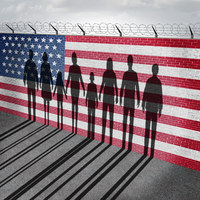
Apoyo mostrado al trabajador indocumentado está creciendo en California
Palm Desert, CA: Mientras la Administración Trump continúa cazando al trabajador indocumentado de diferentes formas, sigue habiendo una creciente ola de apoyo para los trabajadores indocumentados en California y su papel en la economía del estado. No obviada por los partidarios de los trabajadores indocumentados, tanto en el estado como el país en general fue la debacle que involucró al candidato original del presidente para la Secretaria del Trabajo, Andrew Puzder, el CEO de CKE Restaurant Holdings Inc. (CKE), que admitió el empleo de una trabajadora indocumentada, y no pagar los impuestos legalmente requeridos sobre su salario.
Los expertos consideraron notable que existiera una doble norma: un intento de la Administración de destituir a los trabajadores indocumentados, mientras que supuestamente miraba hacia otro lado cuando el candidato del Presidente para ser el Secretario del Trabajo fuera descubierto empleando a una trabajadora indocumentada. Puzder y CKE también están involucrados en una demanda presentada por un trabajador discapacitado en un restaurante CKE que alega discriminación por edad y discapacidad, y despido injustificado. Esa demanda basada en California había sido programada para ir a juicio el 27 de febrero, sin embargo, la cuestión fue empujada de nuevo al 5 de junio a petición de CKE, que argumentó que no podría obtener un juicio justo debido a la controversia de la nominación de Puzder. (James Dombrowski contra CKE Restaurants Holdings Inc., Caso No. 30-2015-00803215, ante la Corte Superior del Estado de California para el Condado de Orange).
Esa preocupación se hizo discutible cuando Puzder, en vísperas de su audiencia de confirmación del Senado, retiró su nominación el mes pasado.
Mientras tanto, los comentaristas siguen sopesando sobre la trabajadora indocumentada. Dori J. Smith, escribiendo en The Desert Sun de Palm Springs (03/11/17) señaló que las redadas contra los trabajadores indocumentados han comenzado, "y se informa que los agentes están arrestando a las personas que no han cometido crímenes en lo absoluto", escribió Smith, Una residente de Palm Desert que se identifica como voluntaria con Moms Demand Action y ex presidenta de Mujeres Democráticas del Desierto. "La gran mayoría de los trabajadores indocumentados NO cometen crímenes, pero sí contribuyen a nuestras comunidades (incluyendo el pago a la Seguridad Social). Las deportaciones masivas agotarán a Estados Unidos de trabajadores, aumentarán drásticamente los costos de consumo y costarán miles de millones”.
Mientras tanto, el Mercury News (03/11/17) llegó a las calles de California y preguntó a los transeúntes sobre sus puntos de vista sobre las políticas de Trump. Rocco Biale, que dirige Rocco's Ristorante Pizzeria en Walnut Creek, hizo referencia a la trabajadora indocumentada de California entre sus comentarios.
"Parece que habrá una apertura para encontrar una manera de mantener a los millones de trabajadores indocumentados, que en mi opinión son la columna vertebral de la economía de EE.UU.", dijo Biale, de 55 años. "Tenemos que encontrar una manera de documentarlos para que ya no tengan que trabajar y vivir en las sombras.”
"Están haciendo el trabajo que la mayoría de los estadounidenses no harán o no pueden hacer".
Los datos compilados y divulgados el mes pasado sugieren que los trabajadores indocumentados representan el diez por ciento de la economía en el estado de California. Casi la mitad del complemento estatal de trabajadores agrícolas son trabajadores indocumentados, que también representan el 21 por ciento de la industria de la construcción.
No se sabe qué impacto tendrán los intentos federales de deportar a los trabajadores indocumentados, sus familias, las economías que apoyan o el potencial para un aumento en los pleitos legales de trabajadores indocumentados.

ERISA Exemption Debate Goes to the US Supreme Court
Washington, DC: The ongoing debate over whether, or not an exemption under the Employee Retirement Security Act (ERISA, as amended 1974) applies to non-profit hospitals reached a pivotal juncture in late March when arguments were made before the justices of the US Supreme Court. At stake is the current practice of not-for-profit hospitals with a church affiliation, applying the ERISA exemption according to a long-standing position in the accounting and actuarial world that a church affiliation meets the criteria for the ERISA exemption.
However, employees who have been fighting an ERISA lawsuit against the hospitals and their affiliates, hold that the ERISA exemption only applies if the pension plan was established by an actual church, rather than by association through a church affiliation. After recent federal circuit court rulings went against Advocate Health Care Network, Saint Peter’s Health Care System and Dignity Health, the cases were appealed to the US Supreme Court.
Dignity Health operates a handful of hospitals and healthcare facilities in the state of California.
ERISA sets out various standards with regard to the management of pension and benefits plans, with established funding minimums, insurance protection and disclosure requirements. Congress allowed an exemption from the rigors of ERISA for not-for-profits. However the language of the exemption and the various interpretations of the original intent of Congress have been debated for some time.
Not-for-profit hospitals and health care facilities with a church affiliation have long interpreted the ERISA exemption as continuing to be available to them so long as a church affiliation is maintained. Employees of those facilities however are not happy with the status quo that their benefit plans are not shielded by ERISA protection, and have been arguing that a church affiliation is not what Congress originally intended.
Employees maintain an ERISA exemption is only available if a benefits plan is established and maintained by a church.
In sum, the issue comes down to an argument by the hospitals – including those run by Dignity Health in California – that the principal purpose organization running their benefit plans have “common religious bonds and convictions” required to qualify for the religious exemption.
This, in deference to arguments by their employees that Congress intended for a strict separation between church and state, and only a church qualified for the exemption.
The hospitals have some expert advocates for their cause, including the deputy solicitor general for the US Department of Justice. The DOJ is supporting the hospitals’ cause as amicus curiae. Were the Supreme Court justices to find for the employees and interpret the ERISA exemption as only available to a benefits plan established and maintained by a church, hospitals would have to completely revise accounting practices and management of the plans in order to comply with ERISA – a costly, and labor-intensive shift.
The latter was the view of the Third Circuit in October 2015 and the Seventh Circuit in March of last year – both ruling that the ERISA exemption is only available to church-established benefits plans. The hospitals argue that in their view, such a qualifier was not the original intent of Congress going forward. What’s more, the hospitals suggest that such a restrictive qualifier contravenes previous rulings by the Fourth and Eighth Circuits which determined a church association was sufficient to qualify for the exemption.
The hospitals, in the ERISA lawsuit also contend that such a position is also supported – and has been for some time – by the DOJ and the Internal Revenue Service (IRS), which hold that church affiliation or association is sufficient.
Their employees argue otherwise.
The cases are Advocate Health Care Network et al. v. Maria Stapleton et al., Case No. 16-74; Saint Peter’s Healthcare System et. al. v. Laurence Kaplan, Case No. 16-86; and Dignity Health et. al. v. Starla Rollins, Case No. 16-258, in the Supreme Court of the United States.

Supplier to US Government Settles Compliance Lawsuit for $1.65 Million
Palo Alto, CA: A software company located in Silicon Valley that is also a sub-contractor to the federal government has agreed to terms of a settlement that puts an end to a compliance lawsuit brought by the Office of Federal Contract Compliance Programs (OFCCP) alleging the defendant, Palantir Technologies Inc. discriminated against job applicants of Asian descent.
While the state of California maintains its own guidelines with regard to discrimination and employees rights, the federal government through the US Department of Labor maintains strict compliance guidelines for any enterprise conducting business on behalf of, or supplying goods and services to, the US government.
The settlement is valued at $1.65 million, and provides back wages and other monetary relief for class members of Asian descent who were applicants to three positions advertised by Palantir between January 1, 2010 and June 30, 2011.
The complaint stemmed from three positions that were advertised, presumably for which Asian applicants were appropriately qualified but from which they were systematically shut out, or so it was alleged. The OFCCP conducted an investigation and mandated conciliation between the two parties. After conciliation failed, the OFCCP launched a formal compliance lawsuit against Palantir, which is based in Palo Alto and specializes in data analysis.
Palantir has gone on record as denying the allegations, and is reported to have provided to the US Department of Labor documentation and alternate statistical data that demonstrated, according to Palantir, that the process used in the hiring protocols for the three positions in question carried no adverse impact of any kind toward Asian candidates.
However, in an effort to avoid continuing litigation and costs, Palantir agreed to settle, according to a settlement decree released earlier this week.
“In the interests of avoiding the costs, risks and uncertainties of continued litigation of the above-captioned matter, OFCCP and Palantir hereby agree to the terms of this consent decree,” both parties said in the decree.
The three jobs in question were: front-end quality assurance engineer, software engineer and quality assurance engineer intern. The settlement decree requires Palantir to extend job offers to at least eight class members who meet requirements of the support engineer and software engineer jobs as positions become available. Those offers are to be extended until four class members are hired into each position, or until the list of class members interested in employment opportunities at the company are depleted.
“We appreciate Palantir working with us to resolve these issues,” OFCCP acting Director Thomas Dowd said in a statement issued April 25 following the release of settlement details resolving the compliance lawsuit. “Together, we will ensure that the company complies with equal employment opportunity laws in its recruitment, hiring and other employment practices.”
The compliance lawsuit is Office of Federal Contract Compliance Programs v. Palantir Technologies Inc., Case No. 16-ofc-00009, before the US Department of Labor Office of Administrative Law Judges.

Wrongful Termination Plaintiff Suffers Heart Attack
Los Angeles, CA: There is yet another development in the story surrounding a California litigant having brought a wrongful termination lawsuit. Former tennis commentator Doug Adler, who had served as a tennis analyst and commentator for ESPN before he was fired, has suffered a heart attack he blames on the stress associated with the legal dispute in which he is embroiled with his former employer.
Adler – based in California – had been working the Australian Open on January 18 of this year when he dispensed a comment relating to the aggressive and combative play of tennis sensation Venus Williams. Adler came under fire for observing that Williams was putting “the guerilla effect” on her opponent, and maintains in his wrongful termination lawsuit that ‘guerilla’ is a term that has been used previously to describe aggressive play.
However, viewers and listeners heard ‘gorilla’ in a classic example of two words spelled differently and holding very different meanings, yet sounding remarkably similar when spoken. Given that Williams is African-American, viewers accused Adler of uttering a racial slur. Rather than back their analyst, ESPN mandated an on-air apology from Adler the following day. However the criticism kept coming – and two days after the controversial utterance, Adler was fired.
The former All-American got himself a wrongful termination lawyer, and sued.
Last month, the New York Post carried a report from Fox News (03/02/17) that Adler had suffered a heart attack due, the plaintiff claims, to stress associated with his job termination and the continuing backlash over a comment he allegedly did not make. ESPN, rather than defending their analyst over the comment, terminated his employment instead.
“By the way ESPN chose to handle this non-issue, they effectively branded me, my character and my reputation for the rest of my life,” Adler told Fox News in February.
Adler “has lost future opportunities in the sporting and business worlds because no one will hire a ‘racist,’” the lawsuit said. “He has suffered serious emotional distress and harm because he has been falsely accused of being the worst thing imaginable, and something he clearly isn’t and never has been, all over the use of the word ‘guerilla', a word that is commonly used in tennis.”
It is not known if his subsequent heart attack, which came after his wrongful termination lawsuit was filed, will figure into the litigation and if so, how. According to Fox News, Adler is claiming intentional and negligent infliction of emotional distress and economic hardship. The suit also names ESPN Senior Vice President Mark Gross and Vice President Jamie Reynolds. It seeks unspecified damages.
Would those damages now include medical costs? Time will tell.
The California wrongful termination lawsuit is Doug Adler v. ESPN Productions Inc. et al., Case No. BC650526, in the Superior Court of the State of California, County of Los Angeles.
Latest Revision to California Family Rights Act Goes to Committee April 24
Sacramento, CA: We are just beyond the one-year anniversary of an expansion to the California Family Rights Act, or CFRA, that was first brought in 16 years ago.
The most recent expansion to the CFRA, signed into law by California Governor Jerry Brown last April and taking effect in 2018, will allow people earning close to minimum wage to be paid 70 percent of their salary while on leave, while workers with higher pay, up to $108,000 annually, will get 60 percent of their salary during leave.
However, that expansion wasn’t enough to prevent a push to further enhance the state’s Family and Medical Leave Act by requiring a company of 10 or more workers to allow eligible employees up to 12 weeks of job-protected parental leave to bond with a new child. Current law excludes many small businesses from family leave requirements beyond women recovering from childbirth. Parental leave, as of today in California, is extended to companies with 50 or more employees.
According to the Los Angeles Times (09/01/16) the original effort was quashed last June. Two months later, in August of last year, the effort was revived as part of Senate Bill 654 – only to be vetoed a month later by Governor Jerry Brown, citing concerns such a provision would have on small business.
Brown had issues with a threshold of 10. Thus, the effort has been revived once again with numbers adjusted to a threshold of 29 to 49 employees – leaving the original provision of 50 employees or more intact, but adding in a new provision that would encompass businesses with 20 to 49 employees.
Senate Bill 63 is at the Committee stage and is scheduled to be debated in Committee Monday, April 24 in the state legislature.
The Family Medical Leave Act (FMLA) is actually a federal statute that provides basic rights for employees. Individual states will often augment those tenets with their own legislation, as has California with the California Family Rights Act (CFRA).
Meanwhile, a former employee of General Dynamics C4 Systems Inc. (General Dynamics) has lost an appeal of her FMLA lawsuit on a claim under the Family Medical Leave Act following allegations that her former employer violated FMLA tenets by failing to adjust her performance expectations and bring them in line with reduced hours of work.
According to court records plaintiff Loretta Cheeks had enjoyed a string of positive performance reviews across a decade with General Dynamics, which is based in Tucson. Her troubles began when she applied for – and was duly granted – reduced work hours for a year under the FMLA. All was well until a key program began to fall behind schedule, at which time Cheeks’ superiors asked her to work additional hours beyond the 32 hour week she had been granted under FMLA, or so Cheeks claimed.
Cheeks was eventually dismissed, and asserts in her FMLA lawsuit that her dismissal violated the agreement she had under the Family Leave Medical Act. General Dynamics countered that the plaintiff was assigned work that should not have taken more than 32 hours in a week to complete.
The plaintiff countered that an employee granted a reduced schedule under the Family and Medical Leave Act should not be expected to complete duties assigned to someone in a full-time position – and during her original trial in 2014 requested that the trial jury be allowed to hear that assertion.
Cheeks lost her case in 2014 when a district court granted summary judgment to General Dynamics based on an assertion that Cheeks had breached a confidentiality agreement through a failure to return certain documents.
The plaintiff appealed to the Ninth Circuit, which upheld the lower court’s ruling.
“The district court did not err in rejecting Cheeks’ proposed instructions because the instructions that it gave adequately covered Cheeks’ theory of the case,” the unsigned memorandum said. “Indeed, nothing prevented Cheeks from arguing to the jury that General Dynamics interfered with her FMLA rights by firing her for failing to meet the performance standards of a full-time employee who did not take FMLA leave.”
The case is Loretta H. Cheeks v. General Dynamics C4 Systems Inc. et al., Case No. 15-15658, in the US Court of Appeals for the Ninth Circuit.

Rollback of Obama Transgender Guidance Does Not Affect California
Sacramento, CA: Any California student identifying with a gender opposite to their birth gender and troubled by the Trump Administration decree issued back in February rescinding federal guidance that allowed transgendered students the use of student washrooms aligned with their gender identity, needn’t be worried about the potential for increased harassment.
The federal decree, rolling back guidance issued by the former Obama Administration, puts the onus back on individual states to decide the issue. Specifically, California had long maintained a policy where school restrooms are open and available to students according to their gender identity – and the federal decree doesn’t change that.
“We have a state law requiring access to bathrooms and locker rooms for those students in accordance with their gender identity,” said Bill Ainsworth, of the California Department of Education, in comments published by The Associated Press (AP 02/23/17).
Historically, transgendered adults and students have long been the subject of needless harassment, resulting in many a harassment lawsuit. But worse still, has been the emotional turmoil transgenders have endured. The Obama Administration attempted to inject some balance – and some safe harbor – into what has often been a divisive and caustic debate amongst the various camps by providing federal guidance that benefitted the student community.
By providing guidance, the feds hoped to update a conversation which, for many had remained rooted along traditional lines. With the stroke of a pen, that guidance was yanked away in February.
However, putting the onus on the individual states is exactly where California already is, and has been since 2013 when state legislation was brought in to legitimize the value and importance of gender identity – as well as to uphold the right, and provide the freedom for transgendered students to use the facility that relates to their gender identity.
That was four years ago, with California being the first state of the Union to do so. Any student subjected to harassment in the state of California by using a school washroom conforming to their gender identity, have safeguards in place at the state level – and none of that changes with the decision by the Trump Administration to rescind.
That doesn’t suggest all states will take it upon themselves to develop updated policy that reflects today’s realities. To that end, one of the reasons why the feds rolled back federal guidance was due to a spate of lawsuits from conservative states attempting to protect and preserve traditional values, and pushing back against federal oversight in such an arena.
Of the 13 states that launched lawsuits, Texas held the most sway when a federal judge, this past August, temporarily blocked the federal imposition of transgender equality within school washroom facilities. It has also been reported that school districts have the freedom to circumvent state laws in that regard.
For residents of many states, it will be an uphill battle to get anywhere close to where California is, and has been for some time.
In California, there are both state laws and independent guidance and encouragement by school districts that provides, and encourages the freedom for a student to use the facility that fits with their gender identity, without apology or harassment.
To that end should harassment ever become an issue, a call to a harassment lawyer to pursue legal action is a viable option given the protections available to any individual subjected to harassment of any kind, including sexual harassment.
Nancy Haque, co-executive director of Basic Rights Oregon, opined to AP that the Trump rollback of the Obama guidance sends a message to transgendered teens “that something is wrong, which is harmful.”
California students – unlike students in other jurisdictions – don’t have that to worry about.
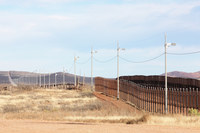
The Undocumented Worker Crisis: Trump’s Wall May Not Be Needed
San Diego, CA: A new report about the US undocumented worker supply authored by economists at the University of California San Diego puts a decidedly different spin on the rhetoric coming out of the Trump Administration, and the campaign that led Donald Trump to the White House. Their findings could have an even more lasting impact on the state of California, if their forecasts turn out to be accurate.
The undocumented worker in California has historically been subjected to a bad rap from those outside the state, or those not conversant with the importance the undocumented worker is to the economy of California. To that end, the state economy relies more heavily on the undocumented worker than most other regions – so much so that state government views the undocumented worker as someone who should be embraced and protected, rather than vilified and threatened with deportation on the next wagon train out of town.
Donald Trump campaigned hard on his vision of a looming crisis to the US economy should undocumented workers continue to flow into the country unabated and unchallenged, and upon his election has promised to curb the inflow of undocumented workers and send them packing.
California has long since worried about the effect such a policy would have on the state economy. But even more troubling, say advocates of California’s undocumented workers, are the threats to otherwise hard-working and law-abiding workers who contribute greatly to the culture and economy of the state – in jobs that might prove unsavory to most Californians – and who, with the possible exception of their undocumented status, are doing everything right.
Now comes a report that suggests claims made by the Trump campaign – rhetoric that could potentially become federal policy – could be rooted more in presumption than fact.
Economists Gordon Hanson, Chen Liu and Craig McIntosh noted data generated by the Brookings Institute reflected a steady influx of workers coming into the US from Mexico and other Latin American countries from the 1980s through the early 2000s. The restively high incomes in the US – as compared with what workers might expect to earn back home – made the US an attractive option to find work, raise a family and earn a living.
However – and this is useful information for any undocumented worker lawyer and her client battling the perception of the undocumented worker flooding into the market unabated and taking jobs away from able-bodied Americans – the low-skilled immigrant workforce has shrunk since the Recession of 2008. The immigrant workforce has also aged, and given shrinking growth in the labor supply in Mexico and other Latin American countries, there are fewer workers available to replenish the domestic undocumented labor supply in the US.
“From the rhetoric during and since the 2016 presidential election, one would think that the United States continues to experience a surge of low-skilled immigration. Although in previous decades such labor inflows certainly occurred, since the Great Recession, U.S. borders have become a far less active place when it comes to the net arrival of foreign labor,” according to the report.
The collapse in the US housing market stemming from the 2008 real estate bubble burst translated to fewer construction starts – and fewer construction jobs. What’s more, note the report authors, Latin American countries had lower fertility rates in the 1970s. That translated into fewer people attaining working age, and a corresponding dip in the migration to the US for jobs.
The report’s authors note the slowdown could remain a factor until 2050.
The take away message is that a further decline in undocumented workers in the US will not require any kind of a policy change from the Trump Administration in an effort to lower the numbers – or eradicate them altogether. A wall is not needed. Natural economic forces appear to have taken care of that score, for decades to come.
In the meantime California is hanging onto its supply of undocumented workers for dear life, knowing their importance to the state economy. A state that values the undocumented worker remains an important ally for any undocumented worker facing the prospect of an undocumented worker lawsuit due to unfair treatment on the part of an employer.
‘Along the Watchtower: The Rise and Fall of US Low-Skilled Immigration,’ was published last month by The Brookings Institute.
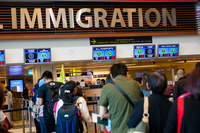
Demanda por discriminación en contra de la Orden Ejecutiva Presidencial entablada en California
Oakland, CA: No tomó mucho tiempo para que las demandas por discriminación comenzaran a fluir después de la orden ejecutiva del Presidente Donald Trump anunciada el 27 de enero de este año, prohibiendo que ciudadanos de siete países predominantemente musulmanes entraran a los Estados Unidos. Por esta razón, la Unión Americana de Libertades Civiles (ACLU) ha presentado una demanda por discriminación en nombre de tres estudiantes universitarios y otros afectados en California, citando a la orden ejecutiva de Trump como inconstitucional.
La demanda, presentada con la ayuda de un abogado de discriminación, también incluye entre los demandantes a la organización de la Familia Judía y Servicios Comunitarios (JFCS) de East Bay. La demanda se propone como un recurso colectivo y declara a la prohibición de viajar como ilegal, así como un intento de discriminar innecesariamente a los musulmanes y establecer una preferencia por una religión sobre otra, esto de acuerdo a sus alegatos.
Los tres estudiantes demandantes poseen visas de estudiante F-1. A pesar de poseer esos documentos, los estudiantes no pueden viajar. El demandante Wasim Ghaleb, un estudiante yemení en el colegio Grossmont en San Diego, había viajado a Arabia Saudita el 15 de enero - 12 días antes de la prohibición - para visitar a su familia. Ghaleb había planeado regresar a California para el semestre de primavera.
Hadil Al-Mowafak es una estudiante de primer año de la Universidad de Stanford con una visa de estudiante F-1 que originalmente no pudo viajar para visitar a su marido en Yemen debido a la orden ejecutiva.
Ha habido diversos acontecimientos desde que se inició la demanda. Una juez federal colocó una suspensión temporal a la prohibición de viajar el pasado viernes, bloqueando efectivamente la orden ejecutiva de Trump.
La Administración Trump, en respuesta, anunció inmediatamente que lucharía contra la suspensión de la prohibición de viajar y lanzó una apelación. A principios de este fin de semana los expertos en inmigración opinaban que si bien la suspensión temporal de la prohibición de viaje permitiría, en teoría, a los inmigrantes con visas válidas de los siete países destinatarios ingresar a los Estados Unidos, la situación seguía siendo tenue. Las autoridades estaban aconsejando a las personas específicas que viajaran "lo antes posible", en modo de una advertencia ya que aún no había garantías.
En las primeras horas del pasado domingo por la mañana Los Angeles Times informó que la Corte de Apelaciones del Noveno Circuito de Estados Unidos en San Francisco negó una solicitud del Departamento de Justicia de los Estados Unidos (DOJ) para ejecutar la prohibición de viajar emitida el 3 de febrero - abriendo efectivamente alternativas para aquellos que fueron afectados por la prohibición cuando la orden ejecutiva de Trump fue firmada el 27 de enero.
El gobierno, sin embargo, al tiempo que indicaba que respetaría la decisión del Noveno Circuito, señaló que seguiría buscando cualquier medio dentro de su jurisdicción para reinstaurar la prohibición de viajar.
En resumen, los individuos originalmente afectados por la prohibición de viajar - incluyendo a los tres estudiantes demandantes - ahora deben estar en condiciones de viajar, por el momento. Se desconoce si la demanda por discriminación se detendrá, o si seguirá adelante, dado que la situación legal sigue siendo complejo.
"El gobierno federal ha dejado claro que tiene la intención de favorecer a los inmigrantes cristianos sobre los musulmanes en la toma de decisiones sobre quién detener, interrogar, deportar o rechazar durante la entrada al país", dijo Julia Mass, abogada de la ACLU del norte de California. Durante una declaración el 2 de febrero de este año, Mass afirmó: "Somos una sociedad diversa. Los musulmanes estadounidenses, los inmigrantes y los nacidos en Estados Unidos por igual, son parte del tejido de esta nación".
Una portavoz de JFCS East Bay, Avi Rose, expresó sentimientos similares. "Esta orden ejecutiva está deshonrando nuestra historia, está deshonrando nuestros valores, y está trayendo caos y desesperación a las vidas de la gente común", dijo Rose, que sirve como Directora Ejecutiva de JFCS East Bay.
Las demandas por discriminación pueden extenderse desde la discriminación por edad, hasta la desigualdad de género. La discriminación racial y religiosa tampoco carece de precedentes. En este caso, la demanda por discriminación alega que las acciones del gobierno federal violan la Primera Enmienda, así como los derechos de protección y debido proceso concedidos bajo la Quinta Enmienda, la Ley de Inmigración y Nacionalidad y la Ley de Procedimiento Administrativo.
Más de 60 demandas de discriminación federal se han presentado desde que el Presidente Trump firmara su Orden Ejecutiva el 27 de enero.
La demanda de California, alegando discriminación, es: Al-Mowafak et al. V. Trump et al., Caso No. 3: 17-cv-00557, en el Tribunal de Distrito de los Estados Unidos para el Distrito Norte de California.

Nike Hit with California Wage and Hour Lawsuit
San Clemente, CA: Retail giant Nike has been hit with a wage and hour lawsuit based out of California that alleges numerous violations to California wage and hour law, as well as other employment tenets. The most compelling aspect of the lawsuit is the alleged requirement by defendant Nike Retail Services Inc. that store employees, alleged to be earning minimum wage, are required to buy their own uniforms and do so several times in a year.
The lawsuit was filed as a putative class complaint in California Superior Court by Omran Hamid, a resident of the Golden State who worked at a Nike retail outlet in San Clemente from October, 2015 to January of this year. He filed his lawsuit a month later, on February 17.
Hamid accuses Nike of failure to provide itemized wage statements and failure to tell the proposed class the amount of paid sick leave available to them or the amount of paid time off Nike would provide in lieu of sick leave, amongst other alleged wage and hour violations.
The purchase of uniforms, however, constituted the primary issue. Hamid asserts the purchase of uniforms by store employees was not only mandated as a condition of employment by Nike, but that employees were also required to maintain “an up-to-date apparel of each season’s product line,” the wage and hour lawsuit asserts.
“Plaintiffs are minimum wage earners, yet, are required to purchase the uniforms an average of four times a year and on an ongoing basis and pay taxation on their value,” the lawsuit claims, adding that such costs combine to drop an employee’s actual wage below minimum standards observed by state and local statutes, for each pay period in which the uniforms were purchased.
“Plaintiffs are manipulated to become walking advertisements of the store exemplifying the athlete image defendants want to portray to their customers at the expense of requiring plaintiffs to bear the cost of the uniforms,” the complaint asserts.
The putative class action seeks to represent all current and former nonexempt employees who toiled as sales associates at Nike retail locations throughout California over the past four years.
According to court documents, there has been substantial fluidity in the California wage and hour lawsuit over its short life. Within seven days of filing his putative class action, Hamid amended his lawsuit to include no fewer than 14 claims against Nike Retail Services. Those amendments included allegations of illegal terms of employment, and the unlawful collection or receipt of wages due, or so it is alleged.
A little more than a month later, on April 3 Nike petitioned to have the lawsuit removed to federal court. Nike also asserted the wage and hour lawsuit fails to state a cause of action, that the plaintiff lacks standing and that the plaintiff failed to comply with established procedures, and failed to act reasonably to mitigate damages.
The case is Omran Hamid v. Nike Retail Services Inc., Case No. 8:17-cv-00600, in the US District Court for the Central District of California.



About . TOS . Privacy . Disclaimer . Contact . Advertise . Member Login
This work is licensed under a Creative Commons Attribution-NoDerivs 3.0 Unported License ©2026 Online Legal Media. All rights reserved.
Visit other Online Legal Media Websites: