Education News

Wells Fargo Whistleblower Files California Harassment Lawsuit
San Francisco, CA: A woman who reported wrongdoing at Wells Fargo has filed a lawsuit in California alleging she was fired in retaliation for reporting illegal activity and was harassed by her superiors. Diana Duenas-Brown, who worked at Wells Fargo in California for 14 years and was a branch manager for 11 years, filed the lawsuit on December 9 alleging wrongful termination and retaliation.
According to Northern California Record (12/27/16), Duenas-Brown was fired on March 16, 2015, after having reported illegal sales practices by Wells Fargo employees, including opening customer accounts and issuing credit cards without customer consent. Wells Fargo faced sanctions following an investigation that uncovered widespread wrongdoing on the part of its sales representatives.
Duenas-Brown alleges that she reported the illegal activity to her superiors and, after doing so, was harassed by her bosses, including being handed unwarranted discipline, hostile interrogations, and poor performance evaluations. She was allegedly also demoted, transferred, and had her wages reduced in the 10 months before she was fired.
The lawsuit claims Duenas-Brown suffered loss of financial and employment benefits and loss of advancement opportunities as a result of Wells Fargo's actions.
Wells Fargo responded to the lawsuit saying it has zero tolerance for retaliation against employees, including retaliation against employees who report wrongdoing. Although Duenas-Brown's allegations against her employer could be considered harassment, her lawsuit claims wrongful termination and retaliation.
The financial firm also faces lawsuits from customers who allege the bank opened fake accounts on their behalf without their consent. Those customers allege their credit scores were harmed by the fake accounts and they paid fines they shouldn't have linked to those accounts. Lawmakers have proposed legislation that would prevent Wells Fargo from holding customers to the arbitration agreements in their bank contracts. Wells Fargo also paid $185 million in fines for the illegal activity.
California employment laws require training to prevent abusive conduct against employees, but that abusive conduct—including verbal abuse, physical abuse, and derogatory remarks—is defined as acts that occur repeatedly. Furthermore, the law does not outright ban abusive conduct, it merely requires training to prevent such activity.
Sexual harassment against employees and discrimination against certain protected groups of people is also prohibited under employment law.
The lawsuit is case number 4:16-cv-07066, in US District Court for the Northern District of California.

Appelate Decision: No Wrongful Termination for Warehouse Worker
Los Angeles, CA: A major media corporation got an early Christmas present December 20 when a three-judge panel with the Second Court of Appeal in California reversed a lower court’s ruling holding Time Warner Cable Services LLC (Time Warner, TWC) liable for wrongful termination and disability discrimination.
A lower court had assessed a $3.4 million judgement against Time Warner with regard to the firing of a warehouse employee over prescription drug use. The plaintiff, Patricia Hancock, was let go from her warehouse position due to her alleged violation of her employer’s drug policy. Hancock had alleged wrongful termination because the drug she was taking for pain, hydrocodone had been previously prescribed. Hancock further alleged her employer had failed to accommodate her short-term disability. A lower court agreed, and issued a judgement of $3.4 million against Time Warner.
The appellate panel, however, reversed the decision of the lower court because, in their view, the defendant was not adequately aware their employee had suffered a disabling injury and thus, could not be held responsible for wrongful termination based on discrimination for the plaintiff’s disability.
The appeals court determined that Hancock had failed to adequately inform her employer as to the extent of her injury, sustained as it was in a Time Warner warehouse.
“The employee cannot ‘expect the employer to read his mind and know he secretly wanted a particular accommodation and sue the employer for not providing it,’” the ruling said. “Any inferences drawn from the evidence must be a product of logic and reason, not speculation or conjecture.”
According to court documents associated with the California wrongful termination lawsuit, Hancock sustained an injury to her lower back while moving heavy pallets at a Time Warner warehouse. This was in August, 2011. The lower court determined that a warehouse supervisor who had ordered extra boxes for the pallets (and thus, increasing the weight which invariably led to the plaintiff’s injury) failed to advise Hancock to fill out an accident report, or to visit a doctor. However, according to court records the plaintiff failed to share with the supervisor that she required medical attention – nor did the plaintiff ask to return home.
According to the wrongfully terminated lawsuit, the plaintiff experienced increasing pain upon returning home later that day and took painkillers she had been prescribed previously following an unrelated surgical procedure.
Court records revealed that the following day, the warehouse supervisor took the plaintiff to see a physician, and the plaintiff was cleared for work. However, a routine drug test taken as part of the doctor consultation revealed the presence of hydrocodone in the plaintiff’s system, related to the medication she had taken for pain the night before.
That’s when the trouble started, and formed the basis of the wrongful termination lawsuit. The plaintiff was asked for the prescription for the hydrocodone. Hancock indicated it was an older prescription, for which she failed to keep the original copy and would need seven days for replacement paperwork to be sent from her healthcare provider.
Rather than place the plaintiff on unpaid leave until the paperwork for hydrocodone was secured, a human resources manager for the defendant terminated Hancock for violation of drug policy.
The trial court found that Time Warner had failed to accommodate Hancock’s disability, and the jury awarded damages. The appeals court reversed that decision, in part, because in the appellate panel’s view Hancock had failed to inform her supervisor at the time that the disability that served as the foundation for her wrongful termination lawsuit in California was due to her back injury.
The appellate panel also ruled that her termination was founded upon the plaintiff’s inability to immediately procure the prescribing documents for the hydrocodone, and not due to her disability.
“Even though the jury found TWC knew Hancock had a qualifying disability, it did not fire her because of the disability. As a result, Time Warner did not engage in disability discrimination and did not wrongfully terminate Hancock,” the decision said.
The wrongfully terminated case is Hancock v. Time Warner Cable Services LLC et al., Case No. B266532, in the Court of Appeal of the State of California, Second Appellate District.

Both Sides Hint at Appeal in Dispute Between Wal-Mart and Truckers
Los Angeles, CA: Even though the losing defendant in a California employee’s rights and compliance lawsuit felt they had scored a win nonetheless, attorneys for Wal-Mart have signaled their likely intention to appeal the $54-plus million verdict. The plaintiffs, who were asking for more and received less than anticipated in the jury award for the plaintiff’s side, indicated they would appeal as well.
The employee’s rights lawsuit pitted Wal-Mart Stores Inc. against a class comprised of 839 truckers who accused their employer of failing to comply with state and federal laws, as well as the employer’s own policies, or so it was alleged.
The plaintiffs claimed unpaid wages for various duties required of them by their employer in the course of their duties, for which they allege to have not received wages, or sufficient wages. The plaintiffs also allege they were not paid minimum wage for federally-mandated layover breaks lasting ten hours. Plaintiffs, who claimed they were required to stay with their trucks during the layover periods, were paid a total of $42 for the 10-hour time frame.
Drivers claimed they should have been paid minimum wage for the class period, which would have earned them between $67 and $90 instead.
In the end the California jury awarded the plaintiffs $44.7 million intended to make up the difference between what the plaintiffs were paid, and what plaintiffs claimed they should have been paid during the layover time.
In the end, plaintiffs were awarded damages for pre, and post-trip inspections together with the required rest breaks as mandated under California law (allegedly not provided), in order to remain in compliance with the laws of the state.
The jury, however, did not award damages for other alleged compliance violations asserted by the plaintiffs, including washing trucks, fueling, weighing the trucks’ load, waiting at vendor and store locations, performing adjustments, complying with US Department of Transportation inspections, or meeting with driver coordinators.
The plaintiffs had sought an award totaling $72.5 million, with a total payout combining liquidated damages and an estimated $25 million in statutory penalties for not remaining in compliance for payment of minimum wages, at $170 million overall.
In the end, the truckers were awarded $54 million-plus in damages. Attorneys for Wal-Mart characterized the outcome as a win for their side, given that plaintiffs were asking for more. Attorneys for the plaintiffs noted that in their view, the facts of the case and the law were “overwhelmingly” on the side of the plaintiffs.
The trial rolled through the fall and concluded November 23rd. Both sides plan to appeal.
The case is Ridgeway et al. v. Wal-Mart Stores Inc. et al., Case No 3:08-cv-05221, in US District Court for the Northern District of California.

California Vows to Protect Undocumented Workers
Sacramento, CA: Following Donald Trump's election as US president, lawmakers have vowed to protect California's undocumented workers and other illegal immigrants from deportation. The move comes following promises from Trump to deport or incarcerate at least eleven million "criminal" immigrants. The California State Legislature, however, has passed resolutions that would challenge immigration policies that unfairly target or harm undocumented workers.
Court Allows FMLA Retaliation Suit To Proceed
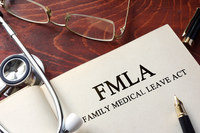
Anaheim, CA: When it comes to defending Family and Medical Leave Act rights, regardless of whether the employee is in California or Ohio, there are certain rules an employer cannot break. Federal FMLA laws apply across the US, while state laws, such as California FMLA, apply only to the individual states. Despite the existence of state FMLA laws, though, there are regulations that employers in every state must follow. Among them is the rule concerning retaliating against employees.
The federal FMLA prohibits covered employers from discriminating or retaliating against employees who exercise their right to FMLA benefits. This means an employer cannot fire, layoff, demote, or otherwise consequence an employee for requesting FMLA benefits or asserting FMLA rights. Employers are also prohibited from interfering with or denying an employee from exercising any FMLA benefits he or she is entitled to.
Employers might think they can get away with retaliating against employees by making it appear they have consequenced the employee for something else—such as poor work conduct. But if there is no history of poor work evaluations and an employee has just attempted to exercise his or her FMLA benefits, the courts might not regard such employer behavior too kindly.
A recent lawsuit highlights the court's view of retaliation. Although the case occurred in Ohio, the rules against retaliation are federal so employees in California who are subject to similar retaliation can take note.
The lawsuit is Lightner v. CB&I (case number 14-cv-2087), S.D. Ohio. Plaintiff Evan Lightner worked for CB&I as a site superintendent from 2009 and consistently received glowing reviews of his work. In the summer of 2013, Lightner raised safety concerns about situations he observed at CB&I. His concerns were allegedly dismissed, but according to court documents in 2014, Lightner needed time off to recover from a lumpectomy. The day after a discussion with his supervisor about the time off, Lightner was allegedly called and told that the project he was supposed to work on had not been awarded and, as a result, Lightner was being "furloughed."
Lightner filed a lawsuit alleging he was furloughed in retaliation for asserting his FMLA benefits and further alleging that despite the contract not being awarded, he was the only worker who was furloughed. The defendant filed a motion for summary dismissal of the suit.
The court found that Lightner's claim of interference could be dismissed because the company could not have interfered with his FMLA claim as it furloughed him before it could deny him leave. But the court did allow the retaliation claim to continue. In allowing the claim to continue, the court noted that CB&I had no documentation supporting the need to eliminate Lightner's position, there was only one person eliminated in the workforce reduction, and a similar job position was posted by the company.
As the court noted, to succeed in a retaliation claim, the plaintiff must show that he or she notified the employer of an intent to take leave, suffered an adverse employment action, and the adverse action was directly caused by the exercise of his or her rights. Judge Algenon L. Marbley found that Lightner met the requirements, and allowed the retaliation claim to continue.

US Supreme Court to Review ERISA Findings from Appellate Courts
Washington, DC: A court challenge that pits church-based health networks against ERISA provisions and interpretations is to be heard by the highest court in the land, following notification on December 2 that the US Supreme Court is going to weigh in by agreeing to review recent decisions by the appellate courts. As one of the health networks is based in California, the case is expected to have some influence and impact on California ERISA labor law.
At issue is an interpretation of just what a church-affiliated hospital is, and whether or not it has to see affiliation with an actual, brick-and-mortar church in order to qualify for exemptions observed in the Employee Retirement Income Security Act (ERISA).
Amongst three health networks embroiled in the litigation is Dignity Health, headquarterd in California. Dignity has joined with Saint Peter’s Healthcare System, based in New Jersey, and Advocate Healthcare Network, which is based in Illinois.
The California ERISA dispute mirrored by the other two health networks has to do with provisions and fiduciary tenets normally required by ERISA. There are exemptions, however, for faith-based health networks affiliated with a church, whereby the latter – assuming they qualify – do not have to undertake fiduciary obligations and minimum-funding requirements.
What got them here was a putative class action launched by employees who assert their employers are not, in actual or real sense affiliated with a church in the first instance, and thus take exception to any claim by the health networks that they qualify for exemption under that qualification.
Based upon the assertion the church-based hospital(s) are capitalizing on an ERISA exemption for which they don’t correctly qualify, workers are therefore taking the position that their retirement funds have been left vulnerable with the lack of minimum funding requirements, insurance or disclosure should the funds dip beneath a certain plateau.
The health networks are fighting back, contending that any reversal of an exemption would oppose long-standing positions taken by the Internal Revenue Service (IRS), US Department of Labor (DOL) and the Pension Benefit Guaranty Corp.
Billions of dollars’ worth of claims are on the line.
According to documents, the Seventh, Third and Ninth Circuits found that the retirement plans of the three networks cannot be excluded from ERISA as “church plans.”
The health networks appealed their case to the US Supreme Court, which has agreed to review the findings of the lower appellate courts.
Religious freedom groups are defending the faith-based health networks, and their decision to take their ERISA case to the highest court in the land.
To that end the Alliance Defending Freedom group, in a statement following the decision by the high court to review, said that “the government shouldn’t attempt to go into the theology business by assuming it has the ability or expertise to decide whether a faith-based ministry is religious enough to be a ministry.”
The cases are Saint Peter’s Healthcare System et al. v. Laurence Kaplan, Case No. 16-86, Advocate Health Care Network et al., Case No. 16-74, and Dignity Health et. al. v. Starla Robbins, Case No. 16-258, in the Supreme Court of the United States.

Popular personalidad de la radio de Los Ángeles apela a una Terminación Injustificada de Contrato de California
Los Ángeles, CA: Un ex locutor de la emisora de radio K-Love 107.5 Los Ángeles reclama que su antiguo empleador, Univision Communications Inc. (Univision), terminó injustamente su contrato con la estación de radio, a pesar de los altos índices de sintonía, por presunta tardanza para llegar al sitio de trabajo, cuando en realidad la demandante Sofía Soria estaba luchando contra un tumor estomacal y requirió cirugía, o al menos eso alegó ella. Soria lanzó una apelación de Terminación Injustificada de Contrato en California, la cual fue oída a principios de noviembre.
Soria alega en los documentos de la corte que los médicos diagnosticaron su tumor de estómago a finales del 2010, y después de un año de visitas continuas al médico lo cual resultó en múltiples ausencias a su programa de radio, Soria afirma haber informado a su empleador que requeriría cirugía. Durante esa conversación, según lo afirmado por la demandante, se produjo a finales del 2011. Poco después, en noviembre de ese año, Soria fue despedida de su trabajo después de haber pasado quince años trabajando con la estación.
Una demanda por despido injustificado que la demandante presentó contra su antiguo empleador en enero de 2013 alega que, en el momento de su despido, su programa de radio disfrutó de altos índices de sintonía por períodos consistentes, por lo que obtuvo aumentos de sueldo y bonos, así como evaluaciones de desempeño positivas, o al menos eso afirma su defensa.
Un tribunal inferior sentenció a favor de Univision. Soria apeló, y el 3 de noviembre una corte de apelaciones de California escuchó argumentos apoyando la sugerencia de la demandante de que fue despedida injustamente de su trabajo en la radio de California.
Univision había argumentado originalmente que Soria nunca estuvo realmente discapacitada y no había solicitado un permiso o licencia médica.
El acusado también sostuvo que el tumor resultó ser no cancerígeno, y por lo tanto no era una amenaza para la salud de la demandante. En opinión del empleador, el demandante había perdido numerosos turnos sin una causa justificable y fue despedida por tardanzas frecuentes. Univision recibió un juicio sumario, previo al recurso de Soria.
En apelación la semana pasada, los abogados de la demandante señalaron que a pesar de que el tumor había demostrado ser benigno, los médicos de Soria habían sugerido a su paciente que el tumor seguía siendo una amenaza para sus órganos internos, de ahí la necesidad de cirugía.
Soria observó durante su apelación que las citas médicas eran necesarias para el monitoreo, biopsias y así sucesivamente. Mientras que la posición de Univision era que, en su opinión, fue la elección de su ex empleada el programar las citas durante los horarios de trabajo, un juez de apelación se preguntó si podría haber habido más compromiso por parte de Univision para apoyar a su empleada en su hora de mayor necesidad.
Los abogados de la demandante también señalaron que a pesar de las afirmaciones de Univision de que la terminación del contrato de Soria se basaba en tardanzas y ausencias frecuentes, "no había un solo documento que criticara su desempeño".
La apelación por Terminación Injustificada de Contrato en California también señala que, bajo la Ley de Derechos de la Familia vigente en California, el único requisito básico para el permiso o licencia médica era que la demandante advirtiera verbalmente que necesitaba un procedimiento quirúrgico. Una demanda subsiguiente de discriminación por discapacidad que habría calificado bajo la Ley de Empleo Justo y Vivienda, fue "negada a raíz de su despido", declaró su abogado en la apelación de la demandante durante la semana pasada.
La demanda por Terminación Injustificada de Contrato en California es Sofía Soria v. Univision Radio Los Angeles Inc. y otros, caso número B263224, en el Tribunal de Apelación del Estado de California, Segundo Distrito Apelativo.

California Donning and Doffing a Contentious Issue
Los Angeles, CA: Getting into and out of work gear is a problematic area of labor law, especially if employees do not have control over how and when they carry out their donning and doffing duties. When putting on and taking off work gear adds 30 to 60 minutes to a shift—and could count as overtime—employees want to be paid for their time. Hence, donning and doffing lawsuits alleging dressing and undressing for work should be counted as compensable time.
Employees in Pennsylvania recently won a donning and doffing battle and although that lawsuit might not have strong implications for California donning and doffing lawsuits, it could signal an important trend in court decisions. Plaintiffs in the Pennsylvania lawsuit—employees at DuPont—filed a lawsuit arguing that they were not properly paid for time spent putting on and taking off their safety gear and briefing incoming shift workers about the status of the work. The employees argued this extra time could add up to 60 minutes to their shifts.
DuPont argued that because it paid employees for their meal and rest breaks—pay that is not required under the Fair Labor Standards Act (FLSA)—it had effectively offset the extra time on the shifts. DuPont noted that the time paid for the breaks worked out to more than the time they spent in shift relief between shifts. But employees argued the shift relief time should have counted as overtime, so they were owed overtime pay.
A District Court granted DuPont's motion for summary judgment, finding the employer's break time pay offset the shift relief compensation. But employees appealed the decision and the Pennsylvania Third Circuit Court of Appeals found that the FLSA did not authorize using break pay to offset the overtime. The Court of Appeals reversed the District Court's dismissal and the lawsuit was remanded for further proceedings.
Donning and doffing time is contentious because it is not always clear whether that time should be considered compensable. The FLSA allows compensation for activities that are integral and indispensable to the employee's job. So when the employee must wear certain clothes to carry out vital job tasks, putting on and taking off those clothes may be considered compensable. And when the employee has no choice but to put on and take off those clothes at the worksite (if, for example, the safety gear is not allowed to leave the worksite), then that time might be compensable.
But if putting on and taking off the gear is simple for convenience and is not related to principal activities, then the time might not be compensable. Of course, there is still disagreement about what constitutes "integral and indispensible" and what primary duties are considered when determining whether compensation is owed.
The lawsuit is Smiley v. El DuPont de Nemours & Co., No. 14-4583.

California Discrimination Alleged Against Iconic Bel-Air Hotel
Los Angeles, CA: The Hotel Bel-Air, a facility that has risen to iconic status since it first opened its doors in 1922, closed for extensive renovations in 2009. That process took two years to complete. At some point, however, prior to its re-opening in 2011 the hotel is reported to have undertaken a hiring drive. In so doing, the hotel operators are alleged to have snubbed existing employees who were members of a union. Union members alleged California discrimination.
According to court documents the union, identified as Unite Here, brought the matter to the National Labor Relations Board (NLRB). The regional office of the agency, located in Los Angeles, brought a formal complaint against the hotel operators, alleging California discrimination in hiring practices.
However, the NLRB waited more than four years to issue the complaint. The hotel, in turn, filed a California lawsuit against the director of the Los Angeles office of the NLRB, Mori Pam Rubin in September of this year, arguing that Rubin violated due process by waiting for so long to bring the complaint forward.
The NLRB responded by indicating that it had to wait until a related unfair labor case had run its course. That case concluded earlier this year, at which point the NLRB issued its complaint against the operators of the Bel-Air hotel citing discriminatory labor practices.
The hotel responded with a lawsuit, citing undue process. Operators of the iconic hotel filed a motion with the US District Court for the Central District of California to block the ongoing investigation by the NLRB.
However, in late October US District Judge Phillip S. Gutierrez dismissed any attempt by the hotel to block the investigation, noting further that Kava Holdings LLC, the operator of the hotel, is in no position to sue the NLRB since only circuit courts possess the necessary jurisdiction to review the proceedings of the NLRB beyond the issuance of a final order.
The Court maintains it does not have jurisdiction to influence the NLRB and thus, the hotel’s lawsuit can’t proceed.
The NLRB, in its reply to the hotel’s lawsuit, asserted that the complaint by Kava was an attempt to derail the Board’s investigation of California hiring discrimination against the hotel operators.
“The hotel’s patent effort to circumvent the exclusive procedures established by Congress by seeking injunctive relief in this court must be rejected under the controlling authority set out by the US Supreme Court and the Ninth Circuit,” the NRLB’s motion said.
“It has been settled law for almost 80 years that federal district courts do not have subject matter jurisdiction to review or enjoin NLRB unfair labor practice proceedings”.
The judge agreed.
The case is Kava Holdings LLC et al. v. Mori Pam Rubin, Case No. 2:16-cv-6955, in the US District Court for the Central District of California.

McDonald’s Settles California Compliance Lawsuit for $3.75 Million
San Francisco, CA: McDonald’s has settled a California compliance lawsuit alleging the company violated state labor laws by failing to properly pay overtime. As part of the settlement, the company will work with the owner of the franchise that faced the lawsuit to ensure it remains compliant with California labor laws.
The lawsuit was filed in 2014 by employees who alleged that McDonalds and the franchise owner—Smith Family, LP—violated California labor law by not properly paying for overtime. Specifically, employees alleged the company’s computer software failed to pay for overtime when overtime shifts ran over two calendar days. McDonald’s had argued that because the locations in question were franchise restaurants, it was not responsible for failure to pay overtime or any other labor law violations.
According to Reuters (11/1/16), Smith Family settled its lawsuit for around $700,000. If approved by a federal judge, the McDonald’s lawsuit will see the company pay $1.75 million in back pay and an additional $2 million in legal fees. Despite agreeing to the settlement, McDonald’s has said it is not a joint employer, although that matter is before other regulators. A spokesperson for the company said it was settling the lawsuit to avoid the costs and disruption associated with litigation.
When a judge was considering whether to certify the lawsuit as a class action, the judge noted that McDonald’s franchise employees all wore McDonald’s uniforms, received their schedules on papers with the McDonald’s logo, and often applied for work through the McDonald’s website. As a result, the judge found that McDonald’s employees may have been reasonable in their belief that they were employed by the company, regardless of how accurate that belief was.
Other allegations made in the lawsuit include failure to accurate pay records and failure to reimburse workers for time spent cleaning work uniforms. In addition to the financial aspects of the settlement, McDonald’s will train Smith Family in the use of corporate software, to ensure the franchise remains complaint with California labor laws. Around 800 employees could be affected by the settlement.
Employers in California are required to meet California labor laws. Failure to do so can result in a lawsuit filed by their employees. In such lawsuits, employees may be able to recover lost wages, benefits, and other damages as deemed reasonable by the courts.



About . TOS . Privacy . Disclaimer . Contact . Advertise . Member Login
This work is licensed under a Creative Commons Attribution-NoDerivs 3.0 Unported License ©2026 Online Legal Media. All rights reserved.
Visit other Online Legal Media Websites: