
California Labor Law News

ERISA Exemption Debate Goes to the US Supreme Court
Washington, DC: The ongoing debate over whether, or not an exemption under the Employee Retirement Security Act (ERISA, as amended 1974) applies to non-profit hospitals reached a pivotal juncture in late March when arguments were made before the justices of the US Supreme Court. At stake is the current practice of not-for-profit hospitals with a church affiliation, applying the ERISA exemption according to a long-standing position in the accounting and actuarial world that a church affiliation meets the criteria for the ERISA exemption.
However, employees who have been fighting an ERISA lawsuit against the hospitals and their affiliates, hold that the ERISA exemption only applies if the pension plan was established by an actual church, rather than by association through a church affiliation. After recent federal circuit court rulings went against Advocate Health Care Network, Saint Peter’s Health Care System and Dignity Health, the cases were appealed to the US Supreme Court.
Dignity Health operates a handful of hospitals and healthcare facilities in the state of California.
ERISA sets out various standards with regard to the management of pension and benefits plans, with established funding minimums, insurance protection and disclosure requirements. Congress allowed an exemption from the rigors of ERISA for not-for-profits. However the language of the exemption and the various interpretations of the original intent of Congress have been debated for some time.
Not-for-profit hospitals and health care facilities with a church affiliation have long interpreted the ERISA exemption as continuing to be available to them so long as a church affiliation is maintained. Employees of those facilities however are not happy with the status quo that their benefit plans are not shielded by ERISA protection, and have been arguing that a church affiliation is not what Congress originally intended.
Employees maintain an ERISA exemption is only available if a benefits plan is established and maintained by a church.
In sum, the issue comes down to an argument by the hospitals – including those run by Dignity Health in California – that the principal purpose organization running their benefit plans have “common religious bonds and convictions” required to qualify for the religious exemption.
This, in deference to arguments by their employees that Congress intended for a strict separation between church and state, and only a church qualified for the exemption.
The hospitals have some expert advocates for their cause, including the deputy solicitor general for the US Department of Justice. The DOJ is supporting the hospitals’ cause as amicus curiae. Were the Supreme Court justices to find for the employees and interpret the ERISA exemption as only available to a benefits plan established and maintained by a church, hospitals would have to completely revise accounting practices and management of the plans in order to comply with ERISA – a costly, and labor-intensive shift.
The latter was the view of the Third Circuit in October 2015 and the Seventh Circuit in March of last year – both ruling that the ERISA exemption is only available to church-established benefits plans. The hospitals argue that in their view, such a qualifier was not the original intent of Congress going forward. What’s more, the hospitals suggest that such a restrictive qualifier contravenes previous rulings by the Fourth and Eighth Circuits which determined a church association was sufficient to qualify for the exemption.
The hospitals, in the ERISA lawsuit also contend that such a position is also supported – and has been for some time – by the DOJ and the Internal Revenue Service (IRS), which hold that church affiliation or association is sufficient.
Their employees argue otherwise.
The cases are Advocate Health Care Network et al. v. Maria Stapleton et al., Case No. 16-74; Saint Peter’s Healthcare System et. al. v. Laurence Kaplan, Case No. 16-86; and Dignity Health et. al. v. Starla Rollins, Case No. 16-258, in the Supreme Court of the United States.

Supplier to US Government Settles Compliance Lawsuit for $1.65 Million
Palo Alto, CA: A software company located in Silicon Valley that is also a sub-contractor to the federal government has agreed to terms of a settlement that puts an end to a compliance lawsuit brought by the Office of Federal Contract Compliance Programs (OFCCP) alleging the defendant, Palantir Technologies Inc. discriminated against job applicants of Asian descent.
While the state of California maintains its own guidelines with regard to discrimination and employees rights, the federal government through the US Department of Labor maintains strict compliance guidelines for any enterprise conducting business on behalf of, or supplying goods and services to, the US government.
The settlement is valued at $1.65 million, and provides back wages and other monetary relief for class members of Asian descent who were applicants to three positions advertised by Palantir between January 1, 2010 and June 30, 2011.
The complaint stemmed from three positions that were advertised, presumably for which Asian applicants were appropriately qualified but from which they were systematically shut out, or so it was alleged. The OFCCP conducted an investigation and mandated conciliation between the two parties. After conciliation failed, the OFCCP launched a formal compliance lawsuit against Palantir, which is based in Palo Alto and specializes in data analysis.
Palantir has gone on record as denying the allegations, and is reported to have provided to the US Department of Labor documentation and alternate statistical data that demonstrated, according to Palantir, that the process used in the hiring protocols for the three positions in question carried no adverse impact of any kind toward Asian candidates.
However, in an effort to avoid continuing litigation and costs, Palantir agreed to settle, according to a settlement decree released earlier this week.
“In the interests of avoiding the costs, risks and uncertainties of continued litigation of the above-captioned matter, OFCCP and Palantir hereby agree to the terms of this consent decree,” both parties said in the decree.
The three jobs in question were: front-end quality assurance engineer, software engineer and quality assurance engineer intern. The settlement decree requires Palantir to extend job offers to at least eight class members who meet requirements of the support engineer and software engineer jobs as positions become available. Those offers are to be extended until four class members are hired into each position, or until the list of class members interested in employment opportunities at the company are depleted.
“We appreciate Palantir working with us to resolve these issues,” OFCCP acting Director Thomas Dowd said in a statement issued April 25 following the release of settlement details resolving the compliance lawsuit. “Together, we will ensure that the company complies with equal employment opportunity laws in its recruitment, hiring and other employment practices.”
The compliance lawsuit is Office of Federal Contract Compliance Programs v. Palantir Technologies Inc., Case No. 16-ofc-00009, before the US Department of Labor Office of Administrative Law Judges.

Wrongful Termination Plaintiff Suffers Heart Attack
Los Angeles, CA: There is yet another development in the story surrounding a California litigant having brought a wrongful termination lawsuit. Former tennis commentator Doug Adler, who had served as a tennis analyst and commentator for ESPN before he was fired, has suffered a heart attack he blames on the stress associated with the legal dispute in which he is embroiled with his former employer.
Adler – based in California – had been working the Australian Open on January 18 of this year when he dispensed a comment relating to the aggressive and combative play of tennis sensation Venus Williams. Adler came under fire for observing that Williams was putting “the guerilla effect” on her opponent, and maintains in his wrongful termination lawsuit that ‘guerilla’ is a term that has been used previously to describe aggressive play.
However, viewers and listeners heard ‘gorilla’ in a classic example of two words spelled differently and holding very different meanings, yet sounding remarkably similar when spoken. Given that Williams is African-American, viewers accused Adler of uttering a racial slur. Rather than back their analyst, ESPN mandated an on-air apology from Adler the following day. However the criticism kept coming – and two days after the controversial utterance, Adler was fired.
The former All-American got himself a wrongful termination lawyer, and sued.
Last month, the New York Post carried a report from Fox News (03/02/17) that Adler had suffered a heart attack due, the plaintiff claims, to stress associated with his job termination and the continuing backlash over a comment he allegedly did not make. ESPN, rather than defending their analyst over the comment, terminated his employment instead.
“By the way ESPN chose to handle this non-issue, they effectively branded me, my character and my reputation for the rest of my life,” Adler told Fox News in February.
Adler “has lost future opportunities in the sporting and business worlds because no one will hire a ‘racist,’” the lawsuit said. “He has suffered serious emotional distress and harm because he has been falsely accused of being the worst thing imaginable, and something he clearly isn’t and never has been, all over the use of the word ‘guerilla', a word that is commonly used in tennis.”
It is not known if his subsequent heart attack, which came after his wrongful termination lawsuit was filed, will figure into the litigation and if so, how. According to Fox News, Adler is claiming intentional and negligent infliction of emotional distress and economic hardship. The suit also names ESPN Senior Vice President Mark Gross and Vice President Jamie Reynolds. It seeks unspecified damages.
Would those damages now include medical costs? Time will tell.
The California wrongful termination lawsuit is Doug Adler v. ESPN Productions Inc. et al., Case No. BC650526, in the Superior Court of the State of California, County of Los Angeles.

Latest Revision to California Family Rights Act Goes to Committee April 24
Sacramento, CA: We are just beyond the one-year anniversary of an expansion to the California Family Rights Act, or CFRA, that was first brought in 16 years ago.
The most recent expansion to the CFRA, signed into law by California Governor Jerry Brown last April and taking effect in 2018, will allow people earning close to minimum wage to be paid 70 percent of their salary while on leave, while workers with higher pay, up to $108,000 annually, will get 60 percent of their salary during leave.
However, that expansion wasn’t enough to prevent a push to further enhance the state’s Family and Medical Leave Act by requiring a company of 10 or more workers to allow eligible employees up to 12 weeks of job-protected parental leave to bond with a new child. Current law excludes many small businesses from family leave requirements beyond women recovering from childbirth. Parental leave, as of today in California, is extended to companies with 50 or more employees.
According to the Los Angeles Times (09/01/16) the original effort was quashed last June. Two months later, in August of last year, the effort was revived as part of Senate Bill 654 – only to be vetoed a month later by Governor Jerry Brown, citing concerns such a provision would have on small business.
Brown had issues with a threshold of 10. Thus, the effort has been revived once again with numbers adjusted to a threshold of 29 to 49 employees – leaving the original provision of 50 employees or more intact, but adding in a new provision that would encompass businesses with 20 to 49 employees.
Senate Bill 63 is at the Committee stage and is scheduled to be debated in Committee Monday, April 24 in the state legislature.
The Family Medical Leave Act (FMLA) is actually a federal statute that provides basic rights for employees. Individual states will often augment those tenets with their own legislation, as has California with the California Family Rights Act (CFRA).
Meanwhile, a former employee of General Dynamics C4 Systems Inc. (General Dynamics) has lost an appeal of her FMLA lawsuit on a claim under the Family Medical Leave Act following allegations that her former employer violated FMLA tenets by failing to adjust her performance expectations and bring them in line with reduced hours of work.
According to court records plaintiff Loretta Cheeks had enjoyed a string of positive performance reviews across a decade with General Dynamics, which is based in Tucson. Her troubles began when she applied for – and was duly granted – reduced work hours for a year under the FMLA. All was well until a key program began to fall behind schedule, at which time Cheeks’ superiors asked her to work additional hours beyond the 32 hour week she had been granted under FMLA, or so Cheeks claimed.
Cheeks was eventually dismissed, and asserts in her FMLA lawsuit that her dismissal violated the agreement she had under the Family Leave Medical Act. General Dynamics countered that the plaintiff was assigned work that should not have taken more than 32 hours in a week to complete.
The plaintiff countered that an employee granted a reduced schedule under the Family and Medical Leave Act should not be expected to complete duties assigned to someone in a full-time position – and during her original trial in 2014 requested that the trial jury be allowed to hear that assertion.
Cheeks lost her case in 2014 when a district court granted summary judgment to General Dynamics based on an assertion that Cheeks had breached a confidentiality agreement through a failure to return certain documents.
The plaintiff appealed to the Ninth Circuit, which upheld the lower court’s ruling.
“The district court did not err in rejecting Cheeks’ proposed instructions because the instructions that it gave adequately covered Cheeks’ theory of the case,” the unsigned memorandum said. “Indeed, nothing prevented Cheeks from arguing to the jury that General Dynamics interfered with her FMLA rights by firing her for failing to meet the performance standards of a full-time employee who did not take FMLA leave.”
The case is Loretta H. Cheeks v. General Dynamics C4 Systems Inc. et al., Case No. 15-15658, in the US Court of Appeals for the Ninth Circuit.

Rollback of Obama Transgender Guidance Does Not Affect California
Sacramento, CA: Any California student identifying with a gender opposite to their birth gender and troubled by the Trump Administration decree issued back in February rescinding federal guidance that allowed transgendered students the use of student washrooms aligned with their gender identity, needn’t be worried about the potential for increased harassment.
The federal decree, rolling back guidance issued by the former Obama Administration, puts the onus back on individual states to decide the issue. Specifically, California had long maintained a policy where school restrooms are open and available to students according to their gender identity – and the federal decree doesn’t change that.
“We have a state law requiring access to bathrooms and locker rooms for those students in accordance with their gender identity,” said Bill Ainsworth, of the California Department of Education, in comments published by The Associated Press (AP 02/23/17).
Historically, transgendered adults and students have long been the subject of needless harassment, resulting in many a harassment lawsuit. But worse still, has been the emotional turmoil transgenders have endured. The Obama Administration attempted to inject some balance – and some safe harbor – into what has often been a divisive and caustic debate amongst the various camps by providing federal guidance that benefitted the student community.
By providing guidance, the feds hoped to update a conversation which, for many had remained rooted along traditional lines. With the stroke of a pen, that guidance was yanked away in February.
However, putting the onus on the individual states is exactly where California already is, and has been since 2013 when state legislation was brought in to legitimize the value and importance of gender identity – as well as to uphold the right, and provide the freedom for transgendered students to use the facility that relates to their gender identity.
That was four years ago, with California being the first state of the Union to do so. Any student subjected to harassment in the state of California by using a school washroom conforming to their gender identity, have safeguards in place at the state level – and none of that changes with the decision by the Trump Administration to rescind.
That doesn’t suggest all states will take it upon themselves to develop updated policy that reflects today’s realities. To that end, one of the reasons why the feds rolled back federal guidance was due to a spate of lawsuits from conservative states attempting to protect and preserve traditional values, and pushing back against federal oversight in such an arena.
Of the 13 states that launched lawsuits, Texas held the most sway when a federal judge, this past August, temporarily blocked the federal imposition of transgender equality within school washroom facilities. It has also been reported that school districts have the freedom to circumvent state laws in that regard.
For residents of many states, it will be an uphill battle to get anywhere close to where California is, and has been for some time.
In California, there are both state laws and independent guidance and encouragement by school districts that provides, and encourages the freedom for a student to use the facility that fits with their gender identity, without apology or harassment.
To that end should harassment ever become an issue, a call to a harassment lawyer to pursue legal action is a viable option given the protections available to any individual subjected to harassment of any kind, including sexual harassment.
Nancy Haque, co-executive director of Basic Rights Oregon, opined to AP that the Trump rollback of the Obama guidance sends a message to transgendered teens “that something is wrong, which is harmful.”
California students – unlike students in other jurisdictions – don’t have that to worry about.
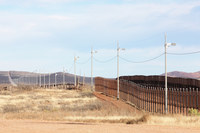
The Undocumented Worker Crisis: Trump’s Wall May Not Be Needed
San Diego, CA: A new report about the US undocumented worker supply authored by economists at the University of California San Diego puts a decidedly different spin on the rhetoric coming out of the Trump Administration, and the campaign that led Donald Trump to the White House. Their findings could have an even more lasting impact on the state of California, if their forecasts turn out to be accurate.
The undocumented worker in California has historically been subjected to a bad rap from those outside the state, or those not conversant with the importance the undocumented worker is to the economy of California. To that end, the state economy relies more heavily on the undocumented worker than most other regions – so much so that state government views the undocumented worker as someone who should be embraced and protected, rather than vilified and threatened with deportation on the next wagon train out of town.
Donald Trump campaigned hard on his vision of a looming crisis to the US economy should undocumented workers continue to flow into the country unabated and unchallenged, and upon his election has promised to curb the inflow of undocumented workers and send them packing.
California has long since worried about the effect such a policy would have on the state economy. But even more troubling, say advocates of California’s undocumented workers, are the threats to otherwise hard-working and law-abiding workers who contribute greatly to the culture and economy of the state – in jobs that might prove unsavory to most Californians – and who, with the possible exception of their undocumented status, are doing everything right.
Now comes a report that suggests claims made by the Trump campaign – rhetoric that could potentially become federal policy – could be rooted more in presumption than fact.
Economists Gordon Hanson, Chen Liu and Craig McIntosh noted data generated by the Brookings Institute reflected a steady influx of workers coming into the US from Mexico and other Latin American countries from the 1980s through the early 2000s. The restively high incomes in the US – as compared with what workers might expect to earn back home – made the US an attractive option to find work, raise a family and earn a living.
However – and this is useful information for any undocumented worker lawyer and her client battling the perception of the undocumented worker flooding into the market unabated and taking jobs away from able-bodied Americans – the low-skilled immigrant workforce has shrunk since the Recession of 2008. The immigrant workforce has also aged, and given shrinking growth in the labor supply in Mexico and other Latin American countries, there are fewer workers available to replenish the domestic undocumented labor supply in the US.
“From the rhetoric during and since the 2016 presidential election, one would think that the United States continues to experience a surge of low-skilled immigration. Although in previous decades such labor inflows certainly occurred, since the Great Recession, U.S. borders have become a far less active place when it comes to the net arrival of foreign labor,” according to the report.
The collapse in the US housing market stemming from the 2008 real estate bubble burst translated to fewer construction starts – and fewer construction jobs. What’s more, note the report authors, Latin American countries had lower fertility rates in the 1970s. That translated into fewer people attaining working age, and a corresponding dip in the migration to the US for jobs.
The report’s authors note the slowdown could remain a factor until 2050.
The take away message is that a further decline in undocumented workers in the US will not require any kind of a policy change from the Trump Administration in an effort to lower the numbers – or eradicate them altogether. A wall is not needed. Natural economic forces appear to have taken care of that score, for decades to come.
In the meantime California is hanging onto its supply of undocumented workers for dear life, knowing their importance to the state economy. A state that values the undocumented worker remains an important ally for any undocumented worker facing the prospect of an undocumented worker lawsuit due to unfair treatment on the part of an employer.
‘Along the Watchtower: The Rise and Fall of US Low-Skilled Immigration,’ was published last month by The Brookings Institute.

Nike Hit with California Wage and Hour Lawsuit
San Clemente, CA: Retail giant Nike has been hit with a wage and hour lawsuit based out of California that alleges numerous violations to California wage and hour law, as well as other employment tenets. The most compelling aspect of the lawsuit is the alleged requirement by defendant Nike Retail Services Inc. that store employees, alleged to be earning minimum wage, are required to buy their own uniforms and do so several times in a year.
The lawsuit was filed as a putative class complaint in California Superior Court by Omran Hamid, a resident of the Golden State who worked at a Nike retail outlet in San Clemente from October, 2015 to January of this year. He filed his lawsuit a month later, on February 17.
Hamid accuses Nike of failure to provide itemized wage statements and failure to tell the proposed class the amount of paid sick leave available to them or the amount of paid time off Nike would provide in lieu of sick leave, amongst other alleged wage and hour violations.
The purchase of uniforms, however, constituted the primary issue. Hamid asserts the purchase of uniforms by store employees was not only mandated as a condition of employment by Nike, but that employees were also required to maintain “an up-to-date apparel of each season’s product line,” the wage and hour lawsuit asserts.
“Plaintiffs are minimum wage earners, yet, are required to purchase the uniforms an average of four times a year and on an ongoing basis and pay taxation on their value,” the lawsuit claims, adding that such costs combine to drop an employee’s actual wage below minimum standards observed by state and local statutes, for each pay period in which the uniforms were purchased.
“Plaintiffs are manipulated to become walking advertisements of the store exemplifying the athlete image defendants want to portray to their customers at the expense of requiring plaintiffs to bear the cost of the uniforms,” the complaint asserts.
The putative class action seeks to represent all current and former nonexempt employees who toiled as sales associates at Nike retail locations throughout California over the past four years.
According to court documents, there has been substantial fluidity in the California wage and hour lawsuit over its short life. Within seven days of filing his putative class action, Hamid amended his lawsuit to include no fewer than 14 claims against Nike Retail Services. Those amendments included allegations of illegal terms of employment, and the unlawful collection or receipt of wages due, or so it is alleged.
A little more than a month later, on April 3 Nike petitioned to have the lawsuit removed to federal court. Nike also asserted the wage and hour lawsuit fails to state a cause of action, that the plaintiff lacks standing and that the plaintiff failed to comply with established procedures, and failed to act reasonably to mitigate damages.
The case is Omran Hamid v. Nike Retail Services Inc., Case No. 8:17-cv-00600, in the US District Court for the Central District of California.

California Health Provider, Others Can’t Sue Under ERISA Claims
San Francisco, CA: Two lawsuits aimed at defeating a request for reimbursement of funds under ERISA were struck down by the Ninth Circuit on grounds that plaintiff actions did not qualify under ERISA. A lower court came to the same conclusion over claims made in the two ERISA lawsuits.
ERISA is the acronym for the Employee Retirement Income Security Act (as amended, 1974). ERISA maintains a broad jurisdiction with guidance over retirement investing, employee rights and fiduciary duty.
The two ERISA lawsuits had little to do with retirement investments, however. Rather the disputes were founded upon various tests a collection of health care providers undertook on behalf of their clients and patients, in two states in 2010 and 2011. The tests involved patients who were plan members with Blue Cross Blue Shield of Arizona Inc. (BCBS) and Anthem Blue Cross Life and Health Insurance Co. (Anthem) of California. Two jurisdictions were involved.
The providers proceeded to submit the bills and receipts for such testing, to the plans.
In California, a women’s health care center was found by Anthem to have used faulty practices and protocols while billing for the tests, and thus was not entitled to payment, in its view. Meanwhile, in Arizona BCBS determined that tests undertaken by health care providers in that state were investigational in nature and therefore not covered by Anthem.
There were twelve health care providers and related nurse practitioners involved with the ERISA lawsuit against BCBS in Arizona, while the California-based women’s health center sued Anthem Blue Cross Life and Health Insurance Co.
The trouble began when BCBS and Anthem, having duly reimbursed the health care providers as requested, conducted post-payment analysis and found the providers were not, in their view, entitled for reimbursement.
BCBS and Anthem sought repayment. However the health care providers pushed back, suggesting that patients had assigned their rights to the health care providers under ERISA. The health care providers asserted further that any collection efforts on the part of Anthem and BCBS were in violation of claims procedures observed by ERISA.
However a lower court hearing the ERISA lawsuits determined the health care providers were not true beneficiaries under the terms of ERISA enforcement provisions, and therefore had no grounds to undertake an ERISA lawsuit.
The Ninth Circuit agreed with that finding: “Here, the employee benefit plans or the plan subscribers, or both, designate providers to receive direct payment from Anthem or Blue Cross,” the panel wrote. “This remuneration for medical services rendered is not a ‘benefit’ under ERISA.”
The value attached to the claims represented a combined total of $533,000.
The case is DB Healthcare LLC et al. v. Blue Cross Blue Shield of Arizona Inc., Case No. 14-16518, in the US Court of Appeals for the Ninth Circuit.

Medical Supplier of Surgical Gowns on Trial for Defective Products, Non-Compliance
Los Angeles, CA: A California OSHA lawsuit that alleges protective surgical gowns were rendered less protective due to cost-cutting on the part of the manufacturer, is meandering its way through US District Court for the Central District of California.
The class action lawsuit heard testimony last week that manufacturer Kimberly-Clark put profits ahead of safety when surgical gowns originally designed and manufactured to be impermeable against the transference of infectious pathogens, turned out to be porous and thus offered less protection than their design and approval would otherwise suggest.
The Division of Occupational Safety and Health is an organization that exists both at the federal and state level. Its mandate is to protect workers from any unnecessary hazard stemming from the workplace. The lawsuit is not brought by California OSHA, but rather by individuals and organizations that purchased, and used the allegedly defective garments.
The spirit of the lawsuit, however, is in line with Cal/OSHA tenets of safety in the workplace. Such efforts do not exclude medical staff, or patients in the surgical arena.
In the surgical and medical sector, various precautions are implemented to ensure surgeons, surgical nurses and other support staff is allowed to work in a relatively safe environment free from grievous harm. Surgical gowns are designed to ward against the transference of pathogens from a patient to the medical staff through an otherwise porous garment.
According to court documents, lead plaintiff in the OSHA lawsuit is Bahamas Surgery Center LLC. The plaintiff is accusing defendants Kimberly-Clark Corp. and Halyard Health Inc. of misleading buyers and the industry as to the safety and efficacy of its line of MicroCool surgical gowns. The allegation is that the gowns do not comply with the AAMI 4 Medical Safety Standard for pathogen barriers.
The gowns in question were sold to both individuals and surgical facilities between February 2012, and January 2015. The gowns were approved by the US Food and Drug Administration (FDA) through an FDA 510(k) Clearance, which fast-tracks medical devices through what is normally a more rigorous testing and clinical trial process. Nonetheless, certain conditions are required to be met. A former director of Kimberly-Clark testified at trial last week that the manufacturer not only misled customers and clients as to the protective capacity of the gowns, but that Kimberly-Clark also provided inaccurate information to the FDA to secure the necessary 510(k) clearances.
Whatever tests and trials carried out to secure approvals, are alleged to have been conducted in “ideal conditions” that may not have adequately represented the real-world aspects of an operating theatre.
The former executive – who left the employ of Kimberly-Cark in 2014 – testified that design changes were made to the gowns after the FDA approved the design in 2010.
“All of those changes were driven by cost reduction, to improve the bottom line; they were not implemented to improve performance,” former Kimberly-Clark executive Keith Edgett testified.
Another former member of senior staff with the manufacturer, also identified as a former commissioned officer with the US Army, testified that a defective product such as a porous surgical gown can result in a surgeon becoming infected, or a patient becoming infected.
The MicroCool surgical gowns were marketed as providing the highest level of liquid barrier protection, “impermeable” and effective against such robust pathogens as Ebola. And yet, the plaintiff asserts Kimberly-Clark knew their gowns were failing compliance tests as early as February, 2012.
One round of tests by an independent lab found that 48 out of 96 gowns tested failed compliance tests. Of those 48 failures, the vast majority – 32 gowns – were found to have failed catastrophically.
Kimberly-Clark is standing behind its product, and its reputation.
The lawsuit is Shahinian v. Kimberly-Clark et al., Case No. 2:14-cv-08390, in the US District Court for the Central District of California.

‘Guerrilla’ Wrongful Termination Lawsuit Heads Back to State Court
Los Angeles, CA: An update now on the California wrongful termination lawsuit filed by a former ESPN tennis commentator allegedly fired from his position with the network over the use of a word plaintiff Doug Adler claims he never used.
Adler – a tennis expert, former All-American player and a commentator on behalf of ESPN for numerous tennis events – was covering the 2017 Australian Open and was describing the aggressive style of play exhibited by competitor Venus Williams. Adler claims he used the word ‘guerrilla,’ a term Adler says has been used previously to describe aggressive tennis.
Viewers, however, heard ‘gorilla’ and assumed Adler was using a demeaning term to lash out at Williams, who is African American. ESPN received a number of complaints and negative backlash. Adler was fired. He alleges wrongful termination, and claims the network was not sympathetic given the reality the two words – spelled differently and meaning two different things – sound exactly the same when spoken.
Adler filed his wrongful termination lawsuit in state court in California in February. Earlier this month, on March 16 the lawsuit was moved to federal court on grounds that Adler and the defendants hailed from two different states, thus giving the federal district court jurisdiction to hear the case. ESPN Productions Inc., the defendant, also held an assumption that damages sought by the plaintiff would exceed the $75,000 ceiling observed by the state court for amounts-in-controversy.
However, US District Court Judge Percy Anderson didn’t feel there was sufficient grounds in the defendant’s statement that co-defendant Mark Gross and Jamie Reynolds – two vice-presidents of ESPN – resided in Connecticut “upon information and belief” of ESPN. The network is also based on Connecticut.
According to Judge Anderson, “upon information and belief” was an insufficient statement to qualify, for the purposes of the Court and the litigation at hand that Gross and Reynolds did, indeed reside in New England.
“The notice of removal’s allegations, alleged on information and belief, are insufficient to establish the citizenship,” the ruling states, adding that a party should be able to allege “affirmatively” the citizenship of the relevant parties.
Given that diversity jurisdiction could not be invoked, the wrongful termination lawsuit goes back to state court in California.
Adler has not specified amounts for damages and recovery he seeks within his California wrongful termination lawsuit. ESPN, for its part worked up a figure of at least $148,000 based on a calculation estimating lost wages, emotional distress, punitive damages and legal fees.
The wrongful termination lawyer representing Adler noted in a statement that one cannot place a value on one’s reputation – since destroyed, the lawsuit claims – when an employer imposes a false label of ‘racist’ followed by termination of employment over an “innocuous comment,” the statement said.
While covering the match and describing Williams’ aggressive play, Adler stated, “She misses her first serve and Venus is all over her. You see Venus move in, and put the guerrilla effect on...charging [opponent Stefanie Voegele].”
Adler maintains he said ‘guerrilla.’ Viewers, however, heard ‘gorilla’ and assumed Adler was uttering a racial slur against the accomplished tennis star. The plaintiff was made to apologize on-air the next day, only to be fired one day after that.



About . TOS . Privacy . Disclaimer . Contact . Advertise . Member Login
This work is licensed under a Creative Commons Attribution-NoDerivs 3.0 Unported License ©2026 Online Legal Media. All rights reserved.
Visit other Online Legal Media Websites: