
Building & Construction News

Farm Owners Required to Comply With Overtime Law
Sacramento, CA: When it comes to California compliance overtime laws might be among the laws that are most widely violated. Employers are accused of misclassifying employees as exempt from California overtime, or just full-out failing to pay non-exempt workers for overtime hours. In some cases, workers aren't even eligible for overtime pay, or have different standards for paying overtime. One group of workers - farmworkers - could soon see that change.

Wage and Hour Lawsuits Continue to Percolate in California
San Mateo, CA: Yet another California based health care facility has been hit with a California wage and hour lawsuit, alleging that hourly employees have not been paid their correct overtime wages, nor have they been provided with rest breaks and meal periods in accordance with California labor law.
The defendant in the case is Sutter West Bay Hospitals. The proposed class action accuses the defendant, on behalf of all qualifying class members, of denying their hourly employees access to meal breaks and rest periods. California law holds that rest periods are taken as required, and that an un-interrupted meal period of not less than thirty minutes be provided prior to the commencement of the fifth hour of work.
Not only is this requirement entrenched within California employment law, the fact remains that were a meal period not duly provided, it means the employee has worked through the meal period and thus should be paid overtime for the 30 minutes of additional work performed.
It is also alleged that hourly employees were provided with non-discretionary bonus pay based upon their job performance. And yet, it is alleged that this bonus pay was not included as part of the calculation of a non-exempt employee’s hourly rate for the purposes of determining the proper overtime rate.
Thus, it is alleged that non-exempt employees of Sutter West Bay Hospitals were not paid correct amounts of overtime, as required under California labor laws.
The wage and hour class action lawsuit is Case No. 2016-cv-538977 in San Mateo County Superior Court for the State of California.
Meanwhile, it has been reported that Ecolab Inc. remains embroiled in four California wage and hour lawsuits that remain pending: this, according to the defendant’s 10-Q filing with the US Securities and Exchange Commission (SEC) for the first quarter ending March 31st of this year. The report, filed in early May, noted that a fifth lawsuit (Cancilla v. Ecolab, Case No. CV 12-03001 US District Court, Northern District of California), has been settled.
The 10-Q filing noted that three of the lawsuits are pending as class actions and claim violations to the Fair Labor Standards Act (FLSA) and / or similar violations to state labor laws.
Of the four remaining wage and hour lawsuits still pending, two are based in California: Ross (formerly Icard) v. Ecolab, Case No. C 13-05097 PJH, and Martino v. Ecolab, Case No. 5:14-cv-04358-PSG, both pending in US District Court for the Northern District of California.

Pulitzer Prize Winner Files Discrimination Lawsuit
Los Angeles, CA: The Los Angeles Times is used to reporting on lawsuits, but now it faces a California discrimination lawsuit of its own, filed by a Pulitzer Prize-winning journalist. Jeffrey Gottlieb filed the lawsuit, alleging age discrimination, harassment, and retaliation.
Gottlieb was hired in March 1997 as an assistant city editor and through his years at Los Angeles Times worked as a staff writer, assistant city editor, and senior writer. Court documents note that Gottlieb and his writing partner - Ruben Vives - co-wrote many stories, including work on corruption in the City of Bell that resulted in them winning Pulitzer Prize for Public Service, a George Polk Award, and a variety of other awards.
Although he won the George Polk award, Gottlieb argues his bosses didn't tell him or Vives about the award, with them finding out by accident, and despite receiving money for other awards, that award money was not fully distributed even two years after it was won. Gottlieb complained to the publisher about the money not being distributed, and complained about illegal activity in relation to the prize money not being disbursed, speaking about the incident in the Washington Post.
Despite winning the Pulitzer Prize, Gottlieb alleges he was not assigned any further investigative reporting duties and was instead sent to Orange County, where his career had initially started, while two other reporters were given the title of investigative reporter.
In August 2014, Gottlieb was told he would be the backup obituaries reporter and then given a choice of covering a variety of topics he considered decent for a new reporter, but not a veteran. In 2015, he had surgery for prostate cancer and was on disability leave for almost eight weeks. Upon his return from leave, he was told he could write obituaries, at which point Gottlieb quit his job.
"Plaintiff felt forced to resign due to his intolerable working conditions, effectively constructively terminating his employment with defendants," court documents state. Shortly after, however, the Times reportedly had a buyout and targeted older reporters with the buyout. Furthermore, Gottlieb alleges, the paper generally hired younger employees and gave better jobs and benefits to employees under the age of 40.
"During plaintiff's employment with defendants, defendants intentionally engaged in age discrimination by discharging employees over the age of 40 with greater frequency than other employees," the lawsuit states. Gottlieb's suit is filed against the Los Angeles Times and editor and publisher Davan Maharaj.
The newspaper has called the allegations "completely without merit."
The lawsuit is Gottlieb v. Los Angeles Times, et al. case number BC630018, in Superior Court of California, County of Los Angeles.

Makers of Rooster Sauce Sues over California Harassment
Irwindale, CA: Harassment can take on many forms, and in this case it’s not so much an employee feeling harassed by an employer at the workplace, but the manufacturer of a hot sauce suing the City of Irwindale, for California harassment.
The product, Sriracha Hot Sauce with the distinctive depiction of a rooster on the bottle (known amongst fans and users as ‘Rooster Sauce’), is made by Huy Fong Foods. There is little doubt that Sriracha hot sauce, amongst hot sauce aficionados, is somewhat revered for its eye-watering heat.
However, hotness so robust it brings forth tears appears not to be limited to mere consumption of the product. It was alleged at one time that fumes originating with the Sriracha manufacturing facility have severely impacted residents of Irwindale.
According to a report carried by FOX News (07/25/16), the municipality filed a lawsuit against Huy Fong in 2013 over the fumes. Residents were complaining. However, health officials looked into the matter and found no health violations, so the City dropped its lawsuit against the manufacturer. Huy Fong, for its part, pledged to resolve the issue of robust fumes.
Then, earlier this year, a second lawsuit was filed against Huy Fong by the municipality - this time, for a tax issue. It was alleged that Huy Fong had been late filing its municipal taxes. The City sought $427,085 in damages.
Huy Fong responded with a California harassment lawsuit, countering the municipality’s legal challenge. In its harassment lawsuit, Huy Fong seeks a court order declaring any previous fees to be invalid. Failing that, the manufacturer seeks the consideration of alternative actions, including a ruling that would allow Huy Fong to recover not less than $750,000 in previous legal fees incurred while defending itself against previous and current legal action pursued by Irwindale.
“Huy Fong Foods has employed local residents and held job fairs for local workers for the past three years,” the California harassment countersuit states.
“The factory is a popular tourist destination and brings visitors and revenue into the city - so popular, in fact, that Huy Fong Foods added two trams to transport visitors around the plant and even opened a gift shop.”
The manufacturer notes that it employs dozens of Irwindale residents, hosts events for the community and provides free Rooster sauce and related merchandise to the community worth about $100,000.
As a result of the 2013 lawsuit, Huy Fong pledged to eradicate fumes escaping the plant as part of a written commitment. There was no mention in the municipality’s subsequent lawsuit with regard to the unsavory fumes continuing, or having been successfully eradicated.

Gretchen Carlson's Wrongful Termination Lawsuit Against Fox
Sacramento, CA: Women who have been victims of sexual harassment at work may have given a little cheer when Gretchen Carlson filed a wrongful termination lawsuit and sexual harassment lawsuit against Roger Ailes, Carlson's former boss at Fox News. And although the lawsuit was filed in New Jersey, the implications of the suit will likely be felt across the US, as the defendant argues the lawsuit should be dismissed and sent to arbitration. In the meantime, more women have come forward alleging a pattern of sexual harassment from Ailes.
Carlson was a long-time television host, including hosting an afternoon program called "The Real Story with Gretchen Carlson" on Fox News. She is a graduate of Stanford University, a best-selling author, an award-winning journalist, and a former Miss America.
According to court documents, Carlson's employment with Fox News was terminated on June 23, 2016, by Ailes in retaliation for Carlson refusing Ailes' sexual advances. Carlson alleges that when she met with Ailes to discuss his discriminatory treatment of her, Ailes commented that some problems are easier to solve through a sexual relationship. Carlson then rejected Ailes' demands for sex and within the year her employment at Fox News was ended.
"Notwithstanding her strong performance and tireless work ethic, however, Ailes denied Carlson fair compensation, desirable assignments and other career-enhancing opportunities in retaliation for her complaints of harassment and discrimination and because she rejected his sexual advances," the lawsuit alleges.
Carlson had previously complained about a hostile work environment created by Steve Doocy on the show Fox & Friends, in which Doocy, Carlson's co-host, mocked her, shunned her, belittled her, and treated her as a "blond female prop." Ailes' alleged response to Carlson's complaint was to tell her she needed to "get along with the boys."
Ailes has since left his position as CEO of Fox News, after more women came forward with allegations of sexual harassment. Included among those was Megyn Kelly, who said Ailes sexually harassed her around 10 years ago. So far, the lawsuit names only Ailes as a defendant, not Fox News or 21st Century Fox.
In response to the lawsuit, Ailes has filed a motion to dismiss, noting that Carlson agreed to arbitration when she signed her contract with the network. The contract requires Carlson to take any employment dispute with Fox News to a confidential arbitration panel, rather than to a court. Ailes' attorneys argue that just because Ailes is named in the lawsuit and Fox is not, does not negate the arbitration clause, according to the Los Angeles Times (7/8/16).

Yet Another Wage and Hour Lawsuit Claims Lack of Overtime From Uber
San Francisco, CA: A proposed class action wage and hour lawsuit by a former UberX driver is accusing the San Francisco-based company of failing to pay its drivers overtime. While plaintiff Jaswinder Singh hails from New Jersey, which is where the lawsuit was filed, the proposed class action becomes a California Wage and Hour lawsuit by default, by virtue of the California headquarters for Uber, and a proposed class action that could potentially benefit drivers from the Golden State.
The proposed wage and hour class action would include class members who drove for both Uber, and UberX, identified as the lower-cost division of Uber.
In his wage and hour lawsuit, Singh identifies himself as serving as a driver for UberX from August 18, 2014 through to September 21, 2015 - a period of just over a year. Singh identifies himself as an employee of Uber, not an independent contractor.
The plaintiff holds that for the 13 months he worked for UberX, he was required to bear most of the expenses involved including, but not limited to the costs for fuel, road tolls, his mobile phone (the lifeblood of an Uber driver), and other expenses for which Singh claims he should have been reimbursed.
Singh also holds that he worked, on a consistent basis, at least 60 hours each week, but received no overtime for any hours worked beyond 40 hours per week as required under state law.
At the heart of the wage and hour lawsuit is whether, or not Uber and UberX drivers are employees, or independent contractors. Previous wage and hour lawsuits filed in Massachusetts and California were recently settled for up to $300 million. Uber, following the settlement, noted that Uber drivers in California and Massachusetts would remain independent contractors. There were no references to Uber and UberX drivers in other states.
Uber has previously held that drivers are independent contractors and not employees, who sign on as Uber drivers and are connected to patrons and fares using the Uber app, ferrying their fares around in their own vehicles.
Plaintiffs, however, note that Uber controls much of the process and experience for the fare, with the Uber driver having little say in that process. The latter, say plaintiffs, detracts from the usual definition of an independent contractor which provides a service to a client based upon an agreed-to set of parameters for service, but with the contractor remaining completely autonomous in the delivery of that service.
Plaintiffs in California Wage and Hour lawsuits and those in other states hold that Uber and UberX drivers are, in actual fact non-exempt employees of Uber and thus, should qualify for overtime and other benefits as entrenched in state laws.
The proposed wage and hour class action lawsuit is Singh v. Uber Technologies, Inc. case No. 3:2016-cv-03044.

Florida Blue Agrees to Settle ERISA Lawsuit
Sacramento, CA: Florida Blue has agreed to settle an ERISA lawsuit, in a move that could have implications for a similar lawsuit filed in California. The lawsuit involves the insurer's refusal to cover Harvoni, a potentially life-saving drug that has been shown to successfully treat hepatitis C.
Contractor Fined by Cal-OSHA, Lawsuit Cites Personal Injuries in Blast
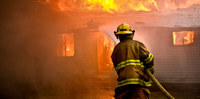
McFarland, CA: It was in November of last year that an industrial accident involving a natural gas pipeline led to an explosion that killed one man and badly injured two women living in a nearby home destroyed in the blast.
While a personal injury lawsuit has been filed by family members of the two injured women, Cal-OSHA in late May undertook its own due diligence and fined Big & Deep Ag Development Co. $40,250 in total sanctions for a number of deficiencies the agency had identified.
To wit, the contractor was cited by Cal-OSHA for digging with an expired permit, failing to properly inform the bulldozer operator as to the true location of the pipeline and failure to properly train the operator.
According to The Bakersfield Californian (5/25/16), the owner of Big & Deep admitted to the expired date on the permit, placing the blame on himself. However, in a telephone interview with The Bakersfield Californian, Jeff Alexander stressed that in his view the expired permit had no bearing on the accident, adding that the operator was experienced and knew exactly where the pipeline was.
It was on November 13 of last year when Joseph Michael “Mike” Ojeda, age 44, was operating what was identified as a Caterpillar dozer and ripper in order to prepare land and facilitate the planting of almond trees. While operating the dozer, Ojeda hit a high-pressure transmission pipeline, three feet in diameter.
The spark initiated by the strike ignited the gas, and the resulting explosion killed Ojeda instantly and ripped through an adjacent home where Amalia Leal and her daughter Gloria Ruckman lived, with Ruckman’s newborn baby. While Leal and Ruckman sustained second- and third-degree burns, the infant escaped serious injury.
It is not known if the family of Ojeda is considering a Cal-OSHA lawsuit for wrongful death and alleged unsafe working conditions. It was noted that Ojeda was well- experienced with some 4,000 hours logged working with and around underground utilities.
It should also be noted that one year earlier, in 2014, the same underground pipeline was struck by a worker toiling for the same contractor. In that incident there was no explosion, but evacuations were required until the gas leak was brought under control and the danger passed.
Various state statutes governing California health and safety on the job are designed to guide employers toward maintaining a safe work environment for employees, and to safeguard employees from undue harm while on the job. Cal-OSHA has the authority to investigate and issue fines and sanctions to any employer viewed as having circumvented the rules.
Cal-OSHA has not filed a lawsuit. Nor has the California Public Utilities Commission, which, as of May 25, had still not completed its investigation.
However, the personal injury lawsuit filed by family members of the two burn victims injured when their home was destroyed by the blast is continuing and is expected to go to trial in March of next year.

California Labor Law Compliance Lawsuit Grew from Accident at Tesla
Fremont, CA: A developing issue in the global automotive industry pertaining to labor law compliance appears to have its roots in California and, specifically, the Tesla automotive plant. A California labor law compliance lawsuit filed by an injured worker toiling for a subcontractor during a construction job at the Tesla plant is effectively reverberating around the globe.
The recent California compliance labor lawsuit was filed by a worker who was seriously injured on the job while working at the Tesla automotive plant in May of last year. Plaintiff Gregor Lesnik was employed by ISM Vuzem, a subcontractor to Eisenmann Corp., a German-based enterprise that supplies paint shop systems to the automotive industry.
According to an investigative report in the Mercury News (5/15/16) of San Jose, Tesla Motors, Inc. had contracted with Eisenmann Corp. for the installation of a paint shop system at its facility in Fremont. Eisenmann, in turn, subcontracted some of the work out to ISM Vuzem, which is headquartered in Slovenia and a company that specializes in factory construction and the installation of equipment.
Lesnik, the plaintiff, claims in his lawsuit that he was working on the roof of the Tesla facility as an employee of ISM Vuzem when a temporary roof panel gave way and he fell, sustaining serious injuries. His lawsuit notes there was no safety net installed below the work area, he was not provided with a safety harness, and a safety supervisor was not present when the accident happened. He fell the equivalent of three stories and broke both his legs, sustained rib fractures and a concussion.
Lesnik noted in his California labor law compliance lawsuit that some 150 Eastern European workers had been provided to Eisenmann by ISM Vuzem in a subcontracting arrangement. The workers, the lawsuit said, worked long hours for low wages - as little as $5 per hour, or so it has been reported.
The labor law compliance lawsuit claims that such conditions were violations of California labor laws.
Tesla issued a statement noting that while not legally responsible for the injuries sustained by the employee of the subcontractor, it would nonetheless “take action to address this individual’s situation,” citing a moral obligation to do so.
“Tesla did everything correctly,” the company said in the statement, posted on its website. “We hired a contractor to do a turnkey project at our factory and, as we always do in these situations, contractually obligated our contractor to comply with all laws in bringing in the resources they felt were needed to do the job.”
Tesla pledged also to impose additional oversight to ensure that “our workplace rules are followed even by sub-subcontractors,” the statement said.
For its part, the German corporation has launched a probe into its supplier contracts. As for Lesnik, Eisenmann says it hired Lesnik through a subcontractor and thus, denies responsibility also. ISM Vuzem also denies responsibility and has tried to persuade Lesnik to drop his lawsuit.
Case information was not available.

TrueCar Truly Believes It Is Compliant with California Law
Santa Monica, CA: In an ongoing California compliance battle between the California New Car Dealers Association (CNCDA) and TrueCar Inc. (TrueCar), the former continues to chase the latter in the courts over what the CNCDA feels is unlawful pricing, together with false and misleading advertising on the part of TrueCar, or so it is alleged.
TrueCar is an entity that was founded in 2005, and reportedly has grown to be a popular resource for car buyers in the Golden State. According to the Sacramento Bee (1/7/16), TrueCar forges relationships with car dealers across the country, and employs those relationships to provide accurate and detailed pricing information on the cost of vehicles through its digital platform. TrueCar claims to have the capacity to link buyers to economically favorable offers from its affiliated dealers, and thus avoid on-site haggling that is normally the bastion of the automotive sales industry.
However, the CNCDA has cried foul, alleging that TrueCar is not complying with California law that serves to regulate the automotive sales industry. For one, the CNCDA accuses TrueCar of false and misleading advertising by way of assertions that TrueCar advertises a claim of “no surprise or hidden fees” on its website, when in reality - or so it is alleged - TrueCar receives a fee from each sale moved through its digital platform.
“TrueCar actually matches a buyer and a seller and gets paid for doing so. This is brokering, and TrueCar isn’t licensed as such,” insisted Brian Maas, CNCDA president, in comments published in the Sacramento Bee. The California compliance lawsuit asserts that TrueCar is not in compliance with California law and seeks a remedy to bring TrueCar into compliance.
TrueCar, for its part, asserts that it is already in compliance, and suggests that a lawsuit having twice been amended by the plaintiff is a sign that the CNCDA non-compliance lawsuit is full of holes.
The CNCDA, based in Sacramento, represents over a thousand franchised new car and truck dealers in the state of California and bills itself as the largest association of its kind in the United States. It brought a California non-compliance lawsuit against TrueCar in May of last year.
According to the Sacramento Bee, the plaintiff made its first of two amendments to its lawsuit in the summer following TrueCar’s attempts to have the lawsuit dismissed in August. Johnny Stephenson, identified as the Chief Risk Officer for TrueCar, suggested in an e-mailed statement to the Sacramento Bee that his company moved to have the newly amended complaint dismissed outright, based on various “defects” TrueCar noted in the complaint.
According to published reports, the Los Angeles Superior Court in Santa Monica did actually dismiss the CNCDA complaint in December of last year, but left the barn door open sufficiently to allow the plaintiff to further amend its complaint and refile again.
The CNCDA did just that and resubmitted its complaint last month. The plaintiff contends that TrueCar is, effectively, acting as a broker in matching buyers with vehicles - and in the state of California, entities undertaking brokerage of any kind must be licensed to do so.
According to the Los Angeles Times (5/20/15), TrueCar charges its affiliated dealers a fee for each sale - about $299 for a new car and $399 for a used car. In some states, including California, TrueCar charges a monthly subscription fee that roughly translates to those rates. It is that subscription fee that generated the California lawsuit. Since California state law dictates that consumers must be provided with a disclosure that outlines whether they or a dealer are paying a fee to a broker, the CNCDA sees that subscription fee as the impetus for a non-compliance lawsuit.
TrueCar, based in Santa Monica, insists it remains compliant with the letter of the law. To that end, the CNCDA is not seeking monetary damages in its California compliance lawsuit, but rather seeks compliance on the part of TrueCar according to California law, should it wish to continue its current business model.



About . TOS . Privacy . Disclaimer . Contact . Advertise . Member Login
This work is licensed under a Creative Commons Attribution-NoDerivs 3.0 Unported License ©2026 Online Legal Media. All rights reserved.
Visit other Online Legal Media Websites: