
California Labor Law News

Cupcakes with Termination Tasteless
Maryann, a paralegal, was given less than 24 hours termination notice. “I was called into the conference room just before 5 p.m.,” says Maryann. “First of all, my boss explained that my position was being eliminated due to financial difficulties and then he asked if I wanted a cupcake to celebrate a new change and transition.”
She didn’t quite have the appetite for a cupcake - chalk it up to bad timing and bad taste - her employer usually brought cupcakes to celebrate an employee’s birthday.
“I was the operations manager for a small immigration law firm that comprised 15 or so staff,” says Maryann. “My title was operations manager so I wore many hats for the attorneys, from handling HR to working with the tech guy. I couldn’t see how they could manage without someone working in this capacity. ‘Who is going to do my job?’ I asked the boss when he gave me the news that I was fired. ‘We’d like you to help us figure it out,’ he replied. ‘And when would you like me to do that?’ I asked.
“He wanted me to help him out the very next day. I was in a state of shock. The controller of the firm had recently left without notice so I was also doing some of her duties, including payroll.
“He could tell this news wasn’t sitting well with me. ‘Would you like to have an exit interview?’ he asked, and then had the nerve to ask what I liked about working here and what could they do better next time around. This really floored me: did he want me to help find a replacement?”
Maryann went to work the next day to ensure that she would be paid for vacation and sick leave. After all, there was no one else in charge of payroll. And she had the “exit interview” that more or less consisted of describing her job description.
“I knew the point of this interview was so that someone taking my place would be prepared, and that my employer would be better equipped to pick up the pieces,” she explains. “Then I simply left. I didn’t get paid for doing the payroll that day, nor did I get my last paycheck, which is another violation of the California labor code. In fact, I didn’t get my paycheck until two weeks later.
“There was more to being terminated than their excuse of financial difficulties. My boss told me that I wasn’t a good manager because I treated people like adults. ‘If you treat people like children they will act like children,’ I replied. (The firm consisted of three middle-aged lawyers and the rest of the employees were in their early 20s.) I took unpaid personal time when my father died and I think that is another reason why I was fired.”
Maryann asked her boss if she was getting severance pay - she thought one month’s salary would be fair for both employee and employer. He hadn’t thought about that. She followed up a week later via e-mail. He replied that the company was “broke” so she wouldn’t be receiving any severance pay.
“I had asked for a month but figured I would get two weeks’ pay; I had worked here for two years,” Maryann says. “I wasn’t expecting nothing - it was like a slap in the face. I believe they have money but I should focus on moving forward and not deal with a crappy past.”
Maryann is now collecting unemployment but she expects to be employed before it runs out. Adding insult to injury, she recently got a call from the accounting coordinator, asking Maryann if she could walk her through the payroll process - with no mention of compensation. “I helped her because it was important to me that people got paid,” she says.
“Before I got my first unemployment check, I consulted with two attorney friends: they recommended that I contact LawyersandSettlements because I wasn’t sure if I had a leg to stand on or not regarding wrongful termination. Then I found out that California is an at-will state. If I didn’t qualify for unemployment, I would definitely have filed a California labor lawsuit, but in the end, I am glad to be gone from that toxic environment with their cupcakes and moving on…”
(In 1978, Dan White gunned down mayor George Moscone and supervisor Harvey Milk. White’s defense team argued that consuming Twinkies had diminished his mental capacity and therefore White was not capable of premeditation required to be charged with first degree murder: he got off with voluntary manslaughter.)

Home Depot Faces California Labor Lawsuit
Courthouse News Service (10/4/13) reports that plaintiff Hardy Housh filed the lawsuit alleging Home Depot discriminated against gay employees in response to financial hardships. The goal, Housh alleges, was to lower the payroll and the benefits the company was financial responsible for. For example, Housh alleges, Home Depot was concerned about medical benefits because of the costs associated with HIV and AIDS viruses.
Housh was reportedly 57 years old and had been with Home Depot for 25 years when he was fired. He was an assistant manager at one of the company’s California stores. When the chain had financial difficulties, it allegedly sought certain employees to fire on the basis of age and sexual orientation to lessen the company’s payroll and financial obligations.
According to the lawsuit, Home Depot allegedly wrote up fake write-ups on employees who were targeted. Furthermore, managers reportedly harassed Housh, including sending sexually explicit pictures to his e-mail. The harassment reportedly began after Housh included his partner in his insurance plan.
Home Depot has denied the allegations. The lawsuit reportedly seeks $100,000.
Meanwhile, The Hollywood Reporter faces a lawsuit of its own, alleging violations of the California Labor Code and other employment laws. The lawsuit, filed in September by David Simpson, names Prometheus Global Media LLC as the defendants and alleges that the company willfully misclassified their freelancers as independent contractors, denying them wage and hour rights under the California Labor Code.
“With the exception of their status as independent contractors, ‘freelancers’ are indistinguishable from employees in all material respects,” the lawsuit alleges. This includes being in the office from 9 to 5 Monday through Friday, attending mandatory work meetings and supervision identical as that given to employees. The only reason for classifying these workers as independent contractors is to deny them overtime pay, rest and meal breaks, and reimbursement for business expenses.
The lawsuit, case number BC522638 seeks class-action status.
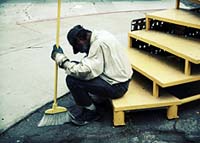
Janitors Allege Ross Dress for Less Equates Work for Less
Ross Dress for Less (Ross) is a clothing chain based in Pleasanton. According to a report in the Contra Costa Times (9/6/13), Ross is accused of contracting janitorial services through USM Inc. (USM), an enterprise headquartered in Pennsylvania. USM, as a go-between or sub-contractor, then hires janitors and janitorial companies to actually undertake janitorial services at Ross’ 1,000 stores across the country.
The crux of the California labor lawsuit, brought by three residents of Oakland, is that Ross allegedly shortchanges USM, through the provision of funding less than what might be reasonably required to undertake the hiring of qualified janitorial staff or contractors.
The result, according to the California labor code complaint, is such under-funding leads to the hiring of so-called “fly-by-night” enterprises, which in turn use immigrant labor, denying those workers adequate pay for work performed.
The California labor lawsuit, filed last month in Alameda County Superior Court, was originally put by three Oakland residents who accuse Ross of violations under California labor employment law. However, it has been reported that lawyers close to the case are hoping to see the lawsuit evolve to a class action.
“Ross knows, or should know that the funds provided to USM under their agreement(s) are not sufficient to allow USM to comply with all applicable local, state and federal laws,” the lawsuit states. For those workers toiling as janitors in Ross locations in the state of California, reduced pay stemming from the alleged underfunding for provision of janitorial services constitutes an alleged violation of California prevailing wage law.
According to the California employee labor lawsuit, the three plaintiffs were issued paychecks that were late, reflected values that were insufficient compared with the work performed, or checks that lacked overtime pay for work performed at Ross locations. The plaintiffs worked for firms contracted by USM Inc. to provide janitorial services for Ross Dress for Less.
California labor law works in concert with federal wage provisions under the Fair Labor Standards Act (FLSA) in order to uphold statutes and provisions designed to ensure workers are provided an adequate wage within the eyes of the law and fair play. When that doesn’t happen, workers have various regulatory and legal options to pursue a claim.

When Does Drug Testing Violate the California Labor Law?
California labor employment law allows an employer to test a prospective employee after a job offer is tendered but before the employee goes on the payroll. But how long after an employee is hired, can they legally be fired?
Colin (not his real name) thinks his employer is using the drug test to legitimize Colin’s termination. Otherwise, Colin could have grounds for a California wrongful termination. According to the drug test, Colin admits that he shouldn’t have been hired in the first place.
“I did a prescreening drug test prior to getting hired,” Colin says. “Initially, I turned down the position but the president called and asked me to join so we negotiated a salary and I accepted. I am a computer technician and understood my job would be IT work, but from the first day, I realized my job was not at all technical. I had to work on a phone- exchange system and I was quite miserable; the president had pulled the wool over my eyes but I showed up for work each day and delivered.
“Two months later, my supervisor said the drug screening test came back positive for pot and had to let me go. I didn’t get to say anything. It was quite easy for me to walk away but at the same time I felt burned. I was head-hunted by this company: it had pulled me from another job; I hadn’t entertained any other prospects.”
Colin was given his last paycheck, in accordance with California employee labor law. Then he went home and re-read the drug consent form. “It said that I have accepted employment and can be tested at their facility or clinic by submitting a urine sample. Declining will mean they will rescind their offer. I signed the form.
“The form goes on to say that I would be notified of the results. But I wasn’t given the opportunity to explain anything or the opportunity to retest. Even if I failed the test, they were supposed to (1) ask me why I failed and (2) give me the opportunity to retest the same day at the company clinic. I was not offered that and I never saw the test results.”
Colin, age 42, and African-American, believes they are using the positive drug test as a smoke screen because the real reason for his termination might mean that he has a legitimate wrongful termination claim.
“I was blindsided - I have never been fired in my life,” Colin adds. “I was a good worker and got along well with everyone, but when I was fired at their corporate office, I got the cold shoulder from everyone
“As well, I am legally able to buy medical marijuana. I was in a car accident and I take marijuana tablets. I hadn’t had any pot at least a week or more before this test but it could have been positive.”
According to the Americans with Disabilities Act (ADA), an applicant or employee who is taking medication for a disability is protected, so if an applicant’s drug test is positive and turned down, and the medication was legally prescribed for a disability, the company could be liable - unless the medication is medical marijuana. But in the state of California, the jury is still out when it comes to pot.
California’s “compassionate use” law allows residents to use marijuana for medical purposes, as long as they have a doctor’s written authorization to use marijuana. A patient who has a valid prescription may not be prosecuted under state law for crimes relating to the use, possession or cultivation of a certain amount of marijuana. But this is the gray area: California’s Supreme Court has held that an employer may refuse to hire an applicant who tests positive for marijuana, even if the drug is legally prescribed for a disability.
In Colin’s case, because he was given a drug test and unfairly suspended or demoted because of it, his labor law attorney might argue that the testers did not meet with the strict requirements for form and procedure set out in the California labor code.
“I was fired last month and still dumbfounded,” Colin says. “I was so shocked that I didn’t even think about asking my employer about the test results. The only thing I can think of is ‘at will.’ As an employer, you can wake up one day and decide you don’t like someone and fire him.”
A California man was fired after testing positive for marijuana, despite the fact that he had a prescription for the drug. The man filed a wrongful termination claim against the company, but the California Court ruled that the company was justified in firing him because it is against federal law to possess or use marijuana despite state rules allowing him to do so. An appeals court upheld the ruling. The man’s case is now before the California Supreme Court.

Salvation Army Faces California Labor Lawsuit
According to court documents, Kimberlea Rea is employed as a bookkeeper/human resources assistant by The Salvation Army at the Modesto Citadel and has been since March 2006. Her job reviews have been favorable, including praise for being “a valuable employee.”
But the lawsuit alleges that one of The Salvation Army’s captains began approaching Rea and asking for her home address. Despite her refusing to give her address, she later saw the captain driving by her home. Eventually, he began asking for hugs and kisses on the cheek, leering at her body and telling her she “looked hot.” The situation allegedly escalated to the point where the captain talked to Rea about his sex life, inappropriately touched her and followed her around the office.
During December 2012, the lawsuit alleges, Rea complained to supervisors about issues with the captain, but the captain was not moved to a different location and no action was initially taken against the captain. In February 2013, after further alleged instances of harassment, the captain was moved to a different section of The Salvation Army. At the time, Rea noted that she was experiencing humiliation, degradation, embarrassment and sleeplessness as a result of the captain’s actions.
Rea was reportedly told by The Salvation Army that some of her complaints were supported by its investigation and that she was not found to be responsible for the captain’s behavior. But the lawsuit alleges Rea was never given a public apology from The Salvation Army, nor were her claims ever publicly acknowledged. She was also reportedly told by The Salvation Army that they would prefer she simply leave her position with them. Furthermore, according to the lawsuit, The Salvation Army’s policy regarding the captain’s conduct was zero tolerance, which meant the captain should have been fired for his actions. Instead, The Salvation Army publicly called his transfer a reward for a “job well done.”
“TSA [The Salvation Army] never provided Rea with a written confirmation of its findings or what actions would be taken to prevent future harassment from occurring,” the lawsuit states. “Rea concluded TSA wanted to merely appease Rea while maintaining a public persona that there was no problem within TSA concerning sexual harassment.”
Following Rea’s complaints and the captain’s transfer, Rea has reportedly been subjected to critical comments and remarks about her job performance.
The lawsuit seeks damages of $1 million, as well as compensatory damages.

Bank of America Loses Arbitration Bid in Overtime Lawsuit
The lawsuit (case 1:13-cv-01531-HB, Southern District of New York) alleges Bank of America and Merrill Lynch violated the Fair Labor Standards Act and New York Labor Law by failing to pay employees designated as “Financial Solutions Advisors” for their overtime work. The plaintiffs - from New York and California - filed a lawsuit against Bank of America and Merrill Lynch seeking class-action status on behalf of current and former Financial Solutions Advisors who were not paid for their overtime hours.
As Financial Solutions Advisors, the employees were registered with the Financial Industry Regulatory Authority (FINRA) and signed a “Form U-4,” which contains an arbitration clause. That arbitration clause, which states “I agree to arbitrate any dispute, claim or controversy that may arise between me and my firm, or a customer, or any person, that is required to be arbitrated under the rules…”, means that the employee agrees to settle any dispute between him or herself and the company through FINRA arbitration, rather than through the courts.
As such, Bank of America and Merrill Lynch filed a motion to force the employees’ claims to arbitration, dismissing the lawsuit.
But Judge Harold Baer, Jr., found that FINRA rules prohibit the enforcement of arbitration agreements against a member of a class action until class-action certification has been denied or decertified. In other words, arbitration cannot be forced until the judge has refused to certify a class-action lawsuit or until the class has been decertified. Only at that point can arbitration be enforced.
This means that the plaintiffs can continue their claims in court rather than through the arbitration system.
Bank of America and Merrill Lynch maintain that the employees were properly exempted from overtime pay under the Fair Labor Standards Act. Under the Fair Labor Standards Act, employees can be exempt from overtime pay if they meet certain administrative criteria. Lawsuits have been filed against various employers alleging employees were improperly classified as exempt from overtime pay.

Upscale Sushi Restaurant Hit with California Labor Code Allegations
Urasawa is both the name of the restaurant and the owner, Hiroyuki Urasawa. The chef has created a brand for himself and is popular amongst well-heeled clientele who regularly visit his establishment in an alcove above Rodeo Drive. According to the Honolulu Star-Advertiser (7/21/13), the pristine sushi bar - described as one of the most renowned sushi restaurants in the US - serves dishes that include caviar and 24-karat gold flakes “for iron.” Patrons spend lavishly and Urasawa is said to spare no expense for his valued guests.
However, it is alleged that his kitchen staff is denied overtime under California labor law, working for the same pay over a 12-hour shift. An investigation by the California Labor Department, according to the Star-Advertiser, found that workers are also denied rest breaks.
Former employee Heriberto Zamora has filed a California labor lawsuit in an effort to secure back wages. The Mexican immigrant worked at Urasawa for a period of five years, starting as a dishwasher and eventually worked his way to food preparation. At his peak, he was making $11.50 per hour.
However, in comments to the Star-Advertiser, Zamora claimed he would routinely put in 60-hour weeks for that rate of pay, without provision for overtime, or meal or rest periods as required under the California labor code. Zamora also describes having to urinate in a sink designed to rinse floor mops after Urasawa allegedly forbade him to use customer restrooms during business hours.
Previously, when Zamora was promoted to food preparation and granted a raise in pay to $9 per hour, he was also allegedly required to buy his own set of knives, costing $700.
“It was always about the customers, making sure that they were happy,” said Zamora, 26, in comments published in the Star-Advertiser. “None of the employees were treated very well. We knew people were paying a lot to eat there, but for us, it was no different.”
One day, after he had been at his station for about nine hours, Zamora began coughing and felt like he was running a fever. He asked to book off sick and return home. The owner, Zamora said, fired him on the spot.
California labor employment law is designed to protect workers’ rights. “There are countless examples in which workers are taking home less than they’ve earned,” said Julie Su, the state labor commissioner. Investigators are said to wait outside, watching workers come and go, comparing what they see to the time records kept on employers’ books. “It’s a perversion of the concept of minimum wage - it goes from being some kind of floor to instead being some kind of ceiling,” Su said.
Urasawa appealed a ruling issued in June, hitting him with a fine of $55,000 for failure to pay overtime under California and labor law, and to provide breaks to Zamora and three others.

What Rights Do Illegal Immigrants Have regarding Wage and Hour Issues?
Moises worked as a cook at Mel’s Diner for six years before it was sold six months ago. The new owner asked him to continue working in the same position at the same rate: $12 per hour, 40 hours per week.
First California labor law violation: Moises says he typically worked 50 hours per week but he never got overtime pay.
“I asked the new boss about California overtime compensation but he told me they never pay anyone overtime,” says Moises. Other employees worked overtime but they didn’t get paid either, so I wasn’t singled out. The previous owner never scheduled us for more than 40 hours per week, but sometimes we would work an extra few hours and always get paid time and a half.”
Second California labor law violation: California wrongful termination?
Moises had a minor “incident” that triggered his termination. “One day I had a problem,” he says. “I was pulled over by the police and jailed overnight because I forgot my driver’s license - I had left it at home. My friend called my boss (I tried to call him first from jail) and told him what happened. The next day I showed up at work and he said, ‘I don’t need you anymore,’ and said I have too many problems. But I think it was because I asked for overtime. They said they have too many cooks but I know they don’t have enough cooks.”
Third California labor law violation: Not receiving last paycheck in a timely manner.
“I was fired one month ago and I still haven’t received this last paycheck,” he says. Moises went back to Mexico but his wife and two daughters, ages seven and three (they were born in the US), stayed in the US. “I sent my wife to the restaurant to get my check. My boss said he wouldn’t give it to her, using the excuse that he doesn’t know her, but that is not true.”
Moises, age 28, has been working illegally in California for the past 10 years. He is in the process of getting his green card. His wife is a US resident and she has applied for citizenship. “I gave my boss a fake social security number; it is a number I have used for the entire time I was in the US. I never had a problem with it. I bought it from someone on the street in Mexico for $80.
“My boss has taken advantage of me because I worked illegally,” Moises adds. “Everyone knows there are a lot of illegals in the US; illegals who want to move here to work and get a better life. I hope to return to the US when I am legal; right now I am trying to fix my status in the US. My family can visit me here but I don’t think I can go to the US for about a year. Meanwhile, I have a construction job here in Mexico City, but I would rather be a cook in California.”
LawyersandSettlements (LAS):
Do the above labor law violations apply to illegal immigrants, i.e., overtime violation, wrongful termination (not even sure if wrongful termination applies to any employee because California is an “at will” state) and not getting the last paycheck on the day of termination?
Attorney David Yeremian (DY):
Yes. According to the CA website of the California Department of Industrial Relations, “All California workers - whether or not they are legally authorized to work in the United States - are protected by state laws regulating wages and working conditions.” The website states that all California workers have the right:
• To receive a minimum wage of $8.00 per hour
• To earn overtime pay - with some exceptions - after working more than 8 hours/day or more than 40 hours/week
• To file wage claims with the state labor commissioner if they believe their employer has violated state wage laws
• To file workplace safety and health complaints with Cal/OSHA, the state’s workplace safety and health program
• To work in an environment free from retaliation for exercising their rights
LAS: Can Moises get a letter from a notary public stating that his wife can receive his last paycheck?
DY: A notarized authorization letter may work; but Moises’ employer is not obligated to give his paycheck to anyone other than him.
LAS: Is the employer in violation of CA labor law for hiring Moises with a fake security card?
DY: The Immigration Reform and Control Act, a federal law, makes it illegal for an employer to knowingly hire undocumented aliens.
LAS: Moises has a fake social security card. What rights does he have re: getting overtime and his last paycheck? Moises says he paid taxes from his pay stubs.
DY: See response to Question 1 above.
LAS: If Moises paid taxes, doesn’t he have a right to get his last paycheck?
DY: Yes, Moises has a right to get his last paycheck. In fact, pursuant to California Labor Code Section 201, an employer who discharges an employee must immediately pay all compensation due and owing.
David Yeremian is an experienced litigator and business counselor, and co-founder of Orshansky & Yeremian LLP. He has worked on a wide variety of litigation matters including employment. The employment discrimination lawyers in Los Angeles provide free consultations to discuss your case fully.

Female California Agriculture Workers Exposed to Harassment, Assault
Issues of harassment in the US agriculture industry were reported on by FRONTLINE, Univision, the Investigative Reporting Program at the UC Berkeley Graduate School of Journalism and the Center for Investigative Reporting. The report, titled Rape in the Fields, aired on PBS on June 25, 2013. The report cites national statistics, but California reportedly has the highest number of agricultural workers in the US and several incidents of alleged harassment in California were included in the documentary.
The report cites a 2010 UC Santa Cruz study that involved 150 female farmworkers. Of those, almost 40 percent experienced sexual harassment, which ranged from verbal harassment to rape, and 24 percent said they were sexually coerced by a supervisor. The study, titled “Examining the Sexual Harassment Experiences of Mexican Immigrant Farmworking Women” (9/22/10), notes that of approximately one million farmworkers in California, 28 percent are women. It further reports that between 35 and 50 percent of women are sexually harassed at some point in their career.
But because they need the work, because many are illegal immigrants or because they are afraid of retaliation, many instances of harassment go unreported. Many may also not realize that harassment on the job is illegal.
Harassment on the job is illegal, as is retaliation for filing a complaint about harassment. In the first sexual harassment lawsuit filed by the US Equal Employment Opportunity Commission against a grower to go to court (the case of Olivia Tamayo, who alleged she was raped three times by a supervisor) in 2004, a jury found Harris Farms - Tamayo’s employer - liable for its supervisor’s sexual harassment and retaliation, and awarded Tamayo approximately $800,000 (as reported in Rape in the Fields).
According to the US Equal Employment Opportunity Commission, it is illegal to harass a person because of their sex. This includes sexual harassment, unwelcome sexual advances, requests for sexual favors and other verbal or physical harassment. If an employee complains about harassment, it is illegal for the employer to retaliate against the employee. Sexual harassment violates Title VII of the Civil Rights Act of 1964, which applies to employers with 15 or more employees. Violations of sexual harassment laws can result in a lawsuit filed against the individual accused of committing the harassment and his or her employers.

When Is a Supervisor Exempt under California Labor Law?
Navigating your way through the FLSA (Wages and Fair Labor Standards Act) guidelines to determine whether you are exempt is not a clear path. For instance, Claudia’s “primary duty” as a supervisor must consist of work that meets the criteria for exemption, such as managing employees. But those responsibilities can also include other duties that those employees she manages are also doing. Claudia believes that the only reason her employer classified her as exempt and pays salary instead of hourly is so that he doesn’t have to pay her California overtime.
“I complained to my boss about being misclassified as exempt and working more than 50 hours a week and he gave me two options: accept my position or quit,” says Claudia, who questions whether her employer has violated the California labor code.
Claudia understands that salaried employees can legally work more than a 40-hour week. But does she have a choice - is she legally entitled to be classified as non-exempt, get paid an hourly wage and overtime compensation? Claudia has done the math and even at minimum wage, with 10 hours a week in overtime compensation (at 1.5 times her hourly rate), she would be better off financially as non-exempt.
“I want to consult a lawyer and see if I am within my rights to get non-exempt status,” she says. “I only ‘manage’ two employees, and only when the boss is away. Everything else I do takes up about 80 percent of my time, such as helping customers and taking stock. There are so many gray areas in the California labor law. I personally feel that I don’t have any clarification of the labor law code and neither does my employer; I think I can only get answers from an employment attorney.”
Supervisors can question their exempt status if most of their time is spent performing non-exempt duties, but that amount of time is tricky to determine because a supervisor arguably can direct the work of an employee while serving a customer or stocking shelves.
Federal regulations recognize the concept of multi-tasking or “concurrent duties” and that supervisors can manage employees while performing other tasks, but this management must consist of more than occasionally directing others. For instance, Claudia manages employees only when her boss is away and therefore spends most of her time performing non-exempt work. Her exempt status likely does not apply.
A recent California labor lawsuit (Heyen v. Safeway, Inc.) involved an assistant store manager who claimed she was entitled to overtime because she spent most of her time bagging groceries and stocking shelves and bookkeeping. To be exempt, California law stipulates that more than half the working time be spent performing exempt work. Safeway claimed that she concurrently managed others while engaged in other tasks and therefore met the requirement. The state appeals court, however, rejected that argument.
Although the “concurrent duties” (like multi-tasking) rule was added to federal law in 2004, it was not added to the California labor code. In the Safeway case, the court determined that the supervisor’s mundane work was not “helpful in supervising employees” and did not meet the exemption criteria, so the employee was entitled to overtime.
In California, a percentage of time must be spent performing exempt work, which may raise the burden for proving an exemption even if the concurrent duties concept is recognized in the state.



About . TOS . Privacy . Disclaimer . Contact . Advertise . Member Login
This work is licensed under a Creative Commons Attribution-NoDerivs 3.0 Unported License ©2026 Online Legal Media. All rights reserved.
Visit other Online Legal Media Websites: