
California Labor Law News
Sacramento Electrical Company Fined for Violations of California Labor Law
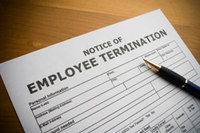
Acme Electrical Corporation was fined $846,300 for allegedly firing an employee due to the fact that he had cancer. This violation of the state's labor law led to the awarding of the money to the affected individual.
Charles Richard Wideman had reportedly worked for the company as western regional sales manager overseeing sales operations in Acme's largest territory. He was employed in this position from February 2004 to March 2008, according to the news source.
Wideman developed kidney cancer in 2006 and prostate cancer in 2007. His illnesses reportedly required two surgeries and numerous disease-related outpatient appointments to try and help him recover, the news provider said.
According to the DFEH, the company immediately granted his requests for time off for recuperative leave and surgery. Although this was allowed, Wideman reportedly requested further accommodation for the travel limitations that his cancer had caused him from June 2006 through April 2007.
It was at this juncture when Acme allegedly refused to grant or "even acknowledge these accommodation requests," according to authorities. Instead of the issuance for Wideman, the company is accused of giving him an unfavorable performance evaluation and criticizing him for insufficient travel, according to the news source.
"California's Fair Employment and Housing Act provides that persons with disabilities, such as cancer, must be reasonably accommodated, so that they can continue to work productively," Phyllis Cheng, director of DFEH, said in a statement. "This historic administrative victory underscores the department's commitment to vindicating the rights of Californians victimized by workplace discrimination."
The state's Fair Employment and Housing Commission found Acme had violated California law by failing to accommodate Wideman's known travel limitation due to the two cancers.
This was the not the only California labor law violation that was cited recently, as a smaller, family-owned electrical business??"Wulff Electric??"recently entered into a settlement because of alleged wage payment failure, according to the Vacaville Reporter.
"Many of Wulff Electric's workers were unaware of the prevailing wage laws that protect worker rights," a representative for the Northern California Electrical Construction Industry-Labor Management Cooperative Trust told the news source.

California Labor Law: "I'm Stuck between a Rock and a Hard Place," Says Bus Driver
Michael drives the school bus three hours a day and performs maintenance work for the remaining five hours. He also gets paid a stipend as the school's volleyball, basketball and track coach. But for the past seven years he has also been driving students to and from sports tournaments, a job he should be getting paid for. Michael diligently records the hours he drives to the tournaments on his time card but he says that, instead of getting paid overtime, his hours are "whited out" before getting sent to the payroll department at the Department of Education.
"I know they are whiting out these hours on my time sheet because I looked before it got faxed to the payroll department, and I also have a photograph of it on my phone," Michael says. "When I told the superintendent that I have to be paid overtime for driving, he said that I couldn't get paid to drive and coach because that would be 'double-dipping.' But I didn't think that was true and now the Department of Labor confirmed that not paying me is a violation of the California labor code.
"I get paid a stipend for coaching and I'm fine with that. But I started driving kids to and from the tournaments when I started coaching so they owe me a substantial amount. Unfortunately I'm not in the union because three other classified employees are required to form a union. I called the union's headquarters, however, and asked them if I should be paid to drive. They said it is definitely illegal for them not to pay me.
"As for forging my time card, the California Labor Board said that is also absolutely illegal. But I'm afraid of retaliation: I need my job, so right now, I'm caught between a rock and a hard place??"I am the only breadwinner in the family; I take care of my wife, my mom and my mother-in-law; I even rented my house and moved in with my mother-in-law??"that's not easy.
"And here's yet another California labor law violation: The two people in the school's administration office are already mad at me because I told the auditors that I bought stuff with my own money and turned in the receipts but never got paid. For instance, I bought a lock, varnish and paint from the hardware store and never got reimbursed. Ever since the auditor brought this up with admin, they only talk to me when they have to. So it's got to the point where I feel like I'm working in a hostile environment. I just do my job and come home and try to ignore it.
"If I quit my job I won't be able to collect unemployment without good reason for leaving. If and when I get another job I wouldn't hesitate to leave. In the meantime, I would still like to pursue legally what can be done about getting compensated??"I want to know the process before going ahead. But at the same time I really don't want them to know…I believe getting an attorney rather than filing a claim with the Department of Labor will be my best recourse."

California Labor Law Agreement Reached for Grocers
According to the news source, the negotiators for the grocery chains and the United Food and Commercial Workers (UFCW) reached a deal that will prevent a strike of more than 54,000 workers throughout Southern California.
The agreement comes after a number of months of public disagreements, with negotiations ultimately heating up after a recent deadline passed. The sides reportedly worked through the weekend to reach the agreement, which is reportedly for three years, the news source said.
The actual details of the deal were not made available to the public, as union members have received the proposal and still need to vote on it. Union officials said that the contract would be approved if at least 50 percent of the members plus one additional vote ratified the agreement, according to the Times.
In separate statements, representatives from the grocery chains and the union said they were satisfied with the deal that was reached.
"We are pleased to have reached a tentative settlement agreement with the union that continues to preserve good wages, secure pensions and access to quality, affordable healthcare??"while allowing us to be competitive in the marketplace," Ralphs, Vons and Albertsons said in the statement, according to the news source.
Rick Icaza, president of UFCW Local 770 in Orange County, added that the deal "protects grocery workers' jobs and healthcare, and keeps the employers' profitable."
Reuters reports that the dispute in this instance dates back to a 141-day strike in Southern California during 2003 and 2004. The strike, which was the longest work stoppage in the history of the US grocery industry, reportedly cost the chains more than $1 billion in sales.
According to the news source, the strike also had an effect on the loyalty of customers, many of whom flocked to nonunion food vendors including Wal-Mart Stores Inc., Costco Wholesale Corp. and Target Corp. Additionally, other competitors such as Whole Foods Market and other upscale chains have increased competition.
Andrew Wolf, an analyst for BB&T Capital Markets, told the news source that both sides were likely forced to make compromises to come to the deal, saying it probably involved "mutual pain and compromise."

"Can I Be Fired If I'm Disabled?" Attorney Answers California Labor Law Issue
Casey, who was recently terminated from his job as an Engineering Technician, wants to know if his employer has violated the California labor law by wrongfully terminating him, specifically due to a Workers' Compensation claim. Furthermore, termination due to disability is discriminatory. LawyersandSettlements asks Randall Crane to discuss Casey's complaint.
Casey: A week after wrist surgery this past May I returned to modified work for a few weeks. My employer decided that I wouldn't do that type of work anymore and sent me home. I've collected Worker's Compensation Temporary disability benefits since June. Can he make me stay home from work?
Randall Crane (RC): The employer doesn't have a right to send an employee home if there is modified work available. But Casey must perform this work if his doctor gives the OK. If Casey refuses to do this work, he can possibly be terminated, subject only to the Family Medical Leave act.
If you collect Workers Comp (WC) and your doctor releases you back to work, you must accept your doctor's decision if you can work within those restrictions or subject yourself to termination and loss of WC benefits.
On the other hand, the employer is obligated to make work available if feasible. Obviously there are a lot of gray areas. If Casey attempts to do the work and he has acute pain, goes back to doctor and says he can't perform, his doctor can modify the terms of the "back to work" order and, in that case, he goes back to full temporary disability benefits.
Casey: At my last doctor's appointment, he released me back to work with restrictions limiting how much weight I could lift with my right hand, and other limitations. When I reported to work with these latest restrictions, I was sent home and told to return on the following Monday.
RC: It sounds like the employer has a problem with these further restrictions and they decided??"truthfully or not??"why not include this employee in reduction of the workforce [below].
Casey: Monday morning my badge access was deactivated and I was given separation papers. HR told me that there was no work for me and that they would have laid me off in July (along with about 20 other people) but they were waiting for me to get healthy.
RC: I'm rather skeptical of that statement but it certainly does raise the possibility of disability and WC discrimination. If you injure yourself trying to be a loyal worker and your employer lays you off but doesn't tell you for 60 days, that's not a great show of employer loyalty…I don't know what truth lies behind this??"is the employer not being candid?
The ultimate problem is that this employee has not gone to a WC attorney to get a detailed resolution of this question. This is a situation where small differences of fact will lead to wide differences of result.
Casey: HR advised me to apply for unemployment insurance (UI) benefits as soon as I got home.
RC: Telling Casey to apply for UI while on disability is ludicrous??"it is not available. It is possible that you can be partially eligible for UI but I don't think that is what is going on here.
Casey: I asked the WC doctor if I could get a new job; he said as long as the new job follows my work restrictions. I have been an Engineering Technician since I graduated high school in 1997 and don't have training to do anything else. Unfortunately, Engineering Technicians (in general) must have full use of both hands.
RC: My impression is that Casey does assembly on a high level or works with sophisticated tools so both hands are required. Even so, he is better than most to come out of this with a good job, and he has a good work history. Again, I can't understand why he didn't go to an attorney right away.
Casey: I believe that I was terminated because I still can't use my right hand fully, but I can't get assistance from the ADA because it hasn't yet been determined if I have a permanent disability??"I'm in limbo.
RC: I'm not suggesting that Casey is depressed, but one of the problems in counseling injured persons is to be aware of the effects of depression that often accompany an injury. Many employees who are injured do not see clear avenues in front of them and many do not realize that psychological and psychiatric assistance is available if they explain depression to their doctor.
When a person has a good array of choices it is imperative that they maintain a stable frame of mind. A general practitioner and WC doctor should be made aware of depression; they may refer a person to counseling and possibly prescribe medication??"both for short- and long-term depression. And an attorney working with injured employees needs to be very perceptive of this.
Casey: I don't know if I qualify to file a complaint with the EEOC.
RC: You do qualify for EEOC but don't apply before speaking with an attorney because it might be advantageous for you to go with the DFEH??"the Department of Fair Employment and Housing (the California equivalent of the EEOC). Great care needs to be used before filing a written complaint because the facts set forth tend to frame up your case. Many people believe these government agencies, which are set up to help those discriminated against, actually work against them. And sometimes they are right.
Casey: HR gave me paperwork for a severance package but I don't want to sign until I know what assistance I qualify for. However, I need to sign it to get my severance pay and three months of medical insurance that it offers.
RC: It sounds like Casey is afraid of losing his health insurance. Does the severance package include three months medical insurance before his COBRA kicks in?
The severance package doesn't sound like a good deal because Casey already has disability benefits and unless there are other health problems, it's hard to see what going on COBRA will gain. It is better to recover from disability and then apply for ordinary health care.
Casey is better than most: he has benefits and is working in a profession where disability can be gotten around with retraining??"under WC he is eligible for retraining which should deal with the hand problem. Casey also says he is getting therapy and his Temporary Disability payments will continue until the doctor releases him back to work with no restrictions or determines that he has a permanent disability.
Ultimately, any severance package or government applications should be reviewed by an attorney.

California Labor Law: Being White Also Spells Discrimination
"All of our work was supposed to be a team effort - t was company policy," says Austin, but the team didn't include him. "Every time I had a problem, such as running out of fuel, not getting somewhere on time, or a problem with the truck, no one helped me in any way. But they constantly helped each other and they expected me to help them.
"When I was first hired, everyone joined a pool - they bet on when I was going to quit. They gave me two days, then a week, then a month. They either called me 'whiteboy' or 'puta' and constantly said disrespectful things about me in Spanish, thinking I don't know what it means. [Puta literally means 'whore' in Spanish.]
"Here's another issue: Anytime there was a fuel spill, the boss told us to clean it up and it was kept quiet. But anytime I caused a spill, I would have to write up the legal form, which is fine, but everyone should have to fill out the form and sign - it's the law.
"The drivers always said I couldn't work as hard as a Mexican. I wasn't part of their clique because I wasn't Mexican and I was reminded of that daily. But I was a hard worker and never had any complaints; I was sent on all the new jobs because I was a good worker. About two months ago I told my boss, who is also Hispanic, about all these discriminatory slurs and that I was going above his head if nothing could be done about it. 'That would just cause problems for yourself and get yourself into more trouble,' he said.
"I was also given the lousiest truck to drive. After a while I wasn't the new guy anymore, which meant that I would get a better, newer truck. But the new Hispanic guy got the good truck and I stayed in the old beater. These older trucks cause more spills and the motor often gives out, creating a big problem with 10 fuel stops a day. By the fifth stop I would invariably have something go wrong, more spills, holes in hoses, all kinds of issues. And that is what I was terminated for: a hose popped and gallons of fuel leaked; I was fired for a hole in the hose that I had no control over. Every time I had a spill it was due to a mechanical error, but I'm not a mechanic (the mechanic is also Mexican and he never worked on my truck).
"I believe that I was fired because I'm white, for not being Mexican. When I worked really hard, my boss complimented me by saying, 'You work like a Mexican,' and times when I wasn't so busy my supervisor said, 'Every white guy I've hired has given up on this job.'
"I doubt this company will hire a white guy anytime soon and that is wrong. Mexican guys have this idea that white guys don't work as hard, and that's just not true. A lot of places have more Mexican guys working than white guys because the employer sometimes pays them below minimum wage, and that is also a California labor law violation. This economic mess has hurt all of us, no matter the color of your skin. But I shouldn't have lost my job because of racial discrimination."

California Labor Law and Misclassification with the IRS
There are many temptations for businesses to classify workers as independent contractors instead of employees. Emma says the main reasons are the following:
• to shift the cost of employment taxes to workers,
• to avoid paying employee benefit costs, and
• to eliminate responsibilities under employment laws, such as civil rights or wage and hour laws.
"However, employers who are determined to have misclassified their workers as independent contractors risk drastic tax liabilities to the IRS, among other potential liabilities, penalties and costs," warns Emma. "Worker classification is a high-stakes decision that affects all industries. The IRS and courts have found workers to be employees in job positions ranging from software engineer to truck driver and from real estate loan officer to exotic dancer."
The IRS recently stepped up employment tax audits in an attempt to close the tax gap, including audits in California, and one of the areas targeted for review is the classification of workers as independent contractors instead of employees. If your business uses independent contractors, you should consult with an employment attorney to evaluate your exposure.
Emma says that the IRS can determine whether your independent contractors are employees and demand unpaid employment taxes, so it's advisable that you examine how you have classified your workers sooner than later.
The IRS method for distinguishing between independent contractors and employees is complicated??"again, an attorney can help you navigate both the IRS "test" and the California labor code. Emma explains that the IRS considers a multi-factor test based on how much control the employer exerts over the worker. "The multi-factor test is broken down into three general categories: (1) Financial Control, (2) Behavioral Control, and (3) Type of Relationship. The factors include, among other things:
• the extent of instructions provided to the worker
• the extent of training provided to the worker
• the extent to which the worker has unreimbursed expenses
• the extent of the worker's investment
• the extent to which the worker makes services available to the relevant market
• how the business pays the worker
• the extent to which the worker can realize a profit or loss
• written contracts describing the relationship the parties intended to create
• whether the business provides the worker with employee-type benefits, such as insurance, a pension plan, vacation pay, or sick pay
• the permanency of the relationship
• the extent to which services performed by the worker are a key aspect of the regular business of the company
The test is applied on a case-by-case basis. Businesses that misclassify their workforce are subject to retroactive tax withholding, penalties and interest," says Emma, who adds that all hope is not lost if your business is audited and a tax examiner determines your workers are misclassified. "You may contest the finding and seek relief under the safe harbor provided by Revenue Code Section 530."
The Section 530 Safe Harbor
"If your business has been consistent in treating workers as independent contractors and has a reasonable basis for doing so, you may be eligible for 'safe harbor' relief under Section 530 of the Revenue Act of 1978," says Emma. "For employment tax purposes, a business may treat an individual as an independent contractor rather than an employee if:
• The business does not treat any other individual holding a substantially similar position as an employee for purposes of employment taxes for any period; and
• All required Federal tax returns are filed by the business on a basis consistent with its treatment of the individual as an independent contractor (e.g., using Form 1099); and
• The business has a 'reasonable basis' for not treating the individual as an employee."
IMPORTANT NOTE: Section 530 provides relief from payment federal employment taxes only but not, for example, lawsuits from workers.
Increasingly, worker classification is garnering more attention in the state of California. Many state officials are facing record budget deficits so they are starting to aggressively pursue companies that try to pass off regular employees as independent contractors. "Well-intentioned businesses will continue to get caught in the crossfire," says Emma, "and the financial exposure can be drastic."
If your business uses independent contractors, you should consult with an attorney to conduct an audit and evaluate your exposure.

Pharmaceutical Firm Fined Over Violations of California Labor Laws
According to a release from the agency, the fine amounted to $371,250 for 11 citations, including four that were deemed willful citations, suggesting the firm had knowledge of the violations. Baxter reportedly has 15 business days to either appeal or pay the fine.
The allegations and fine reportedly stem from a January 21 incident during which Baxter technician Henry Astilla reportedly collapsed after entering a 6,000 liter tank in which nitrogen was bubbled through plasma, according to the release. With air allegedly being displaced by the nitrogen, the tank became oxygen deficient, which led to the worker's death. Baxter is being accused of not properly testing the tank to make sure there was enough oxygen before sending in the technician.
The investigation conducted by Cal/OSHA also indicated that when Astilla was found, a supervisor allegedly told two other employees to bring him out of the tank, without providing the necessary protection or testing the tank for oxygen levels. The agency claims that this alleged negligence led to the two other employees suffering serious injuries, with one of the workers still in the hospital as of July.
"The hazards of working in confined spaces are well documented and this is a classic example of the kind of injury that occurs when employers fail to adequately protect their employees," Cal/OSHA Chief Ellen Widess said in the release. "When confined space operations are not properly planned, it is unfortunately common for other employees to be injured or killed while attempting impromptu rescue of the initial victim."
In other recent cases, Cal/OSHA is reportedly investigating a number of potential heat-related deaths, including two instances where farm workers allegedly collapsed while harvesting crops, according to The Associated Press.
The news source reports that the agency is investigating whether a 47-year-old Blythe farm worker died while operating a tractor to harvest cantaloupes in temperatures exceeding 100 degrees on July 7.
Cal/OSHA spokeswoman Erika Monterroza told the news source that the agency is also in the process of investigating an April death of an Imperial County farm worker who was reportedly breaking corn in 84-degree heat in April.

California Labor Law: Independent Contractor vs Employee Misclassification—Attorney Weighs In
If you are an employer and have misclassified your workers as independent contractors, you could owe the Internal Revenue Service a big chunk of change in employment taxes for your workers. "You may also be liable to the worker for reimbursement of business expenses, overtime pay, meal and rest period violations, and other damages and penalties," says Emma. Conversely, if you have a solid basis to classify workers as independent contractors, you can significantly decrease your overhead.
"In California, classification of workers as independent contractors or employees ultimately comes down to the degree of control exerted by the employer over the worker - the more control that an employer exerts, the more likely the worker is an employee," says Emma. So the more you are told what to do and how to do it, the more you resemble an employee. Emma also points out that a signed contract stating that the worker is an independent contractor does not determine the matter; "Courts look beyond the contract to the actual conduct of the parties."
In addition to "control," California Courts consider other factors in determining whether a worker is properly classified as an employee or independent contractor. The following factors, among others, suggest that you are an employee and not an independent contractor:
1. You perform work that comprises the core business of the employer and is not a distinct occupation or business from that of the employer. "For example, if you are a cab driver working at a taxi company, then your occupation is not distinct from that of the employer and actually comprises the core business of the employer. That suggests an employment relationship," says Emma.
2. The employer supplies the instrumentalities, tools and the place for you. "If you work from the employer's office and make use of the employer's computers, machinery and infrastructure, then you are more likely to be an employee," explains Emma.
3. You are not permitted to subcontract or hire employees of your own to complete the work. "If you are not permitted to outsource your work to others or employ helpers, then you may not be truly independent and may actually be an employee," notes Emma. "Similarly, if you have no opportunity to profit from effective management of your business, then you may not truly be operating an independent business and may actually be an employee."
4. You perform the same work as employees. "If you find yourself doing the same work as employees and reporting to the same managers as employees, then you are probably also an employee."
5. You work at-will, on a full-time basis, for an extended period of time. "Independent contractors are typically engaged by employers on a project-basis or for a limited period of time specified by contract. If you have been working full-time for months or years without any specified termination date, then you resemble an employee and may be misclassified," explains Emma.
6. You are paid the same amount on a regular interval without submitting invoices. Emma says that "Independent contractors typically bid on projects or specify an hourly rate and then submit invoices to the employer. Employees, on the other hand, simply show up to work and are paid for their time on a weekly or bi-weekly basis. If you are routinely paid the same amount without having to submit invoices and regardless of the project or work your are performing, then you are more likely to be an employee."
7. You work exclusively for one employer on a full-time basis. Emma explains that "Independent businesses typically provide services to multiple customers and clients at any given time. If you work exclusively for one employer on a full-time basis, this fact suggests an employment relationship."
The following factors that suggest you are an independent contractor:
1. Your work is distinct from that of the employer.
2. You supply the materials, tools and place to work.
3. You have invested in your own equipment.
4. You have employees.
5. Your work requires a special skill or license.
6. Your contract is on a project basis or for a limited time period.
7. You have other customers/clients.
8. You can increase or decrease your profits based on managerial decisions.
If you are classified as an independent contractor instead of an employee, you should consider whether the classification is in your best interest. "California is progressive and has many laws that protect employees that do not apply to independent contractors," says Emma. "These include minimum wage laws, overtime laws, meal and rest period laws and many others. Most workers are unaware of their rights in the workplace." By selecting a lawyer instead of representing yourself at a government agency hearing, the lawyer can investigate your situation and assert claims on your behalf that you are not aware of. A lawyer will also know how to maximize the value of your claims. "For example, you may believe that you are misclassified and owed $1,000 for missed meal breaks," explains Emma.
"However, if an attorney were to review your case, he or she might find additional claims that you are not aware of such as unpaid overtime claims, missed rest periods, claims against the employer for failing to reimburse you for business expenses, and various other penalties and damages. In this example, if you were to proceed on your own, the government would only consider what you originally claimed (i.e., that $1,000) and nothing more." Most employment attorneys take cases on a contingency basis. "If you think you may be misclassified as an independent contractor, consult with a lawyer and find out where you stand," says Emma.
More about independent contractor misclassification from attorney Leonard Emma of Law Office of Randall Crane next week - stay tuned!

Court: Grocery Worker Regulation Does Not Violate California Labor Law
According to the news source, the California Grocers Association had sued the city of Los Angeles after it adopted a regulation that hindered the ability of companies to replace workers under new ownership.
The 2005 grocery "worker retention" regulation was allegedly conflicting with other employment laws in the state and the rest of the country, the association claimed in the lawsuit.
However, the state Supreme Court ruled 6-1 that the regulation was "fully consistent" with both federal and state legislation, according to the news source. The decision reportedly represented a reversal of two previous rulings that had been made in lower courts.
"This is an important victory for tens of thousands of grocery workers who now don't have to worry about losing their jobs simply because of a corporate ownership change," said Roxana Tynan, deputy director of Los Angeles Alliance for a New Economy, reports the news source.
The news source reported that a call and e-mail sent to the association was not immediately returned.
According to the Los Angeles Times, the law is one of a number of regulations in California requiring companies to maintain workforces for a certain period of time after ownership changes hands.
The law in Los Angeles reportedly covered grocery stores in the city of at least 15,000 square feet, with new owners needing to hire back most previous employees for at least 90 days after the facility became operational under the new ownership.
Justice Kathryn Mickle Werdegar, in writing for the court, said that the law did not interfere with other regulations and that it "applies equally to unionized and nonunionized workplaces," according to the news source.
"It does not selectively preserve or favor unionization or unionized workers; it simply preserves, temporarily, the status quo, whatever that might be," Werdegar explained.
According to the San Francisco Chronicle, similar laws are in effect in other California cities including San Jose, Oakland, Emeryville and Berkeley, with some cities extending the regulations to hotel and airport workers.

When Is Bullying and Harassment a California Labor Law Violation?
"When the people these bullies pick on are in a protected category (e.g., gender, race, religion or pregnancy) that is when they step over the line," says Ballman. "Those are the categories that bullies tend to latch onto. They will also sometimes pick on someone in an emotional situation, someone in a delicate mental state and can torment them to death. You see how bullying affects kids and it happens in the workplace??"people can become suicidal or have a nervous breakdown." However, even if an employee believes he or she is being bullied or harassed by their employer, a supervisor, or a co-worker or they are in a "hostile work environment," they may not have a California labor law claim.
"If we don't accept bullying in schools, why is it acceptable at work?" says Ballman. When is bullying "unacceptable" and how do you determine whether you have a claim and what should you do about it? Ballman advises the following:
Report it:
One statement I hear of too much is "I was harassed, so I quit and then I told them why." This is a frequent mistake. The United States Supreme Court says that, where an employer has a published sexual harassment/discriminatory harassment policy, the employee must report it under that policy and give the employer the opportunity to fix the situation. If you did not avail yourself of the employer's policy before quitting, you are giving up your right to sue for a violation.
Employer's duty:
Appropriate remedies may be to discipline or warn the harasser, to move the harasser, under some circumstances to move the victim, to do training, or in extreme cases, to terminate the harasser. But they don't have to take any action at all. They only have a duty to maintain a safe workplace. You might still have to work with the harasser.
What to put in the report:
General harassment, hostile environment, bullying and other disruptive behavior that is not addressed to an employee for a protected status or activity is not illegal. So before you write the long letter airing all your grievances against your boss, you may want to have an attorney look at it, or just make sure you are addressing your protected status. If you do complain, put it in writing and call it "FORMAL COMPLAINT OF SEXUAL HARASSMENT" or "FORMAL COMPLAINT OF RELIGIOUS HARASSMENT," or whatever category you fit into. Set forth the harassment due to your protected status, and be businesslike. This is not the time to air all your complaints about the business or your boss, only to air the specific complaint about the illegal behavior.
If you are harassed or are in a hostile work environment, make sure you understand your rights and responsibilities. Report it to the employer and give them a chance to address the situation. If they allow the harassment to continue or if they retaliate, contact an employment attorney to discuss your legal options.
Here are some tips from Ms. Ballman:
a. Many employees simply refuse to go back to work, even where the employer has warned or disciplined the harasser. Sometimes, the fear is justified. But it is the employer's duty to create a safe workplace. If you return and are retaliated against or continue to be harassed, report it again. If the employer allows retaliation or continued harassment, that is the time to get an attorney involved.
b. Employers will usually take accusations of this type of conduct seriously. Once they are on notice, they will be held liable if they allow it to continue, and they know it. And most employers know that this behavior is disruptive, has nothing to do with making money, and can adversely affect morale. Even if the employer takes no action, by reporting their inaction to the EEOC or your state agency, you have put these agencies on notice that this behavior is occurring. The employer will have no excuse when the harasser does it to the next employee. And in some cases, you may have a remedy.
c. While a long letter stating that your supervisor is incompetent or a jerk can and should get you fired, the formal complaint addressing illegal behavior should get a serious response.
d. While bullying isn't illegal, harassment due to race, age, sex, national origin, disability, color and religion are illegal.
e. If the bully is targeting certain age, sex, ethnic or other groups, they've probably crossed over into illegal harassment.
f. Bullies are a huge drain on corporate time and assets. Employers should adopt zero tolerance policies regarding bullies.



About . TOS . Privacy . Disclaimer . Contact . Advertise . Member Login
This work is licensed under a Creative Commons Attribution-NoDerivs 3.0 Unported License ©2026 Online Legal Media. All rights reserved.
Visit other Online Legal Media Websites: