
Undocumented Worker News
California is now a ‘Sanctuary State’ for the Undocumented Worker
Sacramento, CA: Last month the undocumented worker in the State of California won yet another series of protections from those seeking to send them packing for their place of origin, with the signing of Bill SB54 by Governor Jerry Brown October 5. While other states have passed laws in an attempt to better protect their immigrants and undocumented workers, TIME / AP (10/05/17) reports that SB54 is the most comprehensive basket of protections in the country, making California a so-called ‘sanctuary state.’
“These are uncertain times for undocumented Californians and their families, and this bill strikes a balance that will protect public safety, while bringing a measure of comfort to those families who are now living in fear every day,” Brown said in statement, according to the Associated Press / AP.
The reference to ‘uncertain times’ is a nod to the policy of the Trump Administration in taking a hard line on immigrants. However, according to TIME, the issue is of particular interest and importance to the Golden State in terms of the sheer magnitude of the immigration numbers, and the value undocumented workers provide to the State economy.
According to TIME, an estimated 10 million immigrants are residents of California – that’s more than the entire state of Michigan. Some 25 percent of those immigrants are thought to be undocumented.
The value and impact immigrants – including those who are undocumented – have on the state economy is significant. Thus, the designation of California as a so-called sanctuary State is not confined to concerns over decency and human rights. Were those immigrants to be deported tomorrow, the State economy would grind to a halt. Immigrants and undocumented workers are valued as agricultural workers, cleaners and custodians, nannies and other support staff for jobs that would be hard to fill without the availability and enthusiasm of immigrants.
TIME reports that SB54 went through a series of updates before it was signed into law, at the behest of organizations such as the California State Sheriff’s Association, which expressed concern about the potential for dangerous offenders to slip through the cracks.
Response to such concerns has taken the form of an allowance for cooperation between state and federal officials with regard to cases that involve particular crimes.
However, the overriding thrust of SB54 is to limit access to federal immigration enforcement through the establishment of so-called ‘safe zones’ in schools, courthouses and hospitals. TIME reports that federal agents retain the authority to enter the State of California for deportation duties or to facilitate raids. That doesn’t change. However, SB54 makes it more difficult to do so.
California Senate Leader Kevin de Leon, the sponsor of SB54, noted that it’s important for immigrants – undocumented or otherwise – to feel free to report abuses of the laws to police, or other authorities. The legislation is also aimed at providing the confidence for immigrant parents to send their children to school for an education, without reprisals.
Of course, any strengthening of supports at the State level will be helpful with regard to the pursuit of an undocumented worker lawsuit: to that end, the undocumented worker lawyer now has more to work with.
TIME also notes that California is also looking to the future, in the event the Trump Administration attempts to deny federal funding to the State as a reprisal for bringing in SB54 and other measures the State has adopted to protect immigrants and undocumented workers. To that end, California began discussions with a noted law firm soon after Trump came into office, in an effort to gain advice and insight as to the legal limitations of resistance.
While the situation remains tenuous, at the end of the day the undocumented worker can take solace in the friends they have in the State legislature. Those lawmakers who sponsor such pieces of legislation as SB54 are motivated in more ways than simply being nice…
They also recognize the value of the undocumented worker to the State economy, and are trying to protect and preserve that value.
In other words, the State needs the undocumented worker, as much as the undocumented worker needs the State…
AB 450 to Further Protect the Undocumented Worker, Awaits Governor’s Pen
Sacramento, CA: The undocumented worker in California, fearful of becoming ensnared in the grasp of US Immigration and Customs Enforcement (ICE), would be cheered with the knowledge that new legislation aimed at additional protections has cleared the California legislature.
The Immigrant Worker Protection Act has moved to the desk of Governor Jerry Brown, for signing into law.
The Trump Administration’s stated efforts to verify legal immigrants while identifying undocumented workers amidst a threat of deportation, provides a unique challenge for California given the State’s reliance on undocumented workers for the agriculture industry, along with other sectors of the economy that combines to comprise ten percent of the State’s workforce.
Already progressive in levelling the field in terms of fairness for the undocumented worker, State legislators have been seeking ways to further bolster protections for undocumented workers since the Trump Administration came into power in January.
To that end, the Immigrant Worker Protection Act puts the onus on employers to run interference for the undocumented worker when ICE comes calling. As written, The Act would require employers to require federal agents seeking to speak to, or access undocumented workers to provide a judicial warrant before they are allowed to access worksites. The Act would also prevent the employer from sharing sensitive and confidential information, such as Social Security numbers, without a subpoena.
Employers would also be required to notify employees ahead of any government audit of employee records, to a minimum of 72 hours advance warning.
The Office of State Assemblyman David Chiu, the Democrat who sponsored AB 450, notes the new legislation would also require that the employee is duly provided with the results of any federal audit.
“In an environment of division and fear, California must continue to defend its workers, to guard its values and to ensure that its laws protect all of our residents,” said Chiu in a statement. “[The bill] declares California’s determination to protect our economy and the people who are working hard to contribute to our communities and raise their families in dignity.”
The Immigrant Worker Protection Act also has the backing of the Service Employees International Union, United Service Workers West. “Immigrants pick our crops, prepare our meals, care for our children and elders, and clean our buildings,” said David Huerta, the union’s president, in a statement. “Immigrants are woven tightly into the fabric of California's workplaces, economy, and daily lives.”
In the end, there is little an employer can do to prevent officials with ICE from pursuing an undocumented worker and determining his or her status. That said the legislative-sanctioned Act, which now awaits the Governor’s endorsement, would require that proper procedures and protocols are in place in order to provide as level a playing field as is possible, given the times.
Mexican Who Defrauded the Undocumented Worker Stripped of Citizenship
Los Angeles, CA: California’s immigrant-friendly, and welcoming stance aside it’s tough enough to be an undocumented worker in Donald Trump’s America without having someone take advantage of you. But that’s what appears to have happened after a Mexican woman misrepresented herself as a US immigration officer and promised to help undocumented immigrants achieve legal status and US citizenship, cheating the unsuspecting victims out of thousands of dollars in the process.
On August 23 the US Department of Justice announced that Maria Araceli Ramos de Martinez, also known as Araceli Martinez, had been stripped of her citizenship as an American by US District Judge R. Gary Klausner of US District Court, Central District of California.
Undocumented immigrants in California support a vast section of the California economy, with undocumented immigrants comprising a full 10 percent of the California workforce. They toil as motel cleaners and custodians, live-in and call-in nannies, and field workers in the agriculture industry – jobs that would be hard to place with native Californians. Current overtures by the Trump Administration to malign undocumented immigrants in the wake of Trump’s ‘Make America Great Again’ campaign have not superseded existing federal laws and statutes protecting the rights of undocumented workers in the US. California has gone even further, recognizing the value of undocumented workers to the State job market and the overall California economy.
Any entity that unduly threatens the undocumented worker with harassment or discrimination could face an undocumented worker lawsuit.
Of course, the California undocumented worker who values life in the US and who duly contributes will seek to become documented if given the opportunity. To that end at least eleven undocumented workers were found to have responded to Martinez when she misrepresented herself as an officer with the US Department of Immigration between June, 2011 and March 2012. It was alleged by federal prosecutors that Martinez offered to help them obtain legal status when she had no authority to do so as a federal immigration agent. According to court documents, Martinez accepted thousands of dollars in fees under false pretenses.
“The Justice Department is committed to preserving the integrity of our nation’s immigration system and the propriety of the government’s adjudication of immigration benefits,” acting Assistant Attorney General Chad A. Readler of the Department of Justice Civil Division said in a statement. “We will aggressively pursue the denaturalization of individuals who lie on their naturalization applications, especially in a circumstance like this one, which involved an alien who masqueraded as an immigration officer and was convicted of defrauding nine aliens of thousands of dollars in exchange for false promises of facilitating immigration benefits.”
Ironically, in the midst of defrauding other undocumented workers Martinez, a native of Mexico, was successful in her own bid for US citizenship. Martinez pleaded guilty to obtaining money, labor or property by false pretense in violation of California state law in Los Angeles County Superior Court in September 2012, according to federal prosecutors. She was indicted on 11 counts of obtaining money, labor or property by false pretense.
There have been other ways in which undocumented workers have been disadvantaged, as with an allegation earlier this spring that sales agents with Wells Fargo canvassed areas near construction sites and Social Security offices in order to “round up” undocumented immigrants for the opening of bank accounts and other bank products – accounts and products they may not have wanted or had no interest in receiving, or so it was alleged.
The undocumented worker has, with few exceptions, the same rights and protections against fraud and other misrepresentations, as do US citizens.
The Martinez undocumented worker lawsuit is United States of America v. Araceli Martinez, Case No. 2:17-cv-02658, in the US District Court of the Central District of California.
El valor del trabajador indocumentado en California es incalculable
Los Ángeles, California: La retórica contra el trabajador indocumentado se había atenuado después de que otros tomarán una relevancia más inmediata en la Casa Blanca de Trump, mientras que el apoyo al trabajador indocumentado continúa aumentando por toda California junto con el impacto positivo que estos tienen en la economía del estado.
Sin embargo, hay quienes compran la afirmación del presidente Donald Trump de que los inmigrantes están quitando trabajo a los trabajadores nacidos en Estados Unidos, y que los trabajadores indocumentados lo tienen fácil.
Aquellos que están familiarizados con la economía en el estado de California, y lo difícil que a menudo es atraer a los residentes nacidos en los Estados Unidos a empleos con salarios bajos en el estado, discrepan vehementemente con los opositores que quieren que todos los trabajadores indocumentados sean deportados.
Ellen Brokaw dirige un rancho en el condado de Ventura. Ella dijo a Public Radio International (PRI 03/06/17) que su dependencia del trabajo de inmigrantes en sus cultivos - y los desafíos que tendría que enfrentar si la mano de obra indocumentada desapareciera repentinamente - se refleja en todo el sector agrícola del Condado de Ventura. "No hay manera de que podamos cuidar y recoger nuestras cosechas sin el trabajo de inmigrantes", dijo a PRI. El rancho de Brokaw - como otros - abarca cientos de acres de árboles que producen cultivos de aguacates, naranjas y limones. Los trabajadores deben subir escaleras, recoger la fruta a mano y transportarla en sacos, los cuales pesan 80 libras cuando estén completamente llenos, totalmente a pie hasta los contenedores de colección.
Brokaw ha tratado de contratar a trabajadores nacidos en Estados Unidos, anunciando contratos adheridos a las reglas incorporadas en un programa de trabajadores invitados. Pero los estadounidenses no parecen querer el trabajo. "Es un trabajo duro, y no es muy bien pagado", dijo Brokaw a PRI. "El salario inicial es de $12 a $13 la hora. A veces algunas personas aplican pero casi nunca permanecen mucho tiempo. "
Los defensores del trabajador indocumentado citan esta sencilla observación como la razón por la que el trabajador indocumentado debe ser aceptado, y no abandonado: este acepta trabajos que pagan menos y que la mayoría de los estadounidenses no quieren, como trabajar en los campos, limpiar habitaciones de hotel o servir como niñeras.
Si el trabajador indocumentado desapareciera repentinamente mañana, ¿quién asumiría esos trabajos? En el condado de Ventura, por ejemplo, hasta 36.000 trabajadores de campo trabajan para la cosecha de cítricos, aguacates y fresas en la temporada de cosecha, y ??eso sólo en el condado de Ventura. El Buró Rural del Condado de Ventura dijo al PRI que el 95 por ciento de esos trabajadores son inmigrantes.
Esa realidad se refleja en todo el sector agrícola del estado. Cuando todos los sectores se toman en su contexto, dijo la reguladora del estado de California, Betty Yee, la mano de obra inmigrante vale 180.000 millones de dólares solamente para el estado de California. Mientras que esa cifra es aproximadamente el diez por ciento del producto interno bruto total de California - $2.448 billones, la cual representa la economía individual más grande de todos los estados en los EE.UU. - sigue siendo un aspecto de vital importancia para la salud general y vitalidad del estado.
Los críticos sugieren - y algunos estudios lo han demostrado - que la prevalencia de los trabajadores indocumentados se traduce en una presión a la baja sobre los salarios de los trabajadores poco cualificados. Sin embargo, otros estudios económicos no apoyan esa conclusión y en general, los informes PRI junto con los economistas en general coinciden en que la inmigración en su conjunto beneficia a la economía de los EE.UU.
Eso es especialmente cierto en California.
Más allá del valor que el trabajador indocumentado tiene en la economía del estado, todavía hay signos de que los trabajadores indocumentados son a menudo maltratados. Informes de salarios no pagados, largas horas de trabajo y malas condiciones de trabajo continúan salpicando el panorama legal a pesar de la postura progresista de California cuando se trata de justicia y derechos para el trabajador indocumentado.
Esta es la razón por la cual una demanda de trabajadores indocumentados puede ser de un valor significativo no sólo para un demandante que ha sido tratado injustamente, sino también como un ejemplo para los empleadores que ejercen la injusticia y los malos tratos. El trabajador indocumentado que conoce su valor para la economía del estado -y las leyes laborales del estado- no lo pensará dos veces antes de contactar a un abogado de trabajadores indocumentados para hacer valer la justicia no sólo en su propio nombre, sino también pensando en el interés de los demás.
Un trabajador indocumentado de Corea del Sur que entró a los Estados Unidos en 2014 con una visa de estudiante y se quedó en el país, ahora trabaja en un club nocturno en Los Ángeles y gana un muy buen salario en efectivo bajo la mesa - alrededor de $5,000 por mes. Y sin embargo, al mismo tiempo, el hombre está envuelto en una disputa con un antiguo empleador que le pagó menos durante años. El trabajador indocumentado ha sido amenazado con la deportación - su antiguo jefe promete denunciarlo a la inmigración - si continúa su búsqueda de los salarios que le corresponden.
"Soy indocumentado, no tengo papeles. Yo no tengo un número de Seguro Social, no tengo una tarjeta verde, así que se vuelve algo natural para mí que los empleadores se aprovechen de mi situación", dijo el trabajador indocumentado a PRI. “Sólo tengo que aceptarlo.”
Pero el hecho es que no tiene por qué aceptarlo. Un abogado de trabajadores indocumentados, conocedor de los derechos de los empleados en California y de un estado sensible a las necesidades de su economía y empático a la difícil situación del trabajador indocumentado, puede defender su caso a través de una demanda de trabajadores indocumentados.

Proposed New State Legislation to Further Protect the Undocumented Worker
Sacramento, CA:As the Trump Administration continues to target immigrants, a State bill recently introduced in the California legislature is aimed at further strengthening the rights of the undocumented worker, in a state that values their contribution to the local economy.
That Bill is AB 450, otherwise known as the Immigration Worker Protection Act. The Bill is designed not so much to limit the reach of the US Immigration and Customs Enforcement (ICE), but rather to further strengthen protections for both the undocumented worker and their employers.
If, and when AB 450 passes the updated protections will be useful for any undocumented worker feeling the heat of intimidation. For anyone considering an undocumented worker lawsuit, the forthcoming protections can only deepen the resolve of the would-be plaintiff.
California has a lot at stake here, given the impact the undocumented worker has on the State economy. According to New America Media (07/13/17) one, in ten of all workers in the State are undocumented. The snapshot is even more compelling when things are broken down by industry. For example, the undocumented worker translates to 21 percent of the total workforce in the construction industry.
In agriculture, it’s almost half – at 45 percent. In total, nearly 2.6 million undocumented immigrants make their homes in the State. Were those undocumented workers to suddenly disappear, the impact on the economy of the State of California would be compelling at the least, and devastating at its worst. Who would queue up to work in the fields picking the harvest, were almost half of the workers in the agriculture industry to suddenly vanish into thin air?
Little wonder the State is embracing, rather than attacking the undocumented worker with additional protections through proposed legislation.
As noted above, the State does not have authority over ICE, which is federally-regulated. However, the State retains certain rights on its own soil – especially if worksites employing undocumented workers are on private property.
Under AB 450 (if it becomes law in the State of California), employers would be required to ask for a warrant before they allow immigration enforcement agents onto the worksite. They would not be able to hand over any private information about workers, such as social security numbers, without a subpoena.
In addition, said Grisel Ruiz, staff attorney of the Immigrant Legal Resource Center (ILRC) in comments appearing in New America Media, “[President Trump] does not have the resources to go after and deport all 11 some-odd million undocumented people, plus, in the US,” she said. “The likelihood of him picking up the random person, especially who’s never had contact with ICE, is actually quite low.” And even if they do get picked up by ICE, she said, “Many people will have a chance to fight their case.”
Every resident of the US, regardless of immigration status, enjoys protections under Constitutional Rights – such as the right to remain silent, to not allow agents into their home or work without a warrant signed by a judge, and to not sign anything before talking to an undocumented worker lawyer.
“We might not, in the State of California, be able to tell ICE what to do,” said Michael Young, legislative advocate with the California Labor Federation which, together with SEIU California, sponsored AB 450. “We can’t regulate federal immigration law. But we can regulate employer behavior. We can say that employers have an obligation to protect their workers and they have to take certain actions to make sure those rights are protected.”
AB 450 is still active and next moves to the State Senate Appropriations Committee. That’s expected to happen late next month…

Restauranteur Convicted of Paying Undocumented Worker Pauper’s Wages
Ukiah, CA: Examples of how the undocumented worker, so valued to the California economy and protected with a basket of rights housed within California law, continues to be abused abound. Regardless of whether, or not an immigrant possesses legal documentation does not preclude an undocumented worker the basic right of fairness.
Two examples in recent months are demonstrative of how undocumented workers are often taken advantage.
Recent allegations over the Wells Fargo bogus account controversy involve assertions that undocumented workers were canvassed near construction sites, Social Security offices and other locations and recruited by Wells Fargo operatives in order to pressure them to sign up for bank accounts they didn’t want.
The allegations are made in a California derivative lawsuit (In Re Wells Fargo & Company Derivative Litigation, Case No. CGC-16-554407, in the Superior Court of California, County of San Francisco).
According to Court documents and a declaration by a former Wells Fargo employee, Hispanic employees of a Wells Fargo branch situated in Petaluma, California were sent to a particular 7-Eleven where undocumented day laborers were known to congregate, and convince said laborers to accompany them to a California Wells Fargo branch to open checking and savings accounts under the premise of waived fees.
Wells Fargo has denied the charges, suggesting that such behavior is against company policy.
Meanwhile, a restauranteur in Northern California was sentenced to two years in prison back in April following guilty pleas of forcing undocumented Thai workers in her employ to work for minimal wages, amongst other undocumented worker and tax fraud allegations.
The defendant, identified as Yaowapha Ritdet, recruited between eight and 16 undocumented Thai immigrants to work at two restaurants she owned with her husband in Ukiah, California. A complaint by the US Department of Justice (DOJ) asserted that Ritdet sometimes paid her workers as little as $20 for a six-hour shift. That translates to a wage of somewhere between $3, and $4 per hour – a sum well below minimum standards and to some, pauper’s wages. The undocumented workers in her employ, according to their undocumented worker lawyer and court documents, asserted they were also unable to take rest breaks and meal periods as entrenched in California law, and were forced to live under rigid rules in a residence above one of the restaurants.
Those undocumented worker allegations prompted an investigation by the DOJ in 2013. Facing an investigation, it has been alleged that Ritdet compelled her charges to lie to federal investigators and not to divulge their status. It has been reported that one undocumented worker was compelled to make a vow, in front of a statue of Buddha, that the worker would not expose Ritdet.
Court heard that while underpaying her employees, Ritdet also skimmed money from cash customer accounts and wired hundreds of thousands of dollars to a private account in Thailand, where she was undertaking significant expense to construct a three-story building there.
It has been reported that Ritdet paid for a Las Vegas vacation for her employees, and produced memoranda of support from her employees. However, the DOJ and the Internal Revenue Service (IRS) didn’t buy it. Ritdet’s conviction involved allegations of tax fraud, amongst other charges, and will serve an additional three years of supervised release following her prison sentence. The defendant is to pay restitution for tax losses to the IRS, as well as back wages to her former employees.
The memorandum stemming from the DOJ investigation in 2013 is blunt: in part, “The harm of her criminal conduct is compounded because she cheated her employees out of a fair wage,” the memorandum states.
The case is US v. Yaowapha Ritdet, Case No. 3:14-cr-00215, in the US District Court for the Northern District of California.
The Value of the Undocumented Worker in California Can’t Be Overstated
Los Angeles, CA: The rhetoric against the undocumented worker has, for now been toned down in the wake of other issues taking more immediate precedence in the Trump White House, while support for the undocumented worker continues to roll through California and the positive impact undocumented immigrants have on the state economy.
Still, there are those who buy into President Donald Trump’s claim that immigrants are taking jobs away from US-born workers, and that undocumented workers have it easy.
Those conversant with the economy in the state of California, and how hard it often is to attract US-born residents to lower-paying jobs in the state, vehemently disagree with the naysayers who want all undocumented workers deported.
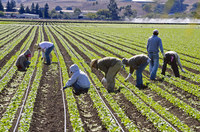
Ellen Brokaw runs a ranch in Ventura County. She told Pubic Radio International (PRI 03/06/17) that her dependence on immigrant labor to get in her crops – and the challenges she would face were undocumented labor to suddenly vanish – is mirrored across the agriculture sector of Ventura County. “There’s no way that we can take care of and pick our crops without immigrant labor,” she told PRI. Brokaw’s ranch – like others – encompasses hundreds of acres of trees that yield crops of avocados, oranges and lemons. Workers are required to climb ladders, pick the fruit by hand and transport the fruit in sacks, 80 pounds when completely full, on foot to collection bins.
Brokaw has tried to hire US-born workers, advertising widely according to rules built into a guest worker program. But Americans don’t seem to want the work. “It’s hard work, and it’s not very well-paid,” Brokaw told PRI. “Starting pay is $12 to $13 an hour. Sometimes some people apply but almost never, do any of them stay.”
Advocates of the undocumented worker cite this simple observation as the reason why the undocumented worker should be embraced, not abandoned: they accept lower-paying jobs most Americans don’t want, such as toiling in the fields, cleaning hotel rooms or serving as nannies.
Were the undocumented worker to suddenly disappear tomorrow, who would undertake those jobs? In Ventura County, for example as many as 36,000 field workers toil to bring in the citrus, avocado and strawberry crop at peak harvest season – and that’s in Ventura County alone. The Ventura County Farm Bureau told PRI that 95 percent of those workers are immigrants.
That snapshot is mirrored across the agriculture sector in the state. When all sectors are taken into context, said California state controller Betty Yee, immigrant labor is worth $180 billion alone to the state of California. While that figure is roughly ten percent of the entire gross domestic product of California – at $2.448 trillion the largest single economy of all the states in the US – it remains a vitally important aspect to the overall health and vitality of the state.
Critics suggest – and some studies have borne this out – that the prevalence of undocumented workers translates to downward pressure on wages for low-skilled workers. However, other economic studies do not support that conclusion and overall, reports PRI, economists generally agree that immigration as a whole benefits the US economy.
That’s especially true in California.
Beyond the value the undocumented worker has on the state economy, there remain signs that undocumented workers are often mistreated. Reports of unpaid wages, long hours, and poor working conditions continue to dot the legal landscape in spite of California’s progressive stance when it comes to fairness, and rights for the undocumented worker.
It’s the reason why an undocumented worker lawsuit can be of significant value not only for a plaintiff who has been treated unfairly, but also as an example to employers who are purveyors of unfairness and ill-treatment. The undocumented worker conversant with his or her value to the state economy – and the labor laws of the state – will not shy away from contacting an undocumented worker lawyer in order to pursue justice not only on his or her own behalf, but also in the interest of others.
One undocumented worker from South Korea who came into the US in 2014 on a student visa and overstayed, now works in a nightclub in Los Angeles and makes a very good wage in cash under the table – about $5,000 per month. And yet, at the same time the man is embroiled in a dispute with a former employer who underpaid him for years. The undocumented worker has been threatened with deportation – his former boss vows to report him to immigration – if he continues his pursuit of the wages which are his due.
“I’m undocumented, I don’t have papers. I don’t have a Social Security number, I don’t have a green card, so it becomes kind of natural for employers to take advantage of me,” the undocumented worker told PRI. “I just have to take it.”
But he doesn’t. An undocumented worker lawyer, conversant with employee rights in California and a state sensitive to the needs of its economy and sympathetic to the plight of the undocumented worker, can champion his case through an undocumented worker lawsuit.

Apoyo mostrado al trabajador indocumentado está creciendo en California
Palm Desert, CA: Mientras la Administración Trump continúa cazando al trabajador indocumentado de diferentes formas, sigue habiendo una creciente ola de apoyo para los trabajadores indocumentados en California y su papel en la economía del estado. No obviada por los partidarios de los trabajadores indocumentados, tanto en el estado como el país en general fue la debacle que involucró al candidato original del presidente para la Secretaria del Trabajo, Andrew Puzder, el CEO de CKE Restaurant Holdings Inc. (CKE), que admitió el empleo de una trabajadora indocumentada, y no pagar los impuestos legalmente requeridos sobre su salario.
Los expertos consideraron notable que existiera una doble norma: un intento de la Administración de destituir a los trabajadores indocumentados, mientras que supuestamente miraba hacia otro lado cuando el candidato del Presidente para ser el Secretario del Trabajo fuera descubierto empleando a una trabajadora indocumentada. Puzder y CKE también están involucrados en una demanda presentada por un trabajador discapacitado en un restaurante CKE que alega discriminación por edad y discapacidad, y despido injustificado. Esa demanda basada en California había sido programada para ir a juicio el 27 de febrero, sin embargo, la cuestión fue empujada de nuevo al 5 de junio a petición de CKE, que argumentó que no podría obtener un juicio justo debido a la controversia de la nominación de Puzder. (James Dombrowski contra CKE Restaurants Holdings Inc., Caso No. 30-2015-00803215, ante la Corte Superior del Estado de California para el Condado de Orange).
Esa preocupación se hizo discutible cuando Puzder, en vísperas de su audiencia de confirmación del Senado, retiró su nominación el mes pasado.
Mientras tanto, los comentaristas siguen sopesando sobre la trabajadora indocumentada. Dori J. Smith, escribiendo en The Desert Sun de Palm Springs (03/11/17) señaló que las redadas contra los trabajadores indocumentados han comenzado, "y se informa que los agentes están arrestando a las personas que no han cometido crímenes en lo absoluto", escribió Smith, Una residente de Palm Desert que se identifica como voluntaria con Moms Demand Action y ex presidenta de Mujeres Democráticas del Desierto. "La gran mayoría de los trabajadores indocumentados NO cometen crímenes, pero sí contribuyen a nuestras comunidades (incluyendo el pago a la Seguridad Social). Las deportaciones masivas agotarán a Estados Unidos de trabajadores, aumentarán drásticamente los costos de consumo y costarán miles de millones”.
Mientras tanto, el Mercury News (03/11/17) llegó a las calles de California y preguntó a los transeúntes sobre sus puntos de vista sobre las políticas de Trump. Rocco Biale, que dirige Rocco's Ristorante Pizzeria en Walnut Creek, hizo referencia a la trabajadora indocumentada de California entre sus comentarios.
"Parece que habrá una apertura para encontrar una manera de mantener a los millones de trabajadores indocumentados, que en mi opinión son la columna vertebral de la economía de EE.UU.", dijo Biale, de 55 años. "Tenemos que encontrar una manera de documentarlos para que ya no tengan que trabajar y vivir en las sombras.”
"Están haciendo el trabajo que la mayoría de los estadounidenses no harán o no pueden hacer".
Los datos compilados y divulgados el mes pasado sugieren que los trabajadores indocumentados representan el diez por ciento de la economía en el estado de California. Casi la mitad del complemento estatal de trabajadores agrícolas son trabajadores indocumentados, que también representan el 21 por ciento de la industria de la construcción.
No se sabe qué impacto tendrán los intentos federales de deportar a los trabajadores indocumentados, sus familias, las economías que apoyan o el potencial para un aumento en los pleitos legales de trabajadores indocumentados.
The Undocumented Worker Crisis: Trump’s Wall May Not Be Needed
San Diego, CA: A new report about the US undocumented worker supply authored by economists at the University of California San Diego puts a decidedly different spin on the rhetoric coming out of the Trump Administration, and the campaign that led Donald Trump to the White House. Their findings could have an even more lasting impact on the state of California, if their forecasts turn out to be accurate.
The undocumented worker in California has historically been subjected to a bad rap from those outside the state, or those not conversant with the importance the undocumented worker is to the economy of California. To that end, the state economy relies more heavily on the undocumented worker than most other regions – so much so that state government views the undocumented worker as someone who should be embraced and protected, rather than vilified and threatened with deportation on the next wagon train out of town.
Donald Trump campaigned hard on his vision of a looming crisis to the US economy should undocumented workers continue to flow into the country unabated and unchallenged, and upon his election has promised to curb the inflow of undocumented workers and send them packing.
California has long since worried about the effect such a policy would have on the state economy. But even more troubling, say advocates of California’s undocumented workers, are the threats to otherwise hard-working and law-abiding workers who contribute greatly to the culture and economy of the state – in jobs that might prove unsavory to most Californians – and who, with the possible exception of their undocumented status, are doing everything right.
Now comes a report that suggests claims made by the Trump campaign – rhetoric that could potentially become federal policy – could be rooted more in presumption than fact.
Economists Gordon Hanson, Chen Liu and Craig McIntosh noted data generated by the Brookings Institute reflected a steady influx of workers coming into the US from Mexico and other Latin American countries from the 1980s through the early 2000s. The restively high incomes in the US – as compared with what workers might expect to earn back home – made the US an attractive option to find work, raise a family and earn a living.
However – and this is useful information for any undocumented worker lawyer and her client battling the perception of the undocumented worker flooding into the market unabated and taking jobs away from able-bodied Americans – the low-skilled immigrant workforce has shrunk since the Recession of 2008. The immigrant workforce has also aged, and given shrinking growth in the labor supply in Mexico and other Latin American countries, there are fewer workers available to replenish the domestic undocumented labor supply in the US.
“From the rhetoric during and since the 2016 presidential election, one would think that the United States continues to experience a surge of low-skilled immigration. Although in previous decades such labor inflows certainly occurred, since the Great Recession, U.S. borders have become a far less active place when it comes to the net arrival of foreign labor,” according to the report.
The collapse in the US housing market stemming from the 2008 real estate bubble burst translated to fewer construction starts – and fewer construction jobs. What’s more, note the report authors, Latin American countries had lower fertility rates in the 1970s. That translated into fewer people attaining working age, and a corresponding dip in the migration to the US for jobs.
The report’s authors note the slowdown could remain a factor until 2050.
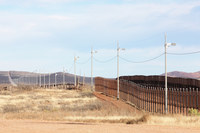
The take away message is that a further decline in undocumented workers in the US will not require any kind of a policy change from the Trump Administration in an effort to lower the numbers – or eradicate them altogether. A wall is not needed. Natural economic forces appear to have taken care of that score, for decades to come.
In the meantime California is hanging onto its supply of undocumented workers for dear life, knowing their importance to the state economy. A state that values the undocumented worker remains an important ally for any undocumented worker facing the prospect of an undocumented worker lawsuit due to unfair treatment on the part of an employer.
‘Along the Watchtower: The Rise and Fall of US Low-Skilled Immigration,’ was published last month by The Brookings Institute.

Support Shown to the Undocumented Worker Growing in California
Palm Desert, CA: As the Trump Administration continues to target, in various efforts the undocumented worker, there remains a growing wave of support for undocumented workers in California and their role in the economy of the state. Not lost on supporters of undocumented workers both in the state and the country overall is the debacle that involved the President’s original nominee for Labor Secretary, Andrew Puzder, the CEO of CKE Restaurant Holdings Inc. (CKE), who admitted employing an undocumented worker, and failing to pay legally-required taxes on her wages.
Pundits found it remarkable that such a double-standard existed: an Administration intent on ousting undocumented workers, while allegedly looking the other way when the President’s nominee for Labor Secretary was revealed as employing an undocumented worker himself. Puzder and CKE are also embroiled in a lawsuit brought by a disabled worker at a CKE restaurant who alleges age and disability discrimination, and wrongful termination. That California-based lawsuit had been scheduled to go to trial February 27, however the matter was pushed back to June 5 at the request of CKE, which argued it couldn’t get a fair trial given the contentiousness of Puzder’s nomination. (James Dombrowski v. CKE Restaurants Holdings Inc., Case No. 30-2015-00803215, before the Superior Court of the State of California for the County of Orange).
That concern was rendered moot when Puzder, on the eve of his Senate Confirmation Hearing, withdrew his nomination last month.
Meanwhile, commentators are continuing to weigh in on the undocumented worker. Dori J. Smith, writing in The Desert Sun of Palm Springs (03/11/17) noted that raids on the undocumented workers have begun, “and it is reported that agents are arresting people who have committed zero crimes,” wrote Smith, a resident of Palm Desert who identifies herself as a volunteer with Moms Demand Action and former president of Democratic Women of the Desert. “The vast majority of undocumented workers do NOT commit crimes, yet they do contribute to our communities (including paying into Social Security). Mass deportations will deplete America of workers, will dramatically increase consumer costs, and will cost billions.”
Meanwhile, the Mercury News (03/11/17) hit the streets in California and queried passersby on their views of Trump policies. Rocco Biale, who runs Rocco’s Ristorante Pizzeria in Walnut Creek, referenced the California undocumented worker amongst his comments.
“It appears as though there will be an opening to find a way to keep the millions of undocumented workers, who in my opinion are the backbone of the US economy,” said Biale, 55. “We need to find a way to document them so they no longer have to work and live in the shadows.
“They are doing the work most Americans won’t, or can’t do.”
Data compiled and released last month suggests undocumented workers support ten percent of the economy in the State of California. Almost half of the state complement of agriculture workers is undocumented workers, who also comprise 21 percent of the construction industry.
It is not known what impact federal attempts to round up undocumented workers will have on workers, their families, the economies they support, or the potential for a spike in undocumented worker lawsuits.



About . TOS . Privacy . Disclaimer . Contact . Advertise . Member Login
This work is licensed under a Creative Commons Attribution-NoDerivs 3.0 Unported License ©2026 Online Legal Media. All rights reserved.
Visit other Online Legal Media Websites: