Undocumented Worker News
Trump Crackdown on Illegal Immigrants Puts California at Odds with the Feds
Sacramento, CA: While the undocumented worker would feel understandably vulnerable in the face of the most recent crackdown by the Trump Administration on undocumented immigrants, California’s undocumented workers can at least take heart in the existence of various state statutes and laws that protect workers, including updates to laws that came into effect the same month as President Trump was sworn in. Undocumented workers also make up an important part of the state economy overall, translating into a vested interest on the part of the State in the undocumented worker.
The rhetoric lobbed out during both the race for the Republican nomination, and the eventual Presidential campaign, had already put the State of California at odds with the incoming Administration’s policies. The most recent announcement that Trump seeks to round up as many as 11 million illegal immigrants and undocumented workers across the US – without criminal records and in some cases just for parking infractions – needlessly threatens both the undocumented worker in the State, and the economy of California overall.
It is still too early to tell if the State of California would ever consider calling up its undocumented worker lawyer and filing an undocumented worker lawsuit against the Feds in an effort to protect the state economy, but it remains a compelling thought.
Earlier this month the Los Angeles Times (02/06/17) put the value of undocumented workers into perspective: in sum, ten percent of the California economy is supported by undocumented workers and comprises one-tenth of the state labor force, according to statistics compiled by the University of Southern California (USC).
Agriculture, construction and the hospitality industries would be hit particularly hard were the Trump ban on immigrants and undocumented workers achieve full press: nearly half of the agriculture employment sector in the state – 45 percent – is comprised of undocumented workers. Data collected by the USC Center for the Study of Immigrant Integration noted that 21 percent of construction workers in the state are undocumented.
The LA Times noted that the restaurant industry would be hit particularly hard, in that restaurants are already grappling with a labor shortage. New immigration policies at the federal level would make things even tighter – although it remains to be seen what effect federal policy would have on state policy.
There is little question, by virtue of pre-existing as well as updated laws and statutes protecting the undocumented worker, that California values its undocumented residents and is fully aware of both their value to the state economy, and the hit to economic output were those undocumented workers suddenly to go away: economic output in the state could be reduced, at minimum, by nine percent.
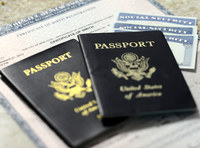
Meanwhile, some state laws and statutes protecting undocumented workers in California have either been updated, augmented or implemented as of January 1 of this year. Amongst those provisions are Senate Bill 1001, which includes a provision under the California Fair Housing and Employment Act for a $10,000 penalty for E-Verify violations on the part of any employer who discriminates against drivers licenses issued to undocumented workers – or requests more, or different documents than are required under federal law. Employers are also prohibited from demanding to see a worker’s US Passport.
Also taking effect this year is Senate Bill 10 Health Care Coverage: Immigration Status, an amendment that would allow undocumented immigrants and deferred action for childhood arrivals (DACA) recipients, the right and freedom to purchase a health plan through Covered California.
Not only does the state of California value its undocumented workers, the state also wants them to stay healthy – and educated: SB-1139, known by some as the ‘Medical Dreamers Opportunity Act,’ would prohibit a student without lawful immigrant status from being denied admission to a school of his, or her choice based upon citizenship or immigration status.
Any undocumented worker who alleges any discrimination, unfair practice or violation can, under Senate Bill 1001: Employment Unfair Practices file a complaint – with their undocumented worker lawyer in tow – through California Division of Labor Standards Enforcement.
The message from California to the Trump Administration remains the same: undocumented workers in the state are valued, and are integral to the state economy.
Los trabajadores indocumentados de California tienen un aliado: el Estado
Davis, CA: A pocas semanas de la inauguración del presidente electo Donald J. Trump, el destino de los trabajadores indocumentados en California sigue siendo incierto si el Sr. Trump decide cumplir sus promesas de campaña y las convierte en políticas reales una vez se instale en la Oficina Oval. La reciente postura del Sr. Trump sobre la instalación de una planta de fabricación en México por Ford Motor Co. resultó en la cancelación de dicha construcción cuando Trump insinuó fuertemente que Ford enfrentaría impuestos masivos por traer carros construidos en México a través de la frontera hacia Estados Unidos.
Los trabajadores indocumentados en los Estados Unidos han soportado la mayor parte de la posición pro-estadounidense de Trump. Esto es especialmente preocupante para California, dado el gran número de trabajadores indocumentados en el estado y la importancia que tienen para la economía de California. California ya ha emitido declaraciones apoyando a sus trabajadores indocumentados, y su valor para la salud financiera del estado. Sin embargo, la Administración Trump sigue siendo una amenaza inminente si las promesas de campaña se llevan a cabo.
Dicho esto, Kevin R. Johnson, decano de la Universidad de California, Davis School of Law y Mabie-Apallas Profesor de Derecho de Interés Público y Estudios Chicanos, escribiendo en The Sacramento Bee (27/11/16) afirmó que una deportación masiva de trabajadores indocumentados está llena de obstáculos legales.
Con respecto a la promesa de la campaña del presidente electo Trump de capturar y deportar de dos a tres millones de inmigrantes indocumentados, centrándose en los delincuentes, existe alguna duda de si ese esfuerzo se limitará a los culpables de crímenes mayores o abarcará a cualquier indocumentado detenido incluso por una infracción menor.
La revista Sacramento Bee hizo referencia a la investigación que sugiere que los inmigrantes indocumentados son, de hecho, más respetuosos de la ley en general que sus homólogos nacidos en Estados Unidos.
Las incursiones en el lugar de trabajo, similares a un esfuerzo realizado durante la administración de George W. Bush en 2008, podrían ser etiquetadas con reclamos de violaciones de derechos civiles contra trabajadores. Eso es lo que sucedió cuando la fábrica de Agriprocessors Inc. ubicada en Postville, Iowa, fue allanada y cerca de 400 trabajadores inmigrantes fueron arrestados.
También se ha hablado, de acuerdo con The Bee, de promulgar una legislación que requiera que todos los empleadores hagan uso de la base de datos de E-Verify, un esfuerzo federal para la verificación de empleados que es estrictamente voluntario. Ha habido propuestas del equipo de transición de Trump para que el uso de E-Verify se haga obligatorio. La base de datos, según diversas fuentes, es propensa a errores. Ha habido algunos casos en los que los trabajadores han sido despedidos por su empleador, a pesar de que legalmente tienen derecho a trabajar en los EE.UU.
Finalmente, Kevin R. Johnson afirma, en los comentarios que aparecen en The Bee, que cualquier final al llamado proceso de detención "catch-and-release" podría resultar en demandas de trabajadores indocumentados en California. En la actualidad, los trabajadores detenidos por falta de documentación son elegibles para la liberación mediante la colocación de bonos. Poner fin a la práctica de la "vinculación hacia fuera" podría atrapar a un trabajador indocumentado de California en un bucle legal, y dejarlo en una custodia que podría durar incluso años, dado el enorme retraso de casos actualmente experimentados por los tribunales de inmigración.
Tal práctica podría aumentar la probabilidad de demandas de trabajadores indocumentados, cuyas resoluciones podrían tomar años.
dos por sus contribuciones a la economía del estado.
California Undocumented Workers have an Ally in the State
Davis, CA: With the inauguration of President-elect Donald J. Trump mere weeks away, the fate of undocumented workers in California remains tenuous should Mr. Trump carry his campaign rhetoric forward to actual policy once installed in the Oval Office. Mr. Trump’s recent stance on the planned installation of a manufacturing plant in Mexico by Ford Motor Co. resulted in the cancellation of those plans when Trump hinted strongly that Ford would face massive taxation to bring Mexican-built cars across the border into the US.
Undocumented workers in the US have borne much the brunt of Trump’s pro-American position. This is especially troubling for California, given the large number of undocumented workers in the state and the importance they have to the California economy. California has already issued statements supporting its undocumented workers, and their value to the financial health of the state. However, the Trump Administration remains a looming threat if campaign promises are carried out.
That said, Kevin R. Johnson, dean of the University of California, Davis School of Law and Mabie-Apallas Professor of Public Interest Law and Chicana/o Studies, writing in The Sacramento Bee (11/27/16) muses that any attempt at a massive deportation of undocumented workers is fraught with obstacles.
With regard to President-elect Trump’s campaign promise to round up and deport two, to three million undocumented immigrants with a focus on criminals, there is some question as to whether that effort will be restricted to those guilty of major crimes, or encompass any undocumented worker arrested for even a minor infraction.
The Bee referenced research that suggests undocumented immigrants are, in fact more law-abiding in general than their US-born counterparts.
Workplace raids, akin to an effort undertaken during the George W. Bush Administration in 2008, could be tagged with claims of civil right violations against workers. That’s what happened when the Agriprocessors Inc. manufacturing facility located in Postville, Iowa was raided and nearly 400 immigrant workers were arrested.
There has also been talk, according to The Bee, of enacting legislation requiring all employers to make use of the E-Verify database, a federal effort towards employee verification that is strictly voluntary. There have been overtures from the Trump transition team that use of E-Verify could be made mandatory. The database, it has been reported, is error-prone. There have reportedly been some instances where workers have been discharged by their employer, even though they are legally entitled to work in the US.
Finally, muses Kevin R. Johnson, in comments appearing in The Bee, any end to the so-called “catch-and-release” detention process could result in California undocumented worker lawsuits. Currently, workers detained for lack of documentation are eligible for release by posting bond. Ending the practice of “bonding out” could ensnare a California undocumented worker in custody that could last for years, given the huge backlog of cases currently experienced by immigration courts.
Such a practice could increase the likelihood of undocumented worker lawsuits, the resolutions of which could take years.
In a perfect world, all workers would be documented. In reality, the state of California has thrown its support behind undocumented workers for their contributions to the state economy.
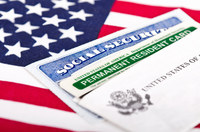
California Vows to Protect Undocumented Workers
Sacramento, CA: Following Donald Trump's election as US president, lawmakers have vowed to protect California's undocumented workers and other illegal immigrants from deportation. The move comes following promises from Trump to deport or incarcerate at least eleven million "criminal" immigrants. The California State Legislature, however, has passed resolutions that would challenge immigration policies that unfairly target or harm undocumented workers.

Undocumented Workers Have Rights, Represent Value to California Economy
Sacramento, CA: While undocumented workers and illegal immigrants have been taking a pounding (primarily from the Republican candidate) in the US Presidential election, the fact remains that undocumented workers in California make up ten percent of the State’s overall work force and represents a contribution of $130 billion to the gross domestic product in the State.
While those numbers are two years old, stemming from a joint study by the University of Southern California and the California Immigrant Policy Center (CIPC), the numbers reflect the importance undocumented workers bring to the California economy – especially those industries such as agriculture which depend heavily on the undocumented worker.
Undocumented workers also have status, with certain rights under the California Labor Code, and free to participate in litigation against defendants who stand accused of mistreatment. To that end, a California wage and hour suit was brought against the operator of a California restaurant by two allegedly undocumented workers attempting to hold their employer accountable for nonpayment of wages.
The plaintiffs in the case are Misael and Sergio Avila; the defendant, Naimat Kadah International. A California magistrate in district court awarded the plaintiffs $33,000 in back wages for overtime without preconditions for payment. While the original ruling has since come under a subsequent ruling by the Ninth Circuit with regard to the inclusion of payroll taxes, the fact remains that courts take allegations of wrongdoing on the part of undocumented workers with equal fervor to those of documented works – or for that matter, native Californians and citizens of the State.
It should be noted that the original settlement was struck in 2012. Following several months of waiting for the settlement to be paid, the plaintiffs filed a motion to have the settlement enforced.
The case is Misael Avila, et al v. Naimat Kadah International, et al, Case No. 13-17075, in US Court of Appeals for the Ninth Circuit.
Donald Trump, in both his campaign for the Republican nomination and more recently as the Republican Presidential nominee, has maligned the value of undocumented workers, casting them as villains taking jobs away from Americans and US citizens. The Trump campaign advocates deportation, and the campaign also questions the value of immigration. Democratic nominee Hillary Clinton, in turn, accused the Trump campaign of hypocrisy given various data that shows undocumented workers were part of a larger, unionized work force hired to raze a building in Manhattan for the eventual construction of Trump Tower.
The Tampa Bay Times (10/20/16), which rated Hilary Clinton’s claims in this regard as factual, noted that undocumented Polish workers were hired to toil alongside unionized workers to flesh out the demolition work force. According to the Tampa Bay Times, the undocumented workers were paid ‘off the books’ at a rate of $4 to $5 per hour for 12-hour daily shifts, without overtime pay.
While deportations do occur in California – the CIPC study in 2014 noted that some 117,000 deportations were carried out in recent years in the State – the fact remains that undocumented workers are viewed as integral to the economy of the state, with protections of workers’ rights under California labor law advancing on an ongoing basis.

In Praise of the California Undocumented Worker
Washington, DC: The unbridled rhetoric that remains the overriding flavor of the Donald Trump Republican campaign is being tested in the highest court in the land following a hearing of legal arguments in United States v. Texas in April that will not only seal the fate of President Obama’s troubled executive actions on immigration, but will either fan the flames or douse the fire of the presumptive Republican nominee.
That decision has yet to be announced. However, any undocumented worker fearful of what may be coming can take heart in reassurances that in California, at least, various leaders are of the opinion that undocumented workers make the state more prosperous, and are urging the US Supreme Court to uphold Barak Obama’s executive action.
This position is good news for any undocumented worker who feels threatened in any way by an employer, or is disinclined to pursue a legal challenge for unfair treatment due to the rhetoric currently resounding throughout the national Republican landscape.
It’s a compelling issue, given that California is home to a little under one-third of the nation’s entire complement of undocumented workers: three million undocumented workers reside and work in the state of California alone.
A group comprised of state leaders in business, education, law enforcement and the religious community submitted a brief to the US Supreme Court for arguments heard on April 18 (a decision has yet to be brought down).
“Representing just seven percent of the state’s population, [undocumented workers] make up 34 percent of its farm workers, 22 percent of its production workers and 21 percent of its construction workers according to one estimate,” the group outlined in a brief filed with the court. “Today, the undocumented workforce alone contributes $130 billion to California’s gross domestic product (GDP) - an amount larger than the entire respective GDPs of 19 other states.”
This is good news for any undocumented worker who feels the cold shoulder coming from the Republican side - and from anyone who opines that the undocumented worker comprises a threat to Americans and wants them all banished. To those who are challenging the President’s executive action on immigration, supporters of the undocumented worker in California take the position that undocumented workers make the state stronger on a number of fronts, including manufacturing. To that end, the state of California remains the largest manufacturing hub in the entire country.
“It’s easy to get caught up in the white-hot political debate over this issue,” said Jot Condie, chief executive of the California Restaurant Association, in comments supporting the state’s submission to the Court. “But for us, this simply comes down to people - our fellow churchgoers, classmates, neighbors and hard-working individuals. Millions of loving families hang in the balance. Kicking the can on immigration reform can no longer be an option.”
The President’s executive action, first proposed in 2014, has been the subject of legal challenges, especially in Texas, which has taken the lead in a lawsuit involving leaders from various other Republican-led states claiming the President did not have the legal authority to enact the changes to immigration his executive action proposed.
A judge in Texas agreed, effectively blocking the proposed law. The US Supreme Court will make the final determination, and do so likely before the fall General Election.
Obama’s Deferred Action for Parents of Americans would afford deportation relief for some 1.1 million undocumented workers in California who are parents of legal children, born in the United States.
Stay tuned…
Undocumented Workers Entitled to Job Protections
Sacramento, CA: While immigration is at the forefront of discussions during the presidential campaign, the plight of undocumented workers and their legal struggles are also an important talking point. And although states may attempt to skirt federal laws - and employers may attempt to ignore federal laws entirely - undocumented workers in California and other states are entitled to some protections, to ensure unethical employers do not take advantage of them.
In 2014, the California Supreme Court ruled in favor of Vicente Salas, who filed a lawsuit against his employer, alleging he was fired in retaliation for filing a workers’ compensation claim and did not have his disability accommodated after he was injured on the job. The Los Angeles Times (6/26/14) reports Salas was working for Sierra Chemical Co., and injured his back while working.
Salas, who was an undocumented worker, got his job by using someone else’s Social Security number. Initially, his lawsuit was dismissed but the state high court found that Salas could sue for back pay until the time his employer became aware he was working illegally.
Federal immigration law makes it illegal for an undocumented worker to use false documents to get a job, but does not prevent employers from paying employees for work done while the employer does not know about the worker’s immigration status, the court found.
According to the court, California state law protects all workers, and they are entitled to protections, regardless of their immigration status. Unfortunately, many undocumented workers are not aware of this protection, and become victim to unethical employers who use the situation to underpay and mistreat employees.
A 2014 report from the Pew Research Center (11/18/14) found that California is home to the most undocumented immigrants, with nearly 2.5 million living in that state. That means that undocumented immigrants make up just over six percent of California’s population. The same study suggests that almost one-tenth of California workers are undocumented.
Across the United States, there are around 11.2 million undocumented immigrants. A 2009 study called “Broken Laws, Unprotected Workers” (found online at nelp.org) found rampant violations of federal wage and hour laws - including minimum wage, overtime and rest break violations - among workers in low-wage industries.
Undocumented workers are entitled to wage and other employment protections. If their rights are violated, they may be eligible to file a lawsuit against their employer.

A Hard Life, Unfairness the Bastion of the California Undocumented Worker
San Francisco, CA: Julieta Yang’s voice is only one in the wilderness that is the undocumented worker in California. But the single mother of three who hails from the Philippines is an example of the challenges and hurdles faced by the undocumented worker in the state of California.
A sector, by the way, that is integral to the state economy. And yet, as important as they are, undocumented workers are maligned, ridiculed, often abused and frequently underpaid. It remains a sad reality that many employers show more kindness to their pets, forgetting that the undocumented worker is a human being.
According to The Guardian (11/15/15), Yang has been an undocumented worker for some 20 years. Separated from her children, who remain in the Philippines, Yang regularly sends money home to her kids in spite of barely making enough to live on herself.
Since 2008, Yang had been working for Uber executive Cameron Poetzscher and his partner Varsha Rao, head of global operations for Airbnb. Based initially in Singapore, Yang found herself in San Francisco when her employers relocated to the United States in 2013.
No longer employed by the couple, Yang is currently embroiled in a lawsuit against her former employers amidst allegations of abuse and a situation where she was chronically underpaid. “I served the whole family,” she told The Guardian. “I did their laundry, I cleaned their home. I did whatever they asked me to do at any time of the day…despite that, they treated me with great disrespect.”
Yang’s role was ostensibly as a live-in nanny in her employer’s San Francisco home. In her California undocumented worker lawsuit, Yang asserts she was paid a flat rate based on five hours of work per day. In reality, or so it is alleged, Yang toiled for nine hours per day for six consecutive days each week. Yang also alleges she was not provided regular meal breaks or rest periods, and was not paid overtime, amongst other allegations.
In her lawsuit, however, Yang faces an uphill battle in that her allegations are founded within the four walls of a private home in the absence of witnesses. Thus it comes down to her word against those of her former employers. Carole Vigne, an attorney and the director of the Wage Protection Program at the Legal Aid Society Employment Law Center in San Francisco, says the burden is on the worker to prove that the violations did occur.
“I’ve seen employers doctor time sheets and forge signatures of workers to disprove allegations of wage theft,” Vigne told The Guardian. “People go to extreme lengths to protect themselves from the allegations and the workers have to fight that.”
Yang has no idea what her future holds. But she feels an overriding need to speak out on behalf of all undocumented workers like her.
She has plenty of company.
According to a 2012 survey by the National Domestic Workers Alliance, 23 percent of almost 2,100 nannies, caregivers and housecleaners were paid below the state minimum wage, 35 percent worked long hours without breaks, and 19 percent reported being threatened, insulted or verbally abused. The survey shows that live-in domestic workers were even worse off, with 67 percent paid below the state minimum wage and 36 percent threatened or verbally abused.
Domestic workers routinely face wage theft, long work hours without rest, hostile work environments and sexual harassment on the job, according to Katie Joaquin the campaign coordinator for the California Domestic Workers Coalition. Immigrants can be even more vulnerable to exploitation.
It’s important for undocumented workers in California - a big part of the state’s economy - to fight back against abuse.
Yang’s voice is just one cry in the wilderness. She’s hoping her cry will grow to a chorus in due course.
Undocumented Workers Integral to California Economy
Camarillo, CA: A decision in a wage and hour lawsuit in New York not only carries positive implications for any undocumented worker in the state of California who may feel wronged by an employer, it also lends itself to the depth and breadth of the undocumented workforce in the Golden state.
The New York lawsuit was David Rosas et al v. Alice’s Tea Cup, LLC, Case No. 1:14-cv-08788-JCF, filed July 6, 2015 in the US District Court for the Southern District of New York. The plaintiffs brought wage and hour claims against their employer, citing violations to the Fair Labor Standards Act (FLSA) and other labor laws recognized by the state of New York. The defendant came back with a request for the plaintiffs to verify their immigration status, which the plaintiffs fought on grounds that immigration status was irrelevant to the matters at hand.
The judge in the case agreed, noting in his decision that the risk of injury to the plaintiffs and the potential for intimidation outweighed the probative value of revealing immigration status for reasons of credibility. To wit, US Magistrate Judge James C. Francis IV in his decision noted that “federal courts have made clear that the protections of the FLSA are available to citizens and undocumented workers alike.”
Such a decision translates into a positive for both the undocumented worker in the state of California, and the state economy in general. That’s because undocumented workers - especially those who work in the agricultural community - make up a significant portion of the state economy.
The Ventura County Star (9/13/15) reports that agriculture is a $2 billion industry in Ventura County. To that end, the Central Coast Alliance United for a Sustainable Economy (CAUSE) reports that an estimated 15,000 undocumented immigrants work the fields in Ventura County alone. Using data from the Census Bureau and Public Policy Institute of California, CAUSE estimates there are more than 72,000 undocumented immigrants in the county, about 9 percent of the population.
That’s a significant number. “To put that into context, that’s more than the population of the city of Camarillo,” said Maricela Morales, executive director of CAUSE, in comments published in the Star. “What if we woke up and the entire population of Camarillo was gone? The impact on our county economically and the social fabric of our community...it would be devastating.”
The issue has relevance given the crosshairs of rhetoric undocumented workers appear to be caught within - especially in the context of the Republican nomination debates, and various positions taken by some of the candidates and one in particular who has pledged to deport all undocumented workers from whence they came. This, in spite of the fact that the FLSA and related agencies in the state of California specifically reference the undocumented worker and affords them protections by way of wage and hour laws that protect all workers in the state of California, even undocumented workers regardless of whether or not they are legally authorized to work in the United States.
The undocumented worker who may feel maligned in the state would no doubt be cheered by a recent settlement in a class-action lawsuit reached with the help of the United Farm Workers (UFW) union, which partnered with table grape workers at Sunview Vineyards. According to Kerry Kennedy, president of Robert F. Kennedy Human Rights who was writing in the Sacramento Bee (9/24/15), the settlement was worth $4.5 million.
Frank Barajas, a history professor at California State University Channel Islands, noted in the Star that “the majority of people working in our fields are undocumented,” he said, adding that mass deportations such as those recently debated amongst the Republican nominees would translate to “a complete collapse of our state economy.”
The takeaway for the undocumented worker: you have rights, both federally and in the state of California. And your presence is important to and adds value to the state economy. Any undocumented worker or group of workers who suspect violations of state wage and hour laws, or other statutes both state-centric and federal under the FLSA, would be encouraged to take advantage of rights and protections afforded you and fight for your due.

California Labor Laws Extend to Undocumented Workers
The truth is, however, even undocumented workers can file complaints about workplace violations without having their residency called into question. A 2002 California law provides undocumented workers full protection under state and federal law. In other words, if a worker who does not have legal documentation has his or her rights violated by an employer, he or she can file a claim against the employer.
This includes violations of discrimination laws. In 2014, according to the Los Angeles Times (6/26/14), California’s Supreme Court ruled that an undocumented worker who alleged he suffered disability discrimination was eligible for protection. Vicente Salas filed a discrimination lawsuit against his employer, alleging he was retaliated against for filing a workers’ compensation claim. The workers’ compensation claim was filed when Salas injured his back while at work.
Although the lawsuit was dismissed by two lower courts - after the employer found out allegedly Salas used someone else’s Social Security number to obtain employment - California’s Supreme Court found Salas could sue for back pay. In its ruling, the court noted the employer had to pay legally mandated wages to employees. Job protections extend to all workers “regardless of immigration status,” the Supreme Court wrote.
Many immigrants who enter the U.S illegally do not speak up about on-the-job violations because they are afraid of deportation. This means they are vulnerable to workplace abuses, although they have the same rights as all other employees.
Among the employment protections undocumented workers are entitled to are minimum wage, overtime, workplace safety - including protection from harassment and assault - certain discrimination laws and retaliation. Furthermore, it is illegal for an employer to report or threaten to report undocumented workers in retaliation for asserting their rights. If these rights are violated, workers can file claims against their employers.



About . TOS . Privacy . Disclaimer . Contact . Advertise . Member Login
This work is licensed under a Creative Commons Attribution-NoDerivs 3.0 Unported License ©2026 Online Legal Media. All rights reserved.
Visit other Online Legal Media Websites: