Transportation News

Class-Action Status Given to Apple Wage and Hour Lawsuit
The initial lawsuit - which was dismissed in 2014 after a Supreme Court decision in a different case - was refiled. It alleges that because the security check is for the sole benefit of Apple and is done in all Apple retail stores across the US, that employees should be paid. Typically, employees undergo security screening after they have clocked out for their meal break or at the end of the day, meaning any time spent waiting for a manager to be free to do a check is unpaid time.
According to the initial lawsuit, that time can add up. For an employee leaving twice during a shift, the wait can mean anywhere from 10 to 15 unpaid minutes. For full-time employees, that adds up to uncompensated overtime.
The lawsuit calls Apple’s conduct regarding the unpaid security checks “illegal and improper” and says employees throughout the US are owed millions of dollars in wages and overtime. Amanda Frlekin, a named plaintiff in the original lawsuit, recorded between 10 and 15 uncompensated minutes during every shift, adding up to between 50 and 90 minutes over the course of the week.
“This daily 10-15 minute uncompensated waiting time during security checks was done in order to undergo searches for possible contraband and/or pilferage of inventory,” the lawsuit alleges. “Because such screening is designed to prevent and deter employee theft, a concern that stems from the nature of the employee’s work (specifically, their access to high value electronics and merchandise), the security checks and consequential wait time are necessary to the employee’s primary work as retail Specialists and done solely for Apple’s benefit.”
Workers are allegedly prohibited from leaving the store prior to a screening, and employees who refuse the security checks can face disciplinary action, including termination.
Apple has argued that the time spent undergoing bag checks is negligible and therefore should not be compensated. It also argues that not all managers conduct security screenings.

Uber Driver Is Employee, according to California Labor Laws
Last month, the start-up cleaning company Homejoy threw in the towel. With four lawsuits fighting over misclassification - like Uber, workers were classified as independent contractors rather than employees - CEO Adora Cheung said the company wasn’t able to raise funding, according to the San Francisco Chronicle.
The California Labor Commissioner’s Office on June 17, 2015 said that Uber must classify its drivers as employees rather than independent contractors. As employees, the drivers would be entitled to minimum wage, meal breaks and overtime (many drivers say they typically work 12-hour days), reimbursement for expenses such as gas and car maintenance, and other benefits and protections.
The ruling by the California Labor Commissioner’s Office came about in a claim brought by an Uber driver. San Francisco-based Barbara Ann Berwick was awarded $4,000 in expenses, which Uber is appealing. If the ruling holds, other Uber drivers could claim employee wages and benefits.
Uber on July 9 filed a motion to oppose a class-action lawsuit filed in California’s Northern District Court claiming that more than 160,000 of its drivers should be classified as employees and are therefore misclassified. Uber argues that, should the class-action suit be successful, it “could force Uber to restructure its entire business model.” It could also have a ripple effect across the burgeoning start-up culture, leading other companies with similar structures to recalibrate,” according to TIME.
On the heels of the Uber California lawsuits, Toronto taxi drivers are launching a class-action lawsuit against Uber, seeking more than $307 million (USD). Reuters reported that the proposed case covers all drivers and taxi companies in Ontario.
And Uber is also up against Congress, which wants to create some kind of a “benefits safety net.” In her first economic policy speech, Hillary Clinton said that “This ‘on demand’ or so-called ‘gig economy’ is creating exciting opportunities and unleashing innovation but it’s also raising hard questions about workplace protections and what a good job will look like in the future.” According to The Hill, Senator Richard Blumenthal (D-Conn.) took her comment one step further, saying that misclassifying workers is
Labor attorney Shannon Liss-Riordan said that two California misclassification cases are headed toward trial. She believes that companies such as Uber will continue to be successful if they reclassify their drivers as employees and assure that the drivers are earning at least minimum wage. Start-up companies argue that independent contractors have more flexibility and can be their own bosses, but as Liss-Riordan points out, employers also give their employees flexibility, and it is a growing trend.
One estimate has Uber valued at $41.2 billion, making it the most valuable start-up in the US.
Will Paid Sick Leave Spur California Labor Lawsuits?
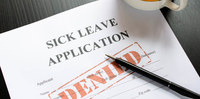
If an employer denies an employee accrued paid sick leave and/or retaliates in any way when an employee tries to use paid sick leave, that employee can now file a labor law complaint with the California Labor Commissioner’s Office. After a complaint is filed, the Commissioner’s Office has the authority to investigate the complaint and determine if damages and penalties will be awarded.
Many of those 6.5 million workers (about three-quarters of the state’s low-wage workers) who will benefit from this new law for the first time are parents who have to take care of their children. Too often children would show up at school sick because the (often single) parent feared getting fired if they didn’t show up at work. Having to send a sick child to school or leaving a sick child at home alone is heart-wrenching. Hillary Clinton said that no one should have “to choose between keeping a paycheck and caring for a new baby or a sick relative.”
And many employees who were never given paid sick leave, or any paid time off, are workers earning minimum wage. People in restaurants and retail who are barely scraping by and go to work sick (yes, the person who cooked your food could have the flu). Assembly member Lorena Gonzalez, D-San Diego, said that “We just want employers to know it’s not an option, and employees can’t be penalized for using their paid sick days. They can’t be fired or have their hours cut. It’s important for them to know they have the right to earn these paid sick days.”
The new law is complicated, and another reason why paid sick leave complaints may spur lawsuits. But every employee should know their rights and exactly what is covered. In a nutshell, for each 30 hours that somebody works, they get one hour of sick leave. The AB 1522 says that businesses will be required to show how many hours of paid sick leave workers have earned on their pay stubs. Employers can either choose to have workers accrue one hour of paid sick leave for every 30 hours worked, or grant employees three days of paid sick leave upfront, to be used within a one-year period.
Every business is required to provide this benefit, even if it only has one employee. Whenever possible, employees must provide “reasonable advance notification” orally or in writing of their desire to use the leave when the need for sick leave is foreseeable. Of course you can’t always know beforehand when you will be sick but you can also use sick leave for the following:
• the diagnosis, care or treatment of an existing health condition
• the preventive care of an employee
• an employee’s personal family member (including spouses, registered domestic partners, children, parents, grandparents, and siblings)
• employees who are victims of domestic violence, sexual assault, or stalking
If they haven’t done so already, employers might want to familiarize themselves with the new paid sick leave law and revise their policies and procedures. And employees shouldn’t rely on their employers to explain their benefits.

California Labor Paid Sick Leave Laws Clarified, Still Complicated
In sum, The Healthy Workplaces, Healthy Families Act of 2014 (AB 1522) was signed into law by Governor Jerry Brown last year for a planned two-stage implementation at the beginning of 2015. Various changes to record keeping and the posting of notices were brought in at the first of the year, followed by the implementation of changes to accruals and reporting on July 1.
The aforementioned changes to the California labor code were part of the original adoption of AB 1522. However, employers found the rollout somewhat overwhelming, requiring an update to AB 1522 in an effort to straighten out some of the confusion.
That update came in the form of AB 304, a bill that Governor Brown swiftly signed into law on July 14 and is effective immediately. The amendments provide some clarification with regard to compliance over payments, provisions for time off and so on. The clarifications are important not only for the employer - in order to properly comply - but also the employee, for whom a basic understanding of the new provisions is important in order to identify whether or not an employer is properly conforming to the new guidelines.
One of the clarifications with regard to California and labor law stemming from the quick passage of AB 304 has to do with record keeping: while an employer can know the reason(s) and purposes for which an employee uses paid sick time, there is no requirement in record-keeping protocols for maintaining documentation to that end.
Were an employer to maintain documentation with regard to the purposes for paid sick leave, or were an employee to find himself getting stiffed on sick pay and sick leave, he needs to be able to identify incidents of noncompliance in order to initiate and pursue a California labor lawsuit, as required.
AB 304 clarifies protocols for calculating paid sick leave, and the employer now has two options for doing so: 1) a calculation formula akin to the regular rate of pay for overtime calculation for the workweek in which paid sick time is used, and 2) the original calculation protocol dividing the employee’s total wages, not including overtime premium pay, by the employee’s total hours worked in the full pay periods of the prior 90 days of employment.
The July 14th amendment also provides for alternate accrual methods beyond the formula of one hour for each 30 hours worked, provided the accrual is on a regular basis and the employee will have 24 hours of paid sick leave available by the 120th calendar day of employment.
There is also clarification, for the purposes of California labor employment law, with regard to the right an employer has in limiting an employee’s use of paid sick days to 24 hours or 3 days either: (1) in each year of employment (by anniversary year, for example); or (2) in each calendar year; or (3) in any specified 12-month period.
Among other provisions in AB 304 is clarification over the requirement that an employee, to be eligible for paid sick leave, must be in a position to have worked for the same employer for 30 days, as opposed to simply working for any employer in the state of California.
There is a somewhat complicated grandfather clause for those employees who were provided paid sick leave or paid time off prior to the implementation of AB 1522 at the first of the year, and for whom a different method for accruing sick time may have been used. This clause allows for a more gradual accrual, provided the employee accrues eight hours of paid sick leave in the first three months of employment and was eligible to earn 24 hours of sick leave or paid time off within nine months of employment.
At the end of the day, California state labor laws are intended to level the playing field and provide fairness for the employee. A mutual understanding of California employee labor law is an important prerequisite for the employer to properly implement new laws, and for the employee to understand when those statutes are being accidentally or purposefully circumvented…

Uber Responds to California Labor Lawsuit with Motion
Uber’s drivers filed the class-action lawsuit (Lyft faces a similar one) alleging that the more than 160,000 Uber drivers in California should be classified as employees and not as independent contractors. Uber - the on-demand car service company - argues it is simply a software company; riders download the Uber app and use it to hire a car service. Drivers respond to the rider’s request and are paid for transporting riders.
Among the allegations in the lawsuit are that drivers are eligible for statutory protections, including forwarding the entire amount of any gratuity given to drivers.
Previously in the lawsuit, Judge Edward Chen said he was not convinced that Uber is simply a software platform, noting that Uber would not make money without drivers and sets the drivers’ pay rate. Judge Chen wrote when denying Uber’s motion for summary judgment that “the Court first concludes that Plaintiffs are Uber’s presumptive employees because they ‘perform services’ for the benefit of Uber.” The judge ruled that a jury should resolve the complaints against Uber.
The California Labor Commissioner’s Office has agreed with Chen’s statements, recently ruling Uber drivers are employees. The commission awarded Barbara Ann Berwick $4,152.20 in employee expenses, including mileage, toll charges and interest, finding Uber was involved in every aspect of Berwick’s driving operation. Uber has reportedly appealed the decision.
Under Uber’s driver agreement, drivers are not reimbursed for expenses, including gas and car maintenance.
Now, Uber has filed a motion opposing class-action status, arguing that the company’s 160,000 drivers have very little in common, other than that they all downloaded and used the Uber app at some point over the past six years. According to Time (7/9/15), Uber argues that the manner in which the Uber app is used varies from driver to driver.
Furthermore, the company argues that if drivers were considered employees, they would lose their personal flexibility, including the ability to drive for more than one company. Finally, Uber says drivers are able to act or dress how they want, work when they want and as much as they want, and decide whether or not to accept requests.
The Uber lawsuit is Douglas O’Connor et al. v. Uber Technologies et al., No. C-13-3826 in the US District Court for the Northern District of California.

California Labor Law Ruling for Uber Has Implications for “Sharing Economy”
This ruling means that Uber has to pay its California-based drivers in accordance with the wage and hour California labor code, reimburse them for any expenses related to work (such as fuel and toll charges) and pay California overtime.
The Commissioner’s Office awarded Uber driver Barbara Ann Berwick $4,152.20 in employee expenses. Uber was ordered to reimburse Berwick for 6,468 miles she drove as an Uber driver at $0.56 per mile; $256.00 in toll charges and $274.12 in interest. Berwick also asked to be paid wages for the 470.7 hours worked driving for Uber, but she was not awarded wages because she couldn’t provide the payment documentation requested for by the court.
Uber argued that its company is nothing more than a “technological platform” for private vehicle drivers to facilitate private transactions, that drivers are independent contractors, that Uber has no control over the hours drivers work, and that the company does not have to reimburse drivers for any “expenses related to operating their personal vehicles.” The California Labor Commissioner’s Office doesn't see it that way and found that Berwick is in fact an employee of Uber. “Without passengers such as Plaintiff [Berwick], Defendant’s [Uber’s] business would not exist,” the Commissioner’s Office said.
Uber filed an appeal on June 16 in a San Francisco state court and told the Associated Press that the ruling is nonbinding, and only applies to one driver. Further, Uber claimed the ruling in favor of Berwick actually contradicts a previous ruling from the same commission, according to NPR.
According to attorney Shannon Liss-Riordan, who is working on a class-action suit of drivers against the $50 billion company, drivers also need to be reimbursed for insurance, workers compensation, unemployment benefits and more. The lawsuit will also address tipping: Uber tells passengers that the driver’s gratuity is included and not to tip the drivers - but drivers say they don’t get a gratuity from the company. (Uber can certainly afford to pay and tip its drivers: in 2013 alone, Uber brought in $210 million in revenue on over $1 billion in rides.)
Shannon Liss-Riordan won a major victory in March when Judge Chen, of the federal district court in San Francisco, denied Uber’s motion for summary judgment; the case will go to trial before a jury. For more information, see the court’s decision (Case3:13-cv-03826-EMC). Liss-Riordan says the next step will be for the court to decide class certification, which would define the scope of the case and which drivers can be covered under it. A hearing on class certification is slated for August 6, 2015.
Although this ruling currently pertains to Berwick, a former chairperson of the National Labor Relations Board, Wilma Liebman, told the New York Times (June 17, 2015) that she “wouldn’t be surprised if there’s a flood of similar kinds of claims.” So far, similar claims have been filed in Georgia, Pennsylvania, Texas, but tribunals there categorized the drivers as independent contractors. And an Uber driver from Florida recently succeeded in his claim for employee status.

Wipro, Uber Face Wage and Hour Lawsuits
According to American Bazaar (6/11/15), Wipro now faces a class-action lawsuit alleging the company misclassified employees as exempt from overtime pay, failed to pay overtime and violated California’s Unfair Competition Act. Plaintiff Suri Payala filed the lawsuit alleging he was hired as an architect (essentially a computer technician) but was not paid for overtime work and was not paid properly for travel time when his worksite was outsourced.
Payala claims approximately 200 other employees are in the same position as he, and none were told about California overtime laws. The lawsuit alleges Payala made less than the monthly threshold for exemption from overtime pay. In California, that threshold is $7,000 per month or $84,130 annually.
Lawyers for Wipro said in court filings that the plaintiff is not entitled to relief.
Meanwhile, as a California lawsuit alleging Uber drivers are misclassified as independent contractors continues, the California Labor Commissioner’s Office has ruled that at least one Uber driver is an employee and not an independent contractor. According to Business Insider (6/17/15), the Commission’s Office ruling is not binding, but could set a precedent.
Both Uber and Lyft face lawsuits alleging their drivers are employees and not independent contractors. In both cases, judges have ruled the cases would be tried by juries, and noted they were not convinced the drivers were independent contractors. Now the labor commission has also found that at least one driver is an employee.
Uber released a statement to Business Insider stating that the California Labor Commissioner’s Office ruling contradicts an earlier ruling by the same Commissioner’s Office, which found drivers were independent contractors. The company plans to appeal the ruling. Among factors that determine whether a person is an employee or contractor are the amount of control and discretion the person has over his or her duties, and how essential the worker is to the success of the business.
The Uber lawsuit is O’Connor et al v. Uber Technologies Inc, et al, No. C-13-3826. The Lyft lawsuit is Cotter v. Lyft Inc., et al, No. 13-4065, US District Court, Northern District of California (San Francisco).

Drivers File California Labor Lawsuit against Lyft
The plaintiffs in the most recent claim allege in court documents that in an effort to increase the number of drivers at its disposal, Lyft offered $1,000 driver referral programs. In one program, a current driver could refer a new driver and both would receive $1,000 if the new driver had applied to be a driver on or after February 25 and completed their first ride by March 5. In the second promotion, new drivers could sign up without being referred, enter a code word and receive $1,000.
The referral programs were reportedly so well received they ended early in Los Angeles. When new drivers apply for a job with Lyft, they must take a “welcome ride” and then pass a background check in that order. The plaintiffs allege that despite drivers filling out their application and completing their welcome ride, Lyft’s background checks were not processed quickly enough to allow new drivers to give their first ride by March 5. Some drivers reportedly waited one to two weeks for a background check.
“As we’re processing the applications, it’s important that we continue to fulfill our safety obligations,” a March 4th e-mail from Lyft reportedly states. “Some of these steps, including DMV and background checks, are outside our control and can vary in length for different applicants. It is possible that you won’t qualify for the promotion if all steps aren’t completed by the March 5th deadline, along with the ride requirement.”
In a follow-up e-mail, Lyft extended the deadline for the first ride to March 12, but only for those drivers who had passed their background checks by March 5. Those who had applied before the program was closed but did not have their background check passed missed out.
“Lyft’s actions caused outrage throughout the Lyft community, with many referring drivers and new drivers believing the entire promotion had been a scam to attract new drivers without having to pay them $1,000,” court documents state.
Plaintiffs in the lawsuit allege breach of contract and fraud. They seek class-action status. The lawsuit is
Lyft, an on-demand ride-sharing company, already faces a California labor lawsuit alleging the company misclassifies drivers as independent contractors instead of as employees.

Respecting Caitlin Jenner and Her Community Under the Law
For some time now, California labor law has protected transgendered individuals from discrimination and harassment. However, a decision by the Superior Court of California, County of Sacramento last spring held that denying transgender employees the right to use gender-identity appropriate facilities remains a violation of the state’s anti-discrimination laws, and other statutes entrenched in the California Labor Code.
That decision, released in March of 2014, held that transgendered employees in the state of California have the right to use gender-identity appropriate change room and washroom facilities in the state of California. Various other states have enacted similar updates to their laws.
Now, the Feds have finally entered the pool with an update to federal codes that mirror California and labor law, as well as similar laws in other jurisdictions related to transgendered individuals.
To that end, the Occupational Safety and Health Administration (OSHA) on June 1 published A Guide to Restroom Access for Transgender Workers.
“The core principle is that all employees, including transgender employees, should have access to restrooms that correspond to their gender identity,” said Assistant Secretary of Labor for Occupational Safety and Health Dr. David Michaels, in a released statement. “OSHA’s goal is to assure that employers provide a safe and healthful working environment for all employees.”
The guide itself is detailed, but in sum, the rule is stated simply thus: if a female has transgendered, either emotionally or physically (or both) to male and therefore identifies as male, then that individual has the right and freedom to use the men’s washroom.
The same holds true for Bruce Jenner, who now identifies as Caitlin. It wasn’t that long ago that Jenner was being interviewed on national television about his story and his ongoing transition to female, the gender to which Jenner now identifies. This week, the release of the Caitlin Jenner photo shoot for the cover of Vanity Fair is a stark representation of what Jenner was revealing just a few weeks ago.
Therefore, applying the Bruce Jenner/Caitlin Jenner example to the rule of law, Bruce Jenner identifies as female now (as Caitlin Jenner) and thus, has the right to use the women’s washroom.
The OSHA guide, and the corresponding law, is founded upon the core belief that all employees in the workplace should be permitted, without retaliation, use of the facility that best matches his or her gender identification. At the end of the day, however, the OSHA guide notes that the employee should determine “the most appropriate and safest option for him - or herself.”
OSHA also identifies best polices that provide additional options that transgendered employees may choose, but are at the same time not a requirement. Such options, as available, could include: “Single-occupancy gender-neutral (unisex) facilities, and: Use of multiple-occupant, gender-neutral restroom facilities with lockable single occupant stalls.
“Under these best practices, employees are not asked to provide any medical or legal documentation of their gender identity in order to have access to gender-appropriate facilities,” states the guideline. “In addition, no employee should be required to use a segregated facility apart from other employees because of their gender identity or transgender status. Under OSHA standards, employees generally may not be limited to using facilities that are an unreasonable distance or travel time from the employee’s worksite.”
The guidelines also speak to the existence of local and state laws and statutes, such as California labor employment law, about which all employees should be conversant.
To summarize, transgendering has long passed the signpost of sensationalism. Rather, gender identification in any form has progressed from tolerance to widespread acceptance; and yet another indication of this is the release, this summer, of Becoming Us, an unscripted “docuseries” on ABC Family, documenting the life of 17-year-old Ben Lehwald of Evanston, Illinois. In the series, which is produced by Ryan Seacrest Productions, Ben’s father Charlie transitions to Carly. The narrative is told from Ben’s perspective as he watches his dad go through his divorce from Ben’s mom Suzy, before undergoing gender reassignment surgery.
In the grand scheme of things, washroom assignment (or reassignment) should be the least of a transgendered individual’s worries. Nonetheless, it is an issue that many states have been grappling with for some time - including California and labor law observed by the state. Now, the Department of Labor through the OSHA guideline will ensure that the rights of everyone are quite properly observed and respected behind the washroom stall.
Caitlin Jenner will use the women’s washroom. It’s only appropriate. And it’s also the law.

California Truckers Just Want to Be Paid
The lead plaintiffs in the proposed class action are Jose Vasquez of Lynwood and Elmer Montoya of Bellflower. The two truckers at one time were employed by Sterling Express Services, Inc. (Sterling).
According to the original complaint, Sterling was alleged to have deducted fuel, registration, parking and other costs related to the operation of the trucks from the pay packets of the two drivers. Vasquez, who drove for Sterling from August 2009 to August 2011 and Montoya, who worked for the firm from March 2012 through January 2014, both allege that Sterling failed to make timely wage payments and failed to pay overtime, a violation of the California labor code.
According to the California labor law class action, drivers felt that even though their employer wrongly (or so it is alleged) classified them as independent contractors, drivers did not have the independent authority to reject assignments from company dispatchers over fears of retaliation from dispatch. “If the truck drivers rejected an assignment, then dispatchers would retaliate against them,” the lawsuit states.
The Long Beach Press-Telegram (5/7/15) reports that in the fall of last year, the Office of the California Labor Commissioner ruled that Sterling had, indeed, wrongfully classified Vasquez and Montoya as independent contractors and ordered the employer to pay the two men lost wages and damages in accordance with California labor employment law. To that end, the compensation order for Vasquez was $74,000 with $128,000 going to Montoya.
The proposed class action would cover any driver working for Sterling who may have moved cargo on behalf of the firm to and from ports in Los Angeles and Long Beach from the date the proposed class action was filed, and extending back four years.
Employers will often attempt to avoid paying overtime and benefits by wrongfully classifying employees as independent contractors, yet requiring them to adhere to policies and protocols more in accordance with an employee/employer relationship dynamic. For example, a true independent contractor would only need to fulfill commitments as reflected in a contract, would have the right to refuse assignments, and would also have the capacity as independent operators to accept assignments from other firms.
There have been several examples where the Office of the California Labor Commissioner has taken employers to task for misclassifying employees in violation of California and labor law. The Long Beach Press-Telegram notes that in March 2013, California Labor Commissioner Julie A. Su ordered Seacon Logix, a freight hauler and shipping company based in Gardena, to pay four Port of Long Beach drivers a combined $100,000 representing withheld wages, interest and penalties.
The California labor lawsuit was filed May 6 at Los Angeles County Superior Court in Compton. Case information was not available at press time.



About . TOS . Privacy . Disclaimer . Contact . Advertise . Member Login
This work is licensed under a Creative Commons Attribution-NoDerivs 3.0 Unported License ©2026 Online Legal Media. All rights reserved.
Visit other Online Legal Media Websites: