Transportation News

California Labor Law: Yard Hostlers Not Getting Proper Breaks
Yard hostlers are employed by trucking companies or logistics companies at these remote locations. Their job is to move the empty trailers around - the same trailers that later haul the product to the retail store - and dock those trailers so workers can fill the trailer with product before it is driven to the store.
“The large retailers pay the logistics companies and trucking companies by the number of trailers moved, so there’s an incentive to move as many trailers as possible,” Szeto says. “This means that yard hostlers are not given proper breaks until all their loads are done. Their lunch breaks are frequently late or interrupted because trailers need to be moved. It’s like a giant game of Tetris, moving the trailers around the yard and to the loading docks.”
There have not been a lot of lawsuits filed so far involving yard hostling, but that could certainly change. Employees have the right to uninterrupted breaks after a certain amount of hours worked. Employers have a duty to schedule breaks for employees, and ensure employees get those breaks.
“In some cases the company isn’t scheduling the breaks. They’re failing to provide breaks under California law.”
Employees in other industries have filed lawsuits alleging their employers failed to provide proper breaks. As more employees learn that their rights are being violated, more lawsuits involving yard hostling could be filed.
“We have one lawsuit currently pending,” Szeto says. “It's an area that’s ripe but hasn’t been saturated because people are not familiar with the job.”

Uber Faces More California Labor Claims
According to court documents, the lawsuit was filed on March 12, 2015 by Sasha Antman on behalf of himself and other similarly situated Uber drivers. The lawsuit alleges that Uber failed to properly secure and protect drivers’ personal information, including names, driver’s license numbers and other personal information, and further failed to warn drivers that their personal information had been stolen.
Antman alleges that starting in May 2014, someone accessed and downloaded Uber files containing drivers’ information. Uber reportedly did not warn drivers about the breach until February 27, 2015, despite allegedly knowing about the data breach “as early as September 17, 2014.” When it warned about the data breach, Uber noted that approximately 50,000 drivers across the US could have been affected.
The lawsuit alleges that the hacker used a security key that was publicly available on the Internet to access and steal the information. “In other words, Defendant not only permitted all of the compromised Private Information to be accessible via a single password, but allowed that password to be publicly accessible via the internet,” the lawsuit states. Furthermore, the plaintiff alleges that the private information was available unencrypted and easily accessible with a password.
Antman argues that Uber failed to take adequate measures to protect its data systems and failed to properly handle and store the password that protected drivers’ private information, resulting in it being compromised. The plaintiff also alleges that on June 2, 2014, an unauthorized person used his private information to apply for a credit card with Capital One, which has had an effect on his credit report.
“The ramifications of the Defendant’s failure to keep Class members’ data secure are severe,” the lawsuit argues. It also accuses Uber of having a lackadaisical, cavalier, reckless or negligent approach to securing driver information.
In addition to the lawsuit regarding protection of driver information, Uber also faces a lawsuit alleging it misclassified drivers as independent contractors when they were in fact employees. A judge has so far refused Uber’s motion to dismiss the lawsuit.
The Uber data breach lawsuit is Antman v. Uber Technologies Inc., case number 15-1175, in the US District Court for the Northern District of California.

California Labor Lawsuit Seeks to Distinguish Employees from Contractors
The lawsuit involves workers who drive for Uber Technologies. The drivers perform a taxi-like service in which they pick up and drop off passengers who are sent to them via the Uber application. Plaintiffs allege Uber would not be able to perform business, nor would it make any money, without the drivers. Furthermore, they claim they must follow Uber’s requirements and can be fired from the company if they fail to do so.
Uber, however, alleges that the drivers are actually Uber customers who use the Uber application to have passengers sent to them. As such, they are not employees but clients and are therefore not subject to the same rights and protections as employees. In other words, Uber says it simply finds prospective passengers for the drivers, who are then free to accept the fare or not.
US District Judge Edward Chen seems to agree with the drivers, stating that he does not think Uber is simply a software platform that allows drivers to find potential fares. At issue is how much control Uber has over its drivers’ ability to earn a living, and how much autonomy the drivers have in carrying out their duties. According to Bloomberg (1/30/15), the judge noted that Uber determines how much money drivers are paid and has the ability to terminate them.
“[To grant Uber summary judgment], I would have to find that, viewing the facts in plaintiffs’ favor, drawing all reasonable subsidiary inferences in favor of the plaintiff, that no reasonable jury could conclude that the drivers are employees,” the judge noted (as seen in a transcript). “That’s a pretty tough standard to meet.” He went on to state that he believes the drivers are serving Uber and he noted that Uber exercises quality control.
“If [Uber is] only providing software, why would they be concerned with who’s buying it, whether they’re qualified, how they’re doing on the job?” the judge stated. “And why would they have control over the pricing, and whether to implement surge pricing or not, et cetera, et cetera… It sounds like a little more than just selling something on the app store.”
No ruling has been issued so far.
The lawsuit is O’Connor et al. v. Uber Technologies Inc. et al, case number 3:13-cv-03826 in the US District Court for the Northern District of California.

Uber and Lyft Face California Labor Lawsuits
Both Uber and Lyft are on-demand car service companies, operating similarly to a taxi company. Drivers are considered independent contractors. Uber and Lyft have both argued that they are actually software companies, with riders using the respective apps to request rides and drivers chosen on the basis of being the first driver in the area to respond to a rider’s request.
But Judge Edward Chen said he did not find it convincing that Uber is simply a software platform, while US District Judge Vince Chhabria indicated that he might also consider Lyft’s drivers employees. Among the issues are how much control Uber and Lyft have over their drivers and their drivers’ work schedules. Uber, for example, sets the rate of pay for drivers and would not make money without the drivers. The drivers are, in fact, integral to Uber and Lyft earning profit.
Neither Uber nor Lyft own their own vehicles. Uber also reportedly uses the slogan “your private driver.” Plaintiffs in the Lyft lawsuit argued they were warned they could be terminated if they did not accept enough jobs.
Lawsuits against both Uber and Lyft initially sought to represent drivers across the US, but the lawsuits were narrowed to California drivers only. According to the Los Angeles Times, Uber has more than 160,000 drivers in 161, as of December 2014.
The lawsuits allege employees were misclassified as independent contractors when they were actually employees and should have been granted benefits owed to employees. Plaintiffs in the Uber lawsuit allege unjust enrichment and violations of the California Unfair Competition Law. According to court documents in the Uber lawsuit, Uber allegedly advertises that the cost of the service includes gratuities, but does not forward the full amount of the gratuity to drivers. Similar allegations were made in the Lyft lawsuit, with plaintiffs arguing that Lyft takes 20 percent of drivers’ tips for “administrative fees.”
The Uber lawsuit is O’Connor et al v. Uber Technologies Inc, et al, No. C-13-3826. The Lyft lawsuit is Cotter v. Lyft Inc., et al, No. 13-4065, US District Court, Northern District of California (San Francisco).

California Labor Lawsuit Filed by Workers at Port of Los Angeles
California Labor Laws Like the Wild West for Limo Drivers
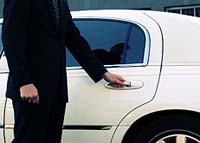
Jo and his wife did their research. They discovered that the limo company owner violated the California labor code by demanding that Jo pay the deductible charges when the limo he was driving was damaged - and it wasn’t even his fault. (Even if it was his fault, charging the driver is questionable.) The Industrial Welfare Commission that regulates wages, hours and working conditions in the transportation industry clearly states that:
No employer shall make any deduction from the wage or require any reimbursement from an employee for any cash shortage, breakage, or loss of equipment, unless it can be shown that the shortage, breakage, or loss is caused by a dishonest or willful act, or by the gross negligence of the employee.
This is how the accident occurred. “My passengers didn’t shut the rear door properly when I dropped them off,” Jo explains. “Pulling away I heard road noise so I hit the brake. The back door swung open and hit a planter in the hotel driveway. It put a crack in the plastic door, so I called the owner and told him what happened. He said it just needed a little touch-up. I worked that weekend, and about a week later I got a text message from the owner, asking what are we going to do about the door damage?”
Jo knew that other drivers had been charged deductible costs. But he knew that the owner was indeed violating the California labor code so Jo was prepared.
“I offered to drive the limo to the repair shop on my own time,” says Jo. “As well, I recently got a ticket for parking in a bus zone and the owner agreed to pay half. I suggested that I would pay all the parking violation, and he pay all the damage: I thought this agreement was more than fair.”
At the end of September, Jo’s boss took him up on the offer but he hasn’t been called in to work since. Instead, the owner’s mother called and asked Jo what he intended to do about the damage. “I told her about the arrangement we made but she kept on raising the question,” says Jo. That is two strikes against Jo’s boss: retaliation is also a violation of the California labor code.
Limo drivers and California overtime
Jo’s second issue is overtime. He worked for about 18 months, on call. All the drivers are on call. In the busy season they typically work 50-60 hours a week and in the low season (January through March) about 15-20 hours.
“Last year I probably drove 100 trips and 75 percent of those were over eight hours,” says Jo. “Most business generates from San Francisco and most people tour the wine country, so we rarely get back within eight hours. Our rate of pay worked like this: he had three different types of vehicles that I drove. When no one was in the vehicle, the pay rate was $9 per hour. When I had passengers in a Lincoln sedan, it was $15 per hour; passengers in the Chevy Suburban was $17 per hour and the limo was $20 per hour.
“He explained that these different rates had to do with the tip included in the rate people were charged. About 50-60 percent would still tip; thankfully, some people are pretty generous, especially coming back from a wine tour.”
Jo and his wife found out that he is eligible for overtime when they researched the limo damage and deductible issue. Jo didn’t confront the owner about overtime because other drivers had brought it up in the past and didn’t get called back.
“I was retired when I took this job and now I’m back in retirement,” Jo adds. “It was fun and I would like to continue but I don’t want to be used and abused again. About a dozen drivers are in the same boat as me - nobody here gets overtime. I asked drivers of other companies if they got paid overtime and some do, some don’t. It’s like the Wild West for us limo drivers regarding overtime and other labor laws.”
Back in 2011, employment lawyer Mark Thierman filed a class-action lawsuit on behalf of Las Vegas limousine drivers against Bell Trans, Nevada’s largest limousine company, alleging failure to pay minimum wage and overtime. Theirman pointed out that California limo drivers are also eligible for California overtime pay.
Brent, a limo driver in San Mateo, was in the same situation as Jo, and he retained an experienced California overtime attorney. “I’ve worked at this limo company for five years and have never been paid overtime,” Brent said. He also worked similar hours as Jo. “My attorney said that I should be paid from the moment I go to work until the moment I leave.”
Many limo drivers and drivers of lighter vehicles for delivery, transit, courier and related services have successfully resolved overtime wage cases. More often than not, these California drivers have been deprived of meal and rest breaks and they are also recovering compensation for these California labor law violations.

California Labor Lawsuit Gets Class-Action Status
The Walmart lawsuit was filed by truck drivers who alleged the company violated the California Labor Code and other labor laws by not paying minimum wage and by not providing meal and rest breaks. The Trucker (9/17/14) reports that the plaintiffs claim Walmart’s piece-rate pay does not provide minimum wages and does not provide pay for all mandatory duties performed that are related to their work, including time spent washing, fueling, weighing the trucks and completing paperwork.
“The court finds that plaintiffs have met the commonality requirement for the proposed class of drivers,” District Judge Susan Illston wrote in her decision. “While Wal-Mart argues that there are varying circumstances in which individual drivers may be granted pay at the discretion of general transportation managers, this does not negate plaintiffs’ assertion that there is a general default policy, defined in the driver reference and pay manuals, against paying drivers for certain tasks.”
The court also wrote that she found Walmart’s argument that the plaintiffs did not show how they could determine which drivers performed which tasks or how long was spent on those tasks unpersuasive. Judge Illston wrote that there were common questions concerning Walmart’s pay formula, which would allow for class certification regarding wages and wait times.
The court did, however, note that if the class members have major variations in the length of time spent involved in mandatory activities such as paperwork or fueling, that Walmart could move to decertify the class. The plaintiffs’ motion to certify wage statements as a class was denied.
According to court documents, the lawsuit was originally filed in 2008. There are reportedly approximately 500 potential members of the class. The drivers also argued that they are paid $42 for 10-hour layovers.
The lawsuit is Ridgeway v. Wal-Mart Stores Inc., No. C 08-05221, US District Court, Northern District of California.
“We’re Finally Getting Somewhere in the FedEx California Labor Lawsuit,” Says FedEx Driver
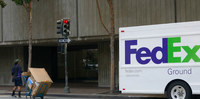
The panel also noted that, although FedEx drivers provided their own vehicles, FedEx assigned drivers delivery areas, directed where packages went and assessed drivers’ workloads.
Non-exempt employees are entitled to overtime compensation under the federal FLSA (Wages and Fair Labor Standards Act), and minimum wage and benefits such as time off under the Family Medical Leave Act, which independent contractors are not entitled to.
While some courts in other states have sided with FedEx, determining the drivers are independent contractors and not entitled to overtime and other benefits, the appeals court found that the California and Oregon drivers have claims similar to other unpaid wages lawsuits filed against FedEx in about 40 states.
“My work time is supposed to be from 7:30 am until 3.30 pm, five days a week but I hardly ever get my deliveries done in that time frame,” says Eric. “My workday typically ends at 5 or 6 pm and this has been going on for years. It used to be OK back in the day because delivery routes would even out during the week. For instance, I would work 10 or 12 hours on Monday and Tuesday and only six hours toward the end of the week. But in the past few years I’ve given them at least 15 hours a week of free work.”
Eric points out that other FedEx employees on an hourly rate are paid overtime, so why not drivers? “I asked my supervisor why we aren’t hourly employees,” Eric explains. “He said, ‘Sorry, that’s just the way it is and there is no overtime.’ So whatever happened to equal pay for a fair day’s work?”
Reuters says that the California case was brought by about 2,300 workers who were full-time FedEx delivery drivers between 2000 and 2007. Court documents state that the drivers were classified as independent contractors under the terms of an operating agreement used by FedEx. The world’s largest express transportation company said it disagrees with the panel’s rulings and will challenge their decision.

Fleet Service Workers Now Boarding Class-Action California Labor Lawsuit
At issue are allegations made by unionized fleet service workers employed at San Francisco International Airport by US Airways Inc. (US Airways). In a complaint certified as a class-action lawsuit April 4 by a California federal judge, some 554 full- and part-time fleet service workers allege they have been stiffed out of overtime pay and meal breaks by their employer. According to California labor code, workers are legally entitled to meal breaks and overtime pay.
The airline, however, argues that provisions in the Railway Labor Act, under which contracts and collective bargaining agreements are negotiated with the International Association of Machinist and Aerospace Workers (IAMAW) union, trump state labor statutes. Together with an interpretation of California labor and employment law that US Airways claims exempts a so-called shift trade policy from overtime obligations under the federal labor code, the defendant held that class-action status should not be granted.
However, US District Judge Charles R. Breyer aligned with the plaintiffs’ motion for class certification.
The fleet service workers are responsible for the loading and off-loading of planes, de-icing tasks, and establishing ramps to the aircraft. Collective bargaining agreements set out when meal breaks are taken and when overtime is paid, according to the unique demands of an industry that puts a great deal of importance on the timeliness of scheduled flights at a busy airport. There are also provisions for shift swaps, so-called “pick-up” shifts, and other provisions unique to the airline industry.
However, as the workers perform their tasks in the state of California, California and labor law comes into play. Lead plaintiffs in the class action, Joseph Timbang Angeles and Noe Lastimosa, contend that members of the class have been stiffed from overtime and have also worked off the clock by way of various pre-shift and post-shift activities.
The defendants claim that any employee who clocks in a few minutes earlier than his or her established start time, and/or clocks out a few minutes beyond the normal end of his or her shift, is not necessarily performing work.
Percolating in the background is the ongoing need to ensure a plane is ready to go and a flight is allowed to leave on time. Were a worker to forego a rest or meal period in order to ensure a plane is readied on schedule, is that meal period made up later? Is there a wage provision to compensate for missed meal periods?
US Airways holds that plaintiffs’ claims are preempted by federal airline labor laws. The plaintiffs disagree, and their California labor lawsuit - filed in November 2012 - will now move forward as a class action. The case is Angeles et al. v. US Airways Inc., Case No. 3:12-cv-05860, US District Court for the Northern District of California.

Bullying Has to Stop
If not for Craig being pro-active, he wouldn’t be able to collect unemployment insurance. His boss, the owner of the trucking company, accused Craig of misconduct and fired him. Initially Unemployment Insurance denied his claim but he went before an impartial unemployment Administration Law judge who sided with him.
“That was one notch in my favor and I was able to collect backpay, but I still haven’t been paid for the week I worked, and even more important, this guy shouldn’t get away with his bullying,” says Craig. “I only worked one week for him and it was probably the worst week of my life.
“I had a delivery to make in Colorado but his truck kept breaking down before I even left. I called him a number of times but he refused to help. I called him several times again to provide tire chains when I encountered snow and ice, but he refused. Clearly it was now up to me to get the truck safe and legal for the road - I am a professional driver and I know what safety measures need to be in place. I bought chains for the truck but he didn’t reimburse me. One notch in his favor.”
When his boss became intimidating and profane over the phone, Craig called the federal Department of Transportation but he could only leave a message. (Someone returned his call - a few days ago - but Craig has yet to follow through.) “I don’t know if he singled me out, I wasn’t there long enough to know anyone besides the mechanic, and I got along fine with him,” adds Craig.
When Craig arrived in Colorado, the truck broke down, again. He called the owner, but instead of helping, he blasted Craig, saying it was his fault. Craig managed to get the truck repaired, again on his dime. “I was late getting to my delivery destination because of this and the traffic was really bad so I missed the pickup,” Craig explains. “Then things got weird. I got a call from my girlfriend. The boss had called her and said I had stolen the truck. I immediately called 911 and they reassured me that the truck had not been stolen. A few days after he fired me for being late, I got a call from a total stranger, saying he was going to cuff me for stealing the truck.
“I believe my constitutional rights were violated because he bullied and threatened me. Since this incident happened, I have been researching bullying in the workplace. I looked into federal and California labor laws and discovered a bullying advocate movement. I just want to work, I am not looking for money and I don’t want to be on unemployment. But I do want this guy to stop bullying. The workers of America don’t deserve to be treated this way.”
Unfortunately, the State of California has no law in place to prohibit bullying - a form of harassment - in the workplace. It is legal to harass an employee or co-worker until the job becomes unbearable and the worker becomes ill. Bullied workers often wind up with post-traumatic stress disorder and worse; occupational stress can lead to physical illness such as anxiety, high blood pressure and coronary heart disease.
Other states are leading the fight against bullying, so people like Craig are hopeful that California won’t be far behind. For instance, the National Association of Government Employees Local 282 in Massachusetts has been one of the first unions in the country to include an anti-bullying clause in collective bargaining agreements.
Also leading the charge is Gary Namie, a social psychologist who co-founded the Workplace Bullying Institute in 1997. He says the economic downturn has made bullying even worse and argues that passage of the laws would give employers more incentive to crack down on bad behavior in the workplace.
In the meantime, Craig might attend a rally with the California Healthy Workplace Advocates, who say “We are here because Bullying Breaks Hearts.” Their mission is to “Raise Public Awareness and Compel our State to Correct and Prevent Abusive Work Environment Through Legislation.”



About . TOS . Privacy . Disclaimer . Contact . Advertise . Member Login
This work is licensed under a Creative Commons Attribution-NoDerivs 3.0 Unported License ©2026 Online Legal Media. All rights reserved.
Visit other Online Legal Media Websites: