
Retail News

Misclassification and Mismanagement under California Labor Law
Hobby Lobby, the home décor chain with about 400 stores nationwide, hired Edward as a co-manager (not assistant manager). He was promised a five-day workweek, about 55 hours per week and a salary for $900 per week. Instead, Edward says that for the first six months, he worked six days per week including Sundays and 12 hours per day - in other words, 70 hours per week. Wait, it gets worse…
"Then they transferred me to Las Vegas where I worked from 6:30 am 'til 7:00 pm or even 8:30 pm when we closed, 6 days a week," says Edward. "They send out this locked schedule to co-managers from the Hobby Lobby corporate office but you never work those hours. All I did was labor intensive work - I unloaded trucks and loaded boxes; I did all the stocking and merchandising and learned a small amount of management - probably about 10 percent."
(According to the California labor code, assistant store managers working on salary over 40 hours a week and who perform non-exempt duties such as those described by Edward could be entitled to overtime pay.)
Still, in Nevada, Edward was asked if he would go back to California for seven weeks to help open a new Hobby Lobby store. “I would be helping the store manager with hiring and managerial tasks so I accepted the job,” Edward explains. “Instead, I unloaded trucks, and did 80 percent of the labor, 12 hours per day, 6 days per week. (The manager told me that he couldn’t work more than 50 percent of manual labor duties; instead he had to delegate the labor to me, otherwise he would be owed overtime!)
“At the end of the seventh week, they hired two co-managers to replace me but they didn’t call them co-managers. In the state of California you have to call them another name because if you work more than 40 hours per week, you have to be paid time and a half. This way, the company didn’t have to pay salary or overtime.
“Two employees with an hourly wage and no overtime was a better deal for the company than having me on salary without getting paid overtime, because the company knew that, according to California labor law, they would have had to pay me overtime.
“When I got back to Las Vegas I asked why I wasn’t paid overtime in California: I was supposed to be paid hourly because I was doing manual labor. My boss told me to send the head office a letter stating how much money in overtime they owed me, which I did. I figured they owed me $4,000. But they replied that they owed me nothing because I was exempt and I was hired through Nevada; apparently working in California didn’t count.
"I find this very hard to believe and I'm sure an attorney will confirm that Hobby Lobby has violated another California labor law.
“Interestingly, I worked in the State of California about 10 years ago as an assistant manager for a grocery store called ‘Smart and Final.’ A cass action was filed against them and the company paid overtime compensation owed to assistant managers. I received a check in the mail about five years ago - a very pleasant surprise - for more than $5,000.”
Edward was recently terminated from Hobby Lobby. According to the online legal resource tool law29.com, a nationwide investigation is underway regarding the company's alleged violations of federal law for failure to pay its Co-Managers overtime pay.
“If it was a good company and they stood behind me, I would have stayed longer,” says Edward, “but since they have lied and terminated me, I am in the process of finding an attorney who will help me get compensated for what is owed to me.”

Theatres in California among Those Cited for Labor Law Violations
In this particular case, the operators of three large national cinema chains were hammered by the US Department of Labor for alleged violations of child labor laws. Theatres operated by Regal Cinemas Inc., Marcus Theatres Corp. and Wehrenberg Inc. have already paid fines relating to allegations that teenagers were allowed to work too many hours and operated dangerous machinery, in contravention of child labor laws.
The 27 theatres investigated are located in nine states, including California. The other alleged offences were described as occurring in Illinois, Indiana, Minnesota, Missouri, Nebraska, Ohio, South Carolina and Wisconsin.
According to the March 2 edition of the Columbia Daily Tribune, about 160 young employees were allowed or mandated to perform hazardous jobs requiring the use of machinery that carried some risk. The operation of motor vehicles, paper balers, trash compactors and power-driven mixers while baking were all cited as contravening the youth employment provisions of the Fair Labor Standards Act.
The US Department of Labor pointed out that 17 hazardous jobs are identified, under law, as inappropriate for workers under the age of 18. Times of day, and the number of hours worked are also restricted under the law, according to the Labor Department. Marcus Theatres, according to a Labor Department release, failed to honor those provisions.
Fines paid by the three corporations totaled $277,000. Regal paid the largest bill, at $158,400. All three companies??"including Regal, which is billed as the largest with 6,683 screens??"were cited for allowing youths to load and operate trash compacters.
Marcus, which paid fines totaling $93,995, and Wehrenberg at $25,080, were both cited for allegations that youth workers were allowed to operate motor vehicles.
The types of motor vehicles were not disclosed.
"The penalties imposed as a result of these violations should serve as a wake-up call to movie theatre owners and other employers," Labor Secretary Hilda Solis said in a statement. "Businesses that employ minors are legally and ethically obligated to abide by child labor standards and ensure youth are protected on the job."
Adult, as well as underage workers in California are protected by federal labor laws??"as noted above??"as well as provisions entrenched in California state labor laws, all designed to protect the rights and the safety of workers.

Apparel Company to Pay Thousands for California Labor Law Violations
Laundry Room Clothing Inc., which is based in Westminster, California, and owner Milton Kaneda were told to pay the money to 115 current and former employees who were not sufficiently compensated for work between February 7, 2009 and March 31, 2010, the Labor Department said.
Under the Fair Labor Standards Act, employers are required to pay workers at least the federal minimum wage of $7.25 for every hour worked in addition to time-and-a-half for hours after 40 per week.
The ruling was handed down by US District Judge A. Howard Matz after Kaneda allegedly failed to defend a lawsuit filed against him by the Labor Department in April, according to the news provider.
According to the Labor Department's Web site, the Fair Labor Standards Act does not require employers to pay overtime for work on weekends, holidays or normal days of rest unless overtime hours are worked on those days.
Was Worker's Death Due to Ignorance of California Labor Laws?
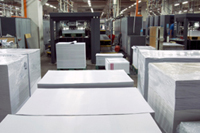
Margarita Mojica was 26 at the time of her death two years ago when she became entrapped in a box creasing and cutting machine. She was 17 weeks pregnant at the time with her second child.
California labor code, as with many federal statutes, dictates not only the requirement that an employer provide a safe work environment, but also that a worker has a right to protest if he or she feels at any time in danger while on the job.
It is not clear if the victim was even aware of the potential for disaster while simply doing her job.
According to the October 19th issue of the San Francisco Chronicle, the Oakland wife and mother of a young daughter was preparing a box creasing and cutting machine to start a job at the facility to replace a cutting die. According to prosecutors she was leaning into the machine when it suddenly activated and closed like a giant clamshell around her.
It is alleged that the owners of Digital Pre-Press International (DPI) of San Francisco were employing a previously owned cutting and creasing machine originally purchased in 2003. It has been reported that workers at some juncture asked to have a safety bar removed from the machine to allow for the handling of thicker cardboard. Investigators say the safety bar was not reinstalled.
While it is unclear if the accident would have been prevented had the safety bar been in place, there are a number of allegations that suggest workers at the facility were not properly schooled in safety protocols according to the tenets of California and labor law.
Regulators cited DPI on two previous occasions, in 1998 and again in 2001, for failing to maintain a worker safety program. The owner of DPI, Sanjay Sakhuja, is reported to have communicated to regulators that he had a training program in place by 2002; and an insurance inspection in 2007 found no problems with the machines at the facility.
However, following the tragic death of Mojica, state regulators under California labor employment law issued no fewer than 14 citations against DPI for not training workers properly. While the plant was reported to have a written safety program, workers told regulators they were never instructed on machine safety.
Sakhuja, along with pressroom manager Alick Yeung, have each been charged with manslaughter and willful violation of California state labor laws. A wrongful death civil suit has since been settled, according to The Chronicle. The value of the settlement was reported to be $6 million.

California Labor Law—Hostile Work Environment
In fact, California is one of the least-tolerant states regarding discrimination and hostile work environment, as evidenced by countless successful California labor lawsuits. Robin (not her real name) is hopeful that she will receive some compensation from her discrimination and hostile work environment claim: she has been discriminated against by her former employer, who has clearly violated the California labor code.
"I recently got a job in a furniture store, but right from the beginning, my employer constantly criticized me in front of the customers," says Robin, who is Italian. "She asked me why my skin color was as 'dark' as hers. 'Did I mind growing up with darker skin color,' and many other questions regarding my personal life and background. Because of her constant badgering, I faltered at my ability to learn; I was always afraid of making a mistake. She would belittle me in front of others with derogatory questions like, 'Can't you see, get your glasses,' or 'Why can't you remember anything,' which only seemed evident that she was insinuating I was old (I am 57 years of age, which she constantly reminded me of).
"It got to the point where I became physically ill and unable to focus. Finally I walked out, but she even ran after me and up to my car as I was pulling away. Now I do not have a job. And I have a severe case of shingles from stress. What can I do? I need to work, yet have not worked at this company long enough to claim unemployment."
A hostile work environment can impact an employee's ability to perform his or her work effectively, which has clearly happened to Robin. For instance, the atmosphere at work can be made hostile by racial slurs or inappropriate joking. Robin has filed a claim with the California Department of Fair Employment and Housing, and her next step is to file a complaint with the EEOC and serve notice on her employer??"the person against whom the complaint was made. She is hopeful that a labor law attorney will help her, and soon.
Title VII of the statute states that an employee who believes he or she has been unlawfully discriminated against must bring an action against the employer within 180 or 300 days of the date the claimed unlawful employment practice occurred.

Former Employee says am/pm Store Violated California Labor Laws
According to Janice, am/pm managers should brush up on the California labor code, and not just regarding overtime laws. "I see how hard my fellow employees work and don't get paid for it," she says. "One guy was ill and went to urgent care; he called the manager and said he was too sick to return to work that day. 'You really let me down,' she said.
"One of my co-workers is working 80 hours a week. I've woken him up in his car a few times, telling him it is time to go to work. He just goes into the bathroom and washes up before starting his shift. I had to work at one am/pm store from 5:30 am until 1:30 pm, then drive 10 minutes to another store and work the 2-10 pm shift, without any overtime pay. The franchise owners justified no overtime pay by saying different stores have different payrolls. But am/pm owns both locations - they own a lot of convenience stores/gas stations in many states. And I was told that if one owner or company owns the same workplace, you must be paid overtime." (In this case, the owner is BP America.)
Janice says many am/pm employees work double shifts every day and some of them are even sleeping in their cars. "One of my co-workers is working 80 hours a week," Janice says. "I've woken him up in his car a few times, telling him it is time to go to work. He just goes into the bathroom and washes up before starting his shift. Another older gentleman is so exhausted having to do all these hours. He asked the manager if he can just stay at one store but they said no. He was afraid of losing his job if he didn't do what he was told. By the way, one man is from India and the other man is from Asian descent - I think they are being taken advantage of.
"A few days after working a 17-hour shift, I was suspended. A secret shopper came in that day and tried to buy alcohol underage. I didn't sell her alcohol but I still failed the test because the bathroom was dirty. We were so busy because the pumps outside weren't taking credit cards so everyone was paying at my cash register. I was alone for three hours, with no time to clean the bathroom.
"I was put on a three-day suspension, apparently because I rang in too many voids. I phoned on the fourth day (Monday) and my manager said the weekends didn't 'count,' so I was also suspended Monday and Tuesday - five days. This is like some Mickey Mouse joke: I had done no wrong and things were getting worse by the minute. I was treated like a child. Every day I called to find out when I was scheduled back to work, but 13 days later I was still suspended. I wrote a respectful letter to the supervisor and asked what was going on. The supervisor said, 'I'll get back to you.'
"Next day they fired me. All they said was, 'Sorry, we have to let you go.' That is when I got my final check - after waiting 13 days on suspension.
"This is why I had a lot of voids: I would ring in a sale and the customer would give me their credit card. But we don't accept credit cards, only debit. (You have to pay for gas beforehand, not at the pump.) Oftentimes, the customer would have no other way to pay so I had to void the sale. This happens all day long because there are no signs saying 'we don't accept credit cards.' Sometimes we had a line to the back of the store with people complaining that the pumps don't even accept debit cards outside - they have been broken for a year. Customers would yell at us. We were so swamped we couldn't do our regular duties like cleaning the bathroom.
"I was wrongfully terminated - another labor law violation. My manager even admitted I didn't do any wrong after I was fired. The lady from main office said I had to be fired because I had too many voids on my cash register. What am I supposed to tell a potential employer? The assistant manager advised me to say I was laid off for lack of hours because I didn't do anything wrong.
"Now I'm on unemployment. I have a four-year-old daughter and I'm a single mom. I am such a good worker and this is so disappointing. But an attorney called from LawyersandSettlements and they sent me some paperwork. I want my co-workers to get what they deserve and stop being treated this way. It's not just about me."

Bag Check Is on the Clock in California
The settlement also includes payment owed to the employees since 2002 for unpaid breaks and overtime.
So-called employee bag checks at the end of a shift is common practice at many retailers across the US.
"During the trial an expert and former manager of loss prevention testified that it is not a great practice for catching people because employees know it's coming," says Kitchin. "However, retailers see it as a deterrent to internal theft, which is admittedly a big problem the industry."
However, asking employees to stand around waiting for the bag check without compensating them for their time is a violation of California labor law. It is a specific assignment required by their employer, as Kitchin successfully argued in the suit against Polo, and sales associates should be paid for it.
"From our perspective, as in the Polo case, if you are locked in a store waiting for a manager, you are under their control," says Kitchin. "Sales associates have lots of duties??"stocking, folding, generating sales, and one of their last jobs at the end of the day is to undergo a bag check."
Although there is federal labor law on the same subject, it is not as clear as the California law. "Federal law is not as protective as California labor law," says Kitchin. Some activities, including bag checks, may or may not be compensable uder federal law.
Patrick Kitchen specializes in wage and hour class actions suits as well as sex and gender discrimination in the workplace. Since 1999, his practice has been devoted to seeking civil justice for people who have been emotionally or physically harmed by others and workers whose rights have been violated by employers. He is a graduate of the University of Michigan School of Law.

Wrongfully Terminated, Contrary to California Labor Law
According to Anthony, this is what happened.
"It was 3.45 pm and I was getting off my shift in 15 minutes," Anthony says. "I worked in the electronics department with Amy (not her real name) and the department supervisor. Amy needed the keys to open the display case for a customer so I threw a lanyard (that the keys clip onto) on top of a glass display case in front of her. She said I threw the keys in her face and complained to my manager??"he was in the back of the store and didn't see this incident.
Amy never came back to our department and still had the keys on the lanyard around her neck. Instead she went to guest services and started talking to another co-worker.
I can't leave; my shift ends in 2 minutes and I have customers waiting for service. And I can't open up any of the display cases. I called Amy on the walkie-talkie and asked her politely to return the keys. Instead, she ignored me.
Now I am in a quandary: nobody is allowed to work overtime because of budget cuts and if I don't clock out at 4pm I can get written up.
I asked the customers to please wait; I clocked out and literally ran to get the keys from the front desk??"where Amy left them. I am now off the clock but I came back to electronics and helped those people who were patiently waiting for service. I started to ring up a purchase but my supervisor finished my transaction. As I was leaving the department, Amy approached me.
She got in my face??"she stepped in front of me and raised her voice.' I don't appreciate you talking to me the way you do, or throwing keys in my face,' she said. I didn't reply; I just walked away.
As I walked away, she yelled in front of customers, 'That's right, walk away like you and your little bitch-ass sister.' My department supervisor heard every word. I told her to keep my sister out of it and kept walking. (My sister is a department supervisor next door at Babies R Us and she was Amy's boss at one time.)
I walked to the back of the store to tell my manager what happened and he said, 'OK, I will handle it'.
They gave me the next two weekends off and Amy had one week off while they were investigating the situation. I was never asked for a statement, nor did I receive a phone call stating that I wasn't on the schedule that week. I had to find out from a co-worker. On January 25 I called to find out my next shift and another employee told me I wasn't on the schedule. I called back January 27 to speak with Bob, the manager. Bob said he would call me back??"he never called.
I called the next day and spoke with another manager; he said he was busy and would call me back. Guess what??"no call back. On January 29th, I spoke with Bob again. He told me to work a shift on January 31 at 4pm. Instead of working, I was hauled into the office and terminated by Bob and another manager. They told me to take off my uniform and badge; I walked out of the office and I was done. Nothing to sign, no good-byes…
Their reason for firing me was that they couldn't have another incident like this happen again. They asked for my supervisor's statement, my sister's statement, and Amy's statement, but they never asked me for a statement. It was one-sided.
Not only was I wrongfully terminated; I also feel discriminated against. Amy sold more instant credits, so maybe they thought she was a better worker. We were both seasonal employees but both of us had made the cut to stay on for the rest of the year, so this was quite a blow to me??"I have nothing else to fall back on. With the economy the way it is, I am still looking for work and probably don't qualify for unemployment insurance.
And another thing: The day I was fired, I was given my final paycheck but it was short 2 hours of pay. I was owed for an 8-hour and a 4-hour shift but they only paid me 10 hours. I didn't open my check until I left the building. I called back, requesting documentation of my termination. HR said she would call me back the next day."
You guessed right, Anthony never got a return call. This is an appalling way to treat employees, particularly an 18-year-old's first job. Fortunately, the California Labor Law is in place to protect employees from wrongful termination and discrimination.
Anthony believes this company owes him and his sister an apology, two hours of pay, and his job back??"at the very least.

Employers Violate California Labor Law
Marie worked full shifts at the gas station, but the majority of her time was spent alone, meaning that she could not take breaks, including lunch breaks, and could not go to the bathroom. Because she was not allowed to take breaks, she never had the opportunity to sit down while at work, until she took matters into her own hands. Unfortunately, her employer's wife came by the gas station while Marie was sitting down.
"She didn't like that," Marie says. "That was one of the reasons stated on the paper he gave me when I was terminated??"that I sat down. I worked without a break??"not even a lunch break??"so I felt that I should be able to sit down for a while.
"The paper also says that he gave me warnings, but I never received any type of warning, not even a verbal warning. Once, I had a drive off of $80, which was my fault and I took responsibility for that. At the end of my shift, I wrote a note explaining what had happened and I said I would pay back the $80, which I did by taking $20 off my next four paychecks. But then the paper says I received another warning for a drive off of $42, but that never happened.
"The other thing is that we're a gas station??"drive offs happen. All the employees had drive offs, not just me. I don't feel that is justification for firing me.
"My employer wrote that I got 'another' customer complaint, but I never had any customer complaints. My customers were regulars and they loved me. Plus, I got 100 percent on a secret shopper visit??"I got an award of $40 for that. So it's not true that I had a customer complaint. If I did have complaints, they didn't tell me about it??"nobody said anything. I'm accused of being belligerent and insubordinate when questioned on things, but nobody questioned me on anything.
"We had to stand most of the time and it was a hard cement floor. I asked my boss if he could just get us a rubber mat to stand on and he flat out refused. I asked a few times because it was hard standing on the floor, but he wouldn't do it.
"I was responsible for maintaining restrooms while on shift, but he did not provide us with gloves for cleaning??"even though I requested some. One time, I had to clean up a child's vomit from the counter and the front of the store and I had no gloves to clean with. I was really mad about that."
There are some employers who have no trouble asking their employees to do things they would never do themselves. Standing for full shifts with no possibility of a rest break, lunch break or even a break to go to the bathroom is ridiculous and it should not be asked of employees. Cleaning restrooms without gloves goes beyond the bounds of what is reasonable.
Employers get away with these violations because many employees are too afraid to fight back. Hopefully as more employees come forward, employers will think twice before breaking California state labor laws.

California Labor Law: Employees Keep Quiet to Keep Their Jobs
Dannie S. worked for a large, well-known pet store chain for a year and a half, until approximately 4 weeks ago when he was fired. At the time, Dannie was told he was fired for talking back to a customer at the front of the store??"something Dannie says there was no policy against when he was fired. In fact, Dannie says that the company has enacted many new policies since he was fired, including a policy against working off the clock.
"All the time that they [the pet store chain] were violating the labor laws, I knew they were doing it but because I wanted to keep my job, I never said anything," Dannie says. "I have to be honest about that right away. I knew it was going on.
"The thing is, they [the company] have an expectation of a certain amount of money each store [in the chain] has to make. But, they don't want anyone to get overtime. But in order to make the kind of money that they want you to make, you have no choice but to work overtime. I would come in way before I had to be at work, up to 2 to 3 hours early. I would clock out for lunch, but work through that lunch hour, then clock back in. Then, I would clock out before the day was over and work for another 2 to 3 hours. In the year and a half I was there, I actually took my lunch maybe 12 times??"and for those times I was still eating my sandwich while I was working.
"They [management] knew I was doing this. There was pressure from the district manager to make money. It wasn't the store manager's fault really, although she knew I was doing this. She probably should have intervened and told me not to work off the clock, but she worked off the clock, too.
"The other thing they would do was they would go into the files and edit your times for you. I know they have my signature on a couple of edited times, but I didn't sign all of them. Again, I didn't say anything because I wanted to keep my job.
"I know that they know they are wrong. I was the grooming manager and I got along well with my employees??"we are still in touch. My employees called to tell me that since I was fired, everyone is required to take their lunch breaks and leave the premises during lunch. They also now have a policy against talking back to customers at the front of the store [Dannie says he was fired for refusing to groom an elderly, sick cat, which was consistent with company policy, and then, after the customer became verbally abusive, telling the customer to leave the store or the police would take care of her]. That's now grounds for automatic termination, but I never saw a policy like that when I was there.
"No one ever told me not to work off the clock and everybody knew I was doing it. We all knew we had to do whatever we could because there was so much pressure from the district manager to make our sales goals. We had no choice but to work off the clock. Normally, a dog groomer sees about 5 or 6 dogs a day. I would do 12 to 13 dogs a day??"that's double the amount a normal groomer does. I did it because I took no breaks and I worked off the clock. By not saying anything about it, I've been encouraging it."
Some employers argue that employees make their own decision to work off the clock and they cannot be held responsible if the employee makes that decision. However, those companies have no problems benefiting from employees who work off the clock (for example, in profits from increased sales) so they should either properly compensate employees for overtime hours or prohibit employees from working off the clock. These are the only ways to ensure that employees are not taken advantage of.



About . TOS . Privacy . Disclaimer . Contact . Advertise . Member Login
This work is licensed under a Creative Commons Attribution-NoDerivs 3.0 Unported License ©2026 Online Legal Media. All rights reserved.
Visit other Online Legal Media Websites: