
Professional Service News

Popular Los Angeles Radio Personality Appeals California Wrongful Termination
Los Angeles, CA: A former announcer with the Spanish-language radio station K-Love 107.5 Los Angeles claims her former employer, Univision Communications Inc. (Univision), wrongfully terminated her employment with the radio station, in spite of high ratings, for alleged tardiness, when in reality plaintiff Sofia Soria was battling a stomach tumor and required surgery, or so she alleged. Soria launched a California Wrongful Termination appeal, which was heard in early November.
Soria alleges in court documents that doctors diagnosed her stomach tumor in late 2010, and following a year of doctor visits that resulted in multiple absences from her radio program, Soria claims to have informed her employer that she would require surgery. That conversation, the plaintiff alleges, occurred in late 2011. Not long after, in November of that year, Soria was terminated from her job after fifteen years with the station.
A wrongful termination lawsuit the plaintiff filed against her former employer in January, 2013 alleges that at the time of her firing, her radio program enjoyed consistently high ratings, for which she earned pay raises and bonuses, as well as positive performance reviews, or so her lawsuit claims.
A lower court found in favor of Univision. Soria appealed, and on November 3 a California appeals court heard arguments supporting the plaintiff’s suggestion that she was wrongfully terminated from her California radio job.
Univision had argued originally that Soria was never really disabled and had not requested accommodation or medical leave.
The defendant had also argued that the tumor turned out to be non-cancerous, and thus was not a threat to the plaintiff’s health. In the employer’s view, the plaintiff had missed numerous shifts without just cause and was terminated for frequent tardiness. Univision was granted summary judgment, prior to Soria’s appeal.
On appeal last week, the plaintiff’s attorneys noted that in spite of the tumor having proven to be benign, Soria’s doctors had suggested to their patient that the tumor remained a threat to Soria’s internal organs – hence the need for surgery.
Soria noted during her appeal that medical appointments were necessary for monitoring, biopsies and so on. While Univision’s position was that in its view, it was the choice of their former employee to schedule appointments during work hours, an appellate judge wondered if there might have been more that Univision could have done to support their employee in her hour of need.
The plaintiff’s attorneys also noted that in spite of Univision’s claims that termination of Soria’s employment was based upon tardiness and frequent absences, there was “not a single piece of paper criticizing her performance.”
The California Wrongful Termination appeal also noted that under the Family Rights Act observed in California, the only basic requirement for accommodation was for the plaintiff to verbally note that she required a surgical procedure. A subsequent disability discrimination claim that would have qualified under the Fair Employment and Housing Act, was “shut down by her termination,” her attorney stated at the plaintiff’s appeal last week.
The California Wrongful Termination lawsuit is Sofia Soria v. Univision Radio Los Angeles Inc. et al., case number B263224, in the Court of Appeal of the State of California, Second Appellate District.

California promulga Ley de Acoso Sexual para trabajadores de limpieza
Sacramento, CA.: Una nueva ley laboral de California intenta asistir a los trabajadores de la industria de limpieza en combatir el acoso sexual en el trabajo. La ley, firmada el 15 de septiembre de 2016 por el gobernador Jerry Brown (D), asiste a los conserjes en entender y protegerse a sí mismos del acoso sexual y requiere a los patrones registrarse con la División de Cumplimiento de Normas Laborales de California.
Bajo la Ley de Asamblea No. 1978, la división establecería entrenamiento preventivo en violencia y acoso sexual interpersonal para tanto empleadores como empleados. Además, ambos grupos recibirán panfletos sobre el acoso sexual. Los empleadores tendrán que registrarse anualmente con el comisionado de trabajo empezando el 1 de julio de 2018, y podrían, en algunas instancias, tener dicha registración revocada. Además, los empleadores se verán requeridos en pagar una cuota de aplicación inicial de $500 y una de registración anual de la misma suma.
Aquellos que no se registren o violen la ley podrían enfrentarse a multas civiles de hasta $10.000.
La ley, auspiciada por la asambleísta del Estado de California Lorena González, ha dicho en una rueda de prensa que la ley agre gwará transparencia y responsabilidad a la industria de limpieza, de forma similar a las leyes enactadas en la industria textil y de limpieza de automóviles. Empleados en la industría de limpieza -particularmente mujeres Latinas- son vulnerable al acoso porque normalmente trabajan solas y temen la deportación si reclaman.
“Muy a menudo estas mujeres son pasadas por alto porque trabajan solas en medio de la noche o después de que el resto de nosotros nos hemos ido a nuestras casas, y merecen algo mejor.” Dijo González. “Así como en otros sectores, tenemos que asegurarnos que los trabajadores vulnerables reciban el entrenamiento apropiado y protección del asalto sexual, y formas efectivas y seguras de reportar estos crímenes.”
Estimados del Departamento de Justicia de EE. UU estima que 80% de todas las violaciones ocurren mientras la víctima está en el trabajo, mientras que alrededor de 50 trabajadores son víctimas de acoso sexual o violación en el trabajo cada día. Sin embargo, este tipo de crimen es uno de los casos de violencia laboral menos reportados a la policía.
“Hemos permitido que estas mujeres se vuelvan objetivos de la violencia sexual por desatender sus condiciones laborales y seguridad básica en el trabajo, pero ya no podemos ignorar está amenaza más.” Aseguró González.
Un reporte de PBS titulado “Rape on the Night Shift” expuso el acoso sexual y abuso de mujeres que trabajan en la industria de limpieza. De acuerdo con el reporte, ABM -una empresa de conserjería grande- se ha enfrentado a tres demandas desde el 2000 hechas por la Comisión de Igualdad de oportunidades de Empleo de Estados Unidos, alegando que la compañía ha fallado en atender las quejas de acoso sexual o violación.
En 2010, según se informa, la compañía accedió a pagar 5.8 millones de dólares para acordar una demanda hecha por 21 mujeres, que alegaron que la empresa no las protegió del acoso sexual.

FMLA Lawsuits on the Rise
Washington, DC: A new report from Bloomberg BNA (10/24/16) suggests the number of Family and Medical Leave Act lawsuits is on the rise. In California, FMLA lawsuits have been filed against employers, alleging violations of employee rights to family and medical leave.

Undocumented Workers Have Rights, Represent Value to California Economy
Sacramento, CA: While undocumented workers and illegal immigrants have been taking a pounding (primarily from the Republican candidate) in the US Presidential election, the fact remains that undocumented workers in California make up ten percent of the State’s overall work force and represents a contribution of $130 billion to the gross domestic product in the State.
While those numbers are two years old, stemming from a joint study by the University of Southern California and the California Immigrant Policy Center (CIPC), the numbers reflect the importance undocumented workers bring to the California economy – especially those industries such as agriculture which depend heavily on the undocumented worker.
Undocumented workers also have status, with certain rights under the California Labor Code, and free to participate in litigation against defendants who stand accused of mistreatment. To that end, a California wage and hour suit was brought against the operator of a California restaurant by two allegedly undocumented workers attempting to hold their employer accountable for nonpayment of wages.
The plaintiffs in the case are Misael and Sergio Avila; the defendant, Naimat Kadah International. A California magistrate in district court awarded the plaintiffs $33,000 in back wages for overtime without preconditions for payment. While the original ruling has since come under a subsequent ruling by the Ninth Circuit with regard to the inclusion of payroll taxes, the fact remains that courts take allegations of wrongdoing on the part of undocumented workers with equal fervor to those of documented works – or for that matter, native Californians and citizens of the State.
It should be noted that the original settlement was struck in 2012. Following several months of waiting for the settlement to be paid, the plaintiffs filed a motion to have the settlement enforced.
The case is Misael Avila, et al v. Naimat Kadah International, et al, Case No. 13-17075, in US Court of Appeals for the Ninth Circuit.
Donald Trump, in both his campaign for the Republican nomination and more recently as the Republican Presidential nominee, has maligned the value of undocumented workers, casting them as villains taking jobs away from Americans and US citizens. The Trump campaign advocates deportation, and the campaign also questions the value of immigration. Democratic nominee Hillary Clinton, in turn, accused the Trump campaign of hypocrisy given various data that shows undocumented workers were part of a larger, unionized work force hired to raze a building in Manhattan for the eventual construction of Trump Tower.
The Tampa Bay Times (10/20/16), which rated Hilary Clinton’s claims in this regard as factual, noted that undocumented Polish workers were hired to toil alongside unionized workers to flesh out the demolition work force. According to the Tampa Bay Times, the undocumented workers were paid ‘off the books’ at a rate of $4 to $5 per hour for 12-hour daily shifts, without overtime pay.
While deportations do occur in California – the CIPC study in 2014 noted that some 117,000 deportations were carried out in recent years in the State – the fact remains that undocumented workers are viewed as integral to the economy of the state, with protections of workers’ rights under California labor law advancing on an ongoing basis.

California Nurses File Claims Against Twin Cities Community Hospital
Templeton, CA: Fifty-three nurses have filed administrative claims against Twin Cities Community Hospital, alleging they have been victims of California labor violations, which resulted in them not receiving their legally mandated breaks. An administrative claim is a step before a civil lawsuit, which could be filed depending on the outcome of the administrative claim.
According to reports, the claim alleges Twin Cities is understaffed, preventing nurses from taking their legally mandated breaks. Nurses argue they were told to walk away from patients to take their break, but such actions put patients at risk of harm, either from not receiving medical care in a timely manner or from causing their own injuries. Nurses say that by walking away from the patients they also put their own nursing licenses in jeopardy.
A lawsuit was reportedly filed in 2015 by eight nurses, alleging they were denied breaks and not paid proper overtime. That lawsuit, Barnard et al. v. Twin Cities Community Hospital et al, alleges that despite agreeing to a flexible workweek in which the nurses regularly work three 12-hour days a week in exchange for no overtime, the hospital put nurses on call and required them to leave early if the number of patients dropped, depriving them of work and making it impossible to rely on a full paycheck.
"The purpose of this lawsuit is to change the culture of the Hospital so that nurses receive proper breaks and patients receive proper care," the 2015 lawsuit states. "This lawsuit is also about wage theft by a hospital that is more interested in lining its coffers than paying its nurses a fair day's wage for a hard day's work."
Plaintiffs in the administrative claim allege the understaffing is done to cut costs and maximize profits. Under California labor law, medical centers are required to maintain a certain nurse-to-patient ratio, and nurses are required meal or rest breaks for their shifts. But the nurses argue that if they were to take their breaks, the nurse to patient ratio would drop outside the legally set limits. As a result, nurses allege they were offered additional pay for skipping breaks, but were then not given that pay.
The claims are scheduled for court in September 2017.
Twin Cities is owned by Tenet Health, which has not commented on the lawsuit. A statement was released from the hospital that it would defend against the action and it is committed to providing safe, high quality patient care.

A Relationship between California OSHA and Wells Fargo
Pomona, CA: As occupational health and safety regulations continue to be strengthened, California OSHA complaints have evolved from the sensational debacle surrounding allegations that banking giant Wells Fargo established accounts in the names of various Wells Fargo clients allegedly without their permission, in a bid to increase fees. Various fines have been levied against the bank, investigations have been launched and thousands of Wells Fargo employees have lost their jobs in the wake of the alleged wrongdoing.
One of those former employees is Claudia Ponce de Leon. Years before the current troubles surrounding Wells Fargo became public, the California-based former employee filed a California OSHA complaint against the bank in December, 2011. In her complaint, Ponce de Leon noted that she had been promoted to a general manager at her branch in Pomona the preceding June, only to discover that employees were engaged in “excessive gaming.” The assumption, is that this reference to gaming had little to do with the playing of video games on company time, but instead involved behavior that reflected questionable practices in an attempt to meet overly-ambitious quotas issued by the bank.
Ponce de Leon, who was terminated from her job soon after raising concerns about the practice, alleged in her California OSHA complaint that it was “virtually impossible” for employees to meet such aggressive quotas without cheating, and that her attempt at reporting what she had found to her superiors resulted in a termination “without cause.”
She reported to Reuters (09/19/16) that only recently has she heard from California OSHA with regard to her firing partly, it is assumed, due to the recent escalation of the Wells Fargo debacle in the media.
However, the increased interest in her case five years out is also presumed to be, in part, due to an overhaul in enforcement guidelines by the Occupational Safety and Health Administration. The federal agency – which also has jurisdiction at the state level in concert with state governance – is sharpening its teeth in an effort to become more effective and relevant at both the federal and state level, including California.
In related news, the recent strengthening of equal pay laws in the state of California – in an effort to make it more difficult to discriminate against workers based on gender – will soon be augmented by a pending change to the salary threshold for exempt employees that will increase costs for employers beginning December 1. The increase will reflect a renewed threshold for white-collar workers of $47,476 per year, or $913 when translated to a weekly salary.
This means that anyone earning less than that amount will be eligible for overtime pay. It should be noted that 10 percent of the threshold can be legally compensated through the issuance of incentive pay, commissions or nondiscretionary bonuses paid quarterly. However, the remaining 90 percent would have to qualify under federal and state overtime pay rules.
Any California employer attempting to skirt around these rules after December 1st will run the risk of an overtime pay lawsuit, or a California OSHA lawsuit provided an employee determines a breach in compensation is based on discrimination.

California Enacts Sexual Harassment Law Targeting Janitorial Industry
Sacramento, CA: A new California labor law attempts to assist workers in the janitorial industry combat sexual harassment at the workplace. The law, which was signed on September 15, 2016, by California Governor Jerry Brown (D), assists janitors in understanding and protecting themselves from sexual harassment and requires janitorial employers to register with California's Division of Labor Standards Enforcement.
Under Assembly Bill 1978, the division would establish in-person sexual violence and harassment prevention training requirements for both employees and employers. Furthermore, employees and employers would receive pamphlets about sexual harassment. Employers would have to register annually with the Labor Commissioner beginning July 1, 2018, and could, in some instances, have registration revoked. Employers will also be required to pay an initial $500 application fee and an annual registration fee of $500.
Those who don't register or who violate the law could face civil fines of up to $10,000.
The bill was sponsored by California State Assemblywoman Lorena Gonzalez (D-San Diego), who said in a news release that the bill will add transparency and accountability to the janitorial industry, similar to laws enacted in the garment manufacturing and car washing industries. Employees in the janitorial industry—particularly Latina females—are vulnerable to harassment because they often work alone and fear deportation if they complain.
"Too often these women are overlooked because they work alone in the dead of night after the rest of us have gone home, and they deserve better," Gonzalez said. "As we have in other sectors, we have to make sure that vulnerable workers receive appropriate training and protections from sexual assault, and effective, safe ways to report crimes."
Estimates from the US Department of Justice suggest that eight percent of all rapes happen while the victim is at work, while around 50 workers a day are victims of sexual assault or rape on the job. Rape and sexual assault, however, are among the least reported violent workplace crimes reported to police.
"We have allowed these women to become targets for sexual violence by neglecting their working conditions and basic safety on the job, but we cannot ignore this threat anymore," Gonzalez said.
A PBS report titled Rape on the Night Shift exposed the sexual harassment, abuse, and rape of women who work in the janitorial industry. According to that report, ABM—a large janitorial company—has faced three lawsuits since 2000 filed by the US Equal Employment Opportunity Commission alleging the company failed to address complaints of sexual harassment or rape.
In 2010, the company reportedly agreed to pay $5.8 million to settle a lawsuit filed by 21 women who alleged the company did not protect them from sexual harassment.
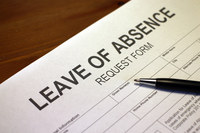
Disappointing Outcome for California FMLA Plaintiff
San Bernardino, CA: In somewhat of a curious outcome to a California FMLA and harassment lawsuit, a jury has found in favor of the City of Redlands in a lawsuit brought by a former employee who alleged discrimination and harassment by the City and a City employee.
A report published in the San Bernardino Sun (09/23/16), outlined the crux of plaintiff Christine Smith’s lawsuit. Smith, a former employee in the Quality of Life Department with the City, had taken leave from her job for circumstances supported by the Family Medical Leave Act. The specific circumstances were not outlined in the published report. However, there appeared to be no dispute with her qualifications for taking leave under FMLA.
It’s what happened when she returned from her absence in October, 2012 that formed the primary basis of her lawsuit. In her litigation, Smith alleged that her supervisor, identified as Quality of Life Department Director Fred Cardenas, demoted Smith from her position as fleet services administrative coordinator upon her first day back from her FMLA leave of absence. Smith also alleged in her lawsuit that she felt bullied, intimidated and isolated to the point where she felt the need to take stress leave on two occasions, in November 2012 and again in June, 2013.
She launched her lawsuit in September, 2013 seeking compensation for pain, suffering and lost wages.
Things began to appear they would be going south for the plaintiff when, in August, the judge in the case granted a motion by the defendant to dismiss the plaintiff’s claims of harassment and discrimination related to disability, failure by the city to accommodate her disability and constructive termination.
Then, earlier this month the jury returned a verdict favoring the defendant, finding the City of Redlands did not retaliate against the plaintiff for taking leave under the Family and Medical Leave Act. The jury also determined that the City of Redlands, in deference to the plaintiff’s allegations, did not fail to prevent the harassment alleged in the case, did not discriminate or retaliate, and did not terminate Smith from her job wrongfully.
The day prior, in a separate verdict, the jury found that the City of Redlands did not interfere with Smith’s rights under the Family Medical Leave Act.
In conducting a post mortem on the case, Smith’s FMLA attorneys noted that the plaintiff’s entire case hinged on the FMLA claims. An attorney, who spoke to jurors following the outcome of the proceedings, noted that jurors understood that “a lot of things happened to Christine that shouldn’t have.” The attorney also noted that they understood and believed that Fred Cardenas, the supervisor, “was a bad actor. What they did not believe was it was because she took FMLA leave and our entire case flowed from that.”
The California FMLA lawsuit is Christine Smith v. City of Redlands et al., Case No. CIVDS 1311312, San Bernardino Superior Court.

California ERISA Lawsuit Alleges Pension Underfunding Worth $1.2 Billion
Los Angeles, CA: A California ERISA lawsuit is demonstrative of the interpretation possible with regard to just what is, and isn’t a so-called ‘church’ pension plan. The latter is a less-restrictive, less-regulated entity that is not required to meet the normally strict guidelines and requirements for managing an employee pension plan under provisions of the Employee Retirement Income Security Act, as amended in 1974.
A class action ERISA lawsuit was filed in 2013 by lead plaintiff Starla Rollins, at one time the billing coordinator for Dignity Health, a nonprofit associated with the Catholic Church. Rollins had complained that, in her view, the employee pension plan maintained by Dignity was grossly under-funded and did not conform to the standards and requirements set out according to ERISA guidelines.
It was an allegation not without substance, as Rollins asserted the pension fund had been shortchanged to the tune of $1.2 billion. Dignity’s response, in sum, remained that given Dignity’s association with the Catholic Church, Dignity qualified to operate and manage the fund as a church plan.
Rollins decided to let the Courts weigh in.
Dignity Health was established when two California-based congregations affiliated with the Sisters of Mercy established nonprofit hospital systems, subsequently merging everything into Catholic Healthcare West. The pension plans associated with Catholic Healthcare West, the hospitals and the two Sisters of Mercy congregations were brought together and merged in 1989.
Dignity does not dispute that it operates the pension fund without adhering to standard ERISA rules, but that it nonetheless manages the fund under a church plan exemption granted through a 1983 amendment to ERISA that allows organizations controlled by, or affiliated with a church, with the principal purpose of providing employee benefits, to
maintain church plans.
The initial ruling by the US District Court, Northern District of California went against the defendant – Dignity – given the court’s assertion that a church plan under ERISA is required to be established by an actual church. That ruling was appealed to the US Court of Appeals for the Ninth Circuit, which upheld the lower court’s ruling.
Dignity’s position, according to court records, holds that: “If a church plan may cover employees of a church-associated organization, and a church-associated organization may maintain the plan, Congress had no reason to insist that the church itself must establish the plan,” when ERISA was amended in 1983.
Writing for the panel, US Circuit Judge William Fletcher of the Ninth Circuit did not agree, citing Dignity for coming up with an argument based on a misreading of the legislative history of ERISA.
“There is nothing in the legislative history to suggest that Congress intended, in expanding the definition of eligible Employees, to eliminate the requirement that a church plan be established by a church,” Fletcher said. “Nor is there anything in
the legislative history to suggest that Congress intended, in broadening the definition of organizations that are authorized to maintain a church plan, to eliminate that same requirement.”
The two lower court’s rulings were appealed to the US Supreme Court, which on September 21st granted Dignity a temporary stay on the lower court’s ruling and mandate, which gives Dignity some breathing room until the high court has the opportunity to hear the case and weigh in.
The case is Dignity Health et al. v. Starla Rollins, Case No. 16-258, in the Supreme Court of the United States.

California Court Finds Employee Contract Clause Unenforceable
San Francisco, CA: California's Ninth Circuit Court of Appeals recently ruled that employer contracts preventing employees from filing class action lawsuits and requiring employees to file claims through separate proceedings are not enforceable. This means that employees who have signed arbitration clauses in their contracts and had their rights violated may be able to file a California labor lawsuit in situations they may not have been able to before. California labor lawsuits are frequently filed in relation to wage and hour violations, but some companies have moved to clauses requiring employees to file individual arbitrations to settle legal disputes.
The decision was handed down in a lawsuit filed by Stephen Morris and other employees against Ernst & Young. According to the judges' decision, Stephen Morris and Kelly McDaniel filed a class action lawsuit alleging they had been misclassified as exempt from overtime pay. When they were hired by Ernst & Young, the employees signed an agreement that they would only bring individual claims against Ernst & Young - not class action claims - and those claims had to be brought through arbitration. The contract stated that claims had to be brought through "separate proceedings."
In other words, employees could not join together in any forum to file a claim against Ernst & Young and could only file individual claims in arbitration. Morris and McDaniel, however, filed a class action lawsuit, which was dismissed by the Northern District of California after Ernst & Young moved to compel arbitration. The plaintiffs appealed the Northern District court's decision, arguing the agreements were unenforceable because they violate the National Labor Relations Act.
Two of the three judges in the Ninth Circuit Court of Appeals agreed with the plaintiffs, finding that the contract could not be enforced because the "separate proceedings" clause violated the National Labor Relations Act. As a result, the panel vacated the lower court's dismissal of the lawsuit and remanded the lawsuit to district court to determine whether the "separate proceedings" clause could be severed from the overall contract.
"Concerted activity - the right of employees to act together - is the essential, substantive right established by the NRLA. 29 U.S.C. §157," Chief Judge Thomas wrote. "Ernst & Young interfered with that right by requiring its employees to resolve all of their legal claims in 'separate proceedings'. Accordingly, the concerted action waiver violates the NLRA and cannot be enforced."
The lawsuit is Stephen Morris, et al. v. Ernst & Young, et al., No. 13-16599, D.C. No. 5:12-cv-04964-RMW.



About . TOS . Privacy . Disclaimer . Contact . Advertise . Member Login
This work is licensed under a Creative Commons Attribution-NoDerivs 3.0 Unported License ©2026 Online Legal Media. All rights reserved.
Visit other Online Legal Media Websites: