
Wage & Hour News
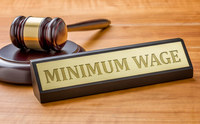
Preliminary Settlement Reached Quickly in California Wage and Hour Dispute
San Francisco, CA: A somewhat unique wage and hour lawsuit that stemmed from what appeared to be an attempt at bartering is winding down with the preliminary approval of a settlement worth $1.65 million. The defendant, CorePower Yoga, denied any wrongdoing in the matter. A fairness hearing is scheduled for June, to determine whether final approval is warranted in the California wage and hour settlement.
Plaintiff William Walsh filed the wage and hour class action lawsuit in October of last year at US District Court for the Northern District of California. At the core of the wage and hour lawsuit is an allegation that CorePower Yoga failed to pay minimum wage to various employees required to purchase studio memberships at a discount.
In what appeared to be a pseudo barter arrangement, CorePower had initiated a program dubbed ‘Yoga for Trade,’ whereby the operator extended memberships to students in its yoga classes willing to work a weekly shift as a custodian. The shifts would be of two, or three hours duration.
Sometime later, according to the California wage and hour lawsuit, the defendant began to phase out the Yoga for Trade program. As part of the process to wind the program down, CorePower Yoga allowed the students formerly involved in the program to instead be part of the Studio Experience Team, whereby participants earn an hourly wage for weekly shifts. However, the students asserted they were also required to apply a large portion of their wages towards the purchase of a discounted membership.
Plaintiffs alleged that under both programs, plaintiffs were in actual fact paid below minimum wage under statutes observed under federal law, as well as California employment law.
The wage and hour settlement, hammered out with help from wage and hour lawyers, came together swiftly. Court records show that US Magistrate Judge Maria-Elena James conditionally certified a class of California students who had been involved in both the Yoga for Trade and Studio Experience Team programs, together with a collective action involving Studio Experience Team students alleging violations of the Fair Labor Standards Act, in order to facilitate the proposed settlement.
The wage and hour class encompasses about 2,700 students who participated in the Yoga for Trade Program, together with some 4,900 students enrolled in the Studio Experience Team. There is some overlap between those two groups, members of which all hail from California. The FLSA collective encompasses about 6,800 students involved in the Yoga for Trade program, who live outside the state of California.

Donning & Doffing Plaintiffs Allege Hours of Unpaid Work per Week
Los Angeles, CA: A class action wage and hour donning and doffing lawsuit in Arkansas is not unlike similar lawsuits which have originated in California (Silva v. See’s Candy Shops Inc., Case No. D068136 in the Fourth Appellate District, Division One, in the Court of Appeal of the State of California) alleging employees have not been paid for all time spent working, and specifically time spent climbing into, and shedding uniforms and other related safety gear at the behest of the employer.
The issue has pitted employer against employee for years. Employers are reluctant to pay their employees for donning and doffing – the act of dressing into employer-mandated uniforms, clothing, hazmat (hazardous materials) suits or other related safety gear, because the employee is not performing actual work.
The employee responds with the view that any uniform, article of clothing or safety gear mandated by the employer in order to perform the employee’s job, should be compensated by the employer. In other words, employees should be dressing, or undressing (donning and doffing) on the clock.
Donning and doffing is a term also used to represent various wage and hour claims, such as off-the-clock work whereby an employee is directed, or expected to perform tasks before punching in for the shift, and / or after clocking out for the day. This combined with missed meal and rest periods – or a requirement to either perform tasks or remain on constant standby to do so – can add several minutes to an employee’s workday for which the employee is not being paid, or so it is alleged.
In the case of the class action wage and hour lawsuit originally filed in Circuit Court of Sebastian County, Arkansas before removal to District Court (Darrell Cato, et al. v. OK Foods, Inc., Case No. 2:16-cv-02202-PKH, in the US District Court for the Western District of Arkansas – Ft. Smith), hourly production workers employed by OK Foods in Fort Smith allege they are missing out on six, to seven hours of pay per week performing tasks for which they are not paid.
Named plaintiffs include Darrell Cato, Jeffrey Biggs, Margee Williams and Mario Mallett.
The case was recently appealed by the defendant to the US Court of Appeals for the Eighth Circuit.
Meanwhile it’s a new day for a California wage and hour lawsuit, even though an appellate panel ruled mostly in favor of the defendant. Nonetheless, plaintiff Pamela Silva’s years-long dispute with her former employer, See’s Candy Stores Inc. will go forward based on grounds granted to the plaintiff by the appellate panel.
The dispute qualified as a California donning and doffing lawsuit, in that Silva alleged See’s Candy forced her to perform work during her lunch hour, when she was – or so it was alleged – clocked out.

California Donning and Doffing a Contentious Issue
Los Angeles, CA: Getting into and out of work gear is a problematic area of labor law, especially if employees do not have control over how and when they carry out their donning and doffing duties. When putting on and taking off work gear adds 30 to 60 minutes to a shift—and could count as overtime—employees want to be paid for their time. Hence, donning and doffing lawsuits alleging dressing and undressing for work should be counted as compensable time.
Employees in Pennsylvania recently won a donning and doffing battle and although that lawsuit might not have strong implications for California donning and doffing lawsuits, it could signal an important trend in court decisions. Plaintiffs in the Pennsylvania lawsuit—employees at DuPont—filed a lawsuit arguing that they were not properly paid for time spent putting on and taking off their safety gear and briefing incoming shift workers about the status of the work. The employees argued this extra time could add up to 60 minutes to their shifts.
DuPont argued that because it paid employees for their meal and rest breaks—pay that is not required under the Fair Labor Standards Act (FLSA)—it had effectively offset the extra time on the shifts. DuPont noted that the time paid for the breaks worked out to more than the time they spent in shift relief between shifts. But employees argued the shift relief time should have counted as overtime, so they were owed overtime pay.
A District Court granted DuPont's motion for summary judgment, finding the employer's break time pay offset the shift relief compensation. But employees appealed the decision and the Pennsylvania Third Circuit Court of Appeals found that the FLSA did not authorize using break pay to offset the overtime. The Court of Appeals reversed the District Court's dismissal and the lawsuit was remanded for further proceedings.
Donning and doffing time is contentious because it is not always clear whether that time should be considered compensable. The FLSA allows compensation for activities that are integral and indispensable to the employee's job. So when the employee must wear certain clothes to carry out vital job tasks, putting on and taking off those clothes may be considered compensable. And when the employee has no choice but to put on and take off those clothes at the worksite (if, for example, the safety gear is not allowed to leave the worksite), then that time might be compensable.
But if putting on and taking off the gear is simple for convenience and is not related to principal activities, then the time might not be compensable. Of course, there is still disagreement about what constitutes "integral and indispensible" and what primary duties are considered when determining whether compensation is owed.
The lawsuit is Smiley v. El DuPont de Nemours & Co., No. 14-4583.

California Nurses File Claims Against Twin Cities Community Hospital
Templeton, CA: Fifty-three nurses have filed administrative claims against Twin Cities Community Hospital, alleging they have been victims of California labor violations, which resulted in them not receiving their legally mandated breaks. An administrative claim is a step before a civil lawsuit, which could be filed depending on the outcome of the administrative claim.
According to reports, the claim alleges Twin Cities is understaffed, preventing nurses from taking their legally mandated breaks. Nurses argue they were told to walk away from patients to take their break, but such actions put patients at risk of harm, either from not receiving medical care in a timely manner or from causing their own injuries. Nurses say that by walking away from the patients they also put their own nursing licenses in jeopardy.
A lawsuit was reportedly filed in 2015 by eight nurses, alleging they were denied breaks and not paid proper overtime. That lawsuit, Barnard et al. v. Twin Cities Community Hospital et al, alleges that despite agreeing to a flexible workweek in which the nurses regularly work three 12-hour days a week in exchange for no overtime, the hospital put nurses on call and required them to leave early if the number of patients dropped, depriving them of work and making it impossible to rely on a full paycheck.
"The purpose of this lawsuit is to change the culture of the Hospital so that nurses receive proper breaks and patients receive proper care," the 2015 lawsuit states. "This lawsuit is also about wage theft by a hospital that is more interested in lining its coffers than paying its nurses a fair day's wage for a hard day's work."
Plaintiffs in the administrative claim allege the understaffing is done to cut costs and maximize profits. Under California labor law, medical centers are required to maintain a certain nurse-to-patient ratio, and nurses are required meal or rest breaks for their shifts. But the nurses argue that if they were to take their breaks, the nurse to patient ratio would drop outside the legally set limits. As a result, nurses allege they were offered additional pay for skipping breaks, but were then not given that pay.
The claims are scheduled for court in September 2017.
Twin Cities is owned by Tenet Health, which has not commented on the lawsuit. A statement was released from the hospital that it would defend against the action and it is committed to providing safe, high quality patient care.

California Court Finds Employee Contract Clause Unenforceable
San Francisco, CA: California's Ninth Circuit Court of Appeals recently ruled that employer contracts preventing employees from filing class action lawsuits and requiring employees to file claims through separate proceedings are not enforceable. This means that employees who have signed arbitration clauses in their contracts and had their rights violated may be able to file a California labor lawsuit in situations they may not have been able to before. California labor lawsuits are frequently filed in relation to wage and hour violations, but some companies have moved to clauses requiring employees to file individual arbitrations to settle legal disputes.
The decision was handed down in a lawsuit filed by Stephen Morris and other employees against Ernst & Young. According to the judges' decision, Stephen Morris and Kelly McDaniel filed a class action lawsuit alleging they had been misclassified as exempt from overtime pay. When they were hired by Ernst & Young, the employees signed an agreement that they would only bring individual claims against Ernst & Young - not class action claims - and those claims had to be brought through arbitration. The contract stated that claims had to be brought through "separate proceedings."
In other words, employees could not join together in any forum to file a claim against Ernst & Young and could only file individual claims in arbitration. Morris and McDaniel, however, filed a class action lawsuit, which was dismissed by the Northern District of California after Ernst & Young moved to compel arbitration. The plaintiffs appealed the Northern District court's decision, arguing the agreements were unenforceable because they violate the National Labor Relations Act.
Two of the three judges in the Ninth Circuit Court of Appeals agreed with the plaintiffs, finding that the contract could not be enforced because the "separate proceedings" clause violated the National Labor Relations Act. As a result, the panel vacated the lower court's dismissal of the lawsuit and remanded the lawsuit to district court to determine whether the "separate proceedings" clause could be severed from the overall contract.
"Concerted activity - the right of employees to act together - is the essential, substantive right established by the NRLA. 29 U.S.C. §157," Chief Judge Thomas wrote. "Ernst & Young interfered with that right by requiring its employees to resolve all of their legal claims in 'separate proceedings'. Accordingly, the concerted action waiver violates the NLRA and cannot be enforced."
The lawsuit is Stephen Morris, et al. v. Ernst & Young, et al., No. 13-16599, D.C. No. 5:12-cv-04964-RMW.

Wage and Hour Lawsuits Continue to Percolate in California
San Mateo, CA: Yet another California based health care facility has been hit with a California wage and hour lawsuit, alleging that hourly employees have not been paid their correct overtime wages, nor have they been provided with rest breaks and meal periods in accordance with California labor law.
The defendant in the case is Sutter West Bay Hospitals. The proposed class action accuses the defendant, on behalf of all qualifying class members, of denying their hourly employees access to meal breaks and rest periods. California law holds that rest periods are taken as required, and that an un-interrupted meal period of not less than thirty minutes be provided prior to the commencement of the fifth hour of work.
Not only is this requirement entrenched within California employment law, the fact remains that were a meal period not duly provided, it means the employee has worked through the meal period and thus should be paid overtime for the 30 minutes of additional work performed.
It is also alleged that hourly employees were provided with non-discretionary bonus pay based upon their job performance. And yet, it is alleged that this bonus pay was not included as part of the calculation of a non-exempt employee’s hourly rate for the purposes of determining the proper overtime rate.
Thus, it is alleged that non-exempt employees of Sutter West Bay Hospitals were not paid correct amounts of overtime, as required under California labor laws.
The wage and hour class action lawsuit is Case No. 2016-cv-538977 in San Mateo County Superior Court for the State of California.
Meanwhile, it has been reported that Ecolab Inc. remains embroiled in four California wage and hour lawsuits that remain pending: this, according to the defendant’s 10-Q filing with the US Securities and Exchange Commission (SEC) for the first quarter ending March 31st of this year. The report, filed in early May, noted that a fifth lawsuit (Cancilla v. Ecolab, Case No. CV 12-03001 US District Court, Northern District of California), has been settled.
The 10-Q filing noted that three of the lawsuits are pending as class actions and claim violations to the Fair Labor Standards Act (FLSA) and / or similar violations to state labor laws.
Of the four remaining wage and hour lawsuits still pending, two are based in California: Ross (formerly Icard) v. Ecolab, Case No. C 13-05097 PJH, and Martino v. Ecolab, Case No. 5:14-cv-04358-PSG, both pending in US District Court for the Northern District of California.

Yet Another Wage and Hour Lawsuit Claims Lack of Overtime From Uber
San Francisco, CA: A proposed class action wage and hour lawsuit by a former UberX driver is accusing the San Francisco-based company of failing to pay its drivers overtime. While plaintiff Jaswinder Singh hails from New Jersey, which is where the lawsuit was filed, the proposed class action becomes a California Wage and Hour lawsuit by default, by virtue of the California headquarters for Uber, and a proposed class action that could potentially benefit drivers from the Golden State.
The proposed wage and hour class action would include class members who drove for both Uber, and UberX, identified as the lower-cost division of Uber.
In his wage and hour lawsuit, Singh identifies himself as serving as a driver for UberX from August 18, 2014 through to September 21, 2015 - a period of just over a year. Singh identifies himself as an employee of Uber, not an independent contractor.
The plaintiff holds that for the 13 months he worked for UberX, he was required to bear most of the expenses involved including, but not limited to the costs for fuel, road tolls, his mobile phone (the lifeblood of an Uber driver), and other expenses for which Singh claims he should have been reimbursed.
Singh also holds that he worked, on a consistent basis, at least 60 hours each week, but received no overtime for any hours worked beyond 40 hours per week as required under state law.
At the heart of the wage and hour lawsuit is whether, or not Uber and UberX drivers are employees, or independent contractors. Previous wage and hour lawsuits filed in Massachusetts and California were recently settled for up to $300 million. Uber, following the settlement, noted that Uber drivers in California and Massachusetts would remain independent contractors. There were no references to Uber and UberX drivers in other states.
Uber has previously held that drivers are independent contractors and not employees, who sign on as Uber drivers and are connected to patrons and fares using the Uber app, ferrying their fares around in their own vehicles.
Plaintiffs, however, note that Uber controls much of the process and experience for the fare, with the Uber driver having little say in that process. The latter, say plaintiffs, detracts from the usual definition of an independent contractor which provides a service to a client based upon an agreed-to set of parameters for service, but with the contractor remaining completely autonomous in the delivery of that service.
Plaintiffs in California Wage and Hour lawsuits and those in other states hold that Uber and UberX drivers are, in actual fact non-exempt employees of Uber and thus, should qualify for overtime and other benefits as entrenched in state laws.
The proposed wage and hour class action lawsuit is Singh v. Uber Technologies, Inc. case No. 3:2016-cv-03044.

Well-Known Fitness Brand Associated with California Wage and Hour Class Action
Los Angeles, CA: You would be forgiven if West Covina Corporate Fitness is a name that doesn’t ring an immediate bell for you. But Gold’s Gym might. In actual fact, West Covina Corporate Fitness Inc. (WCCF) does business in California under the Gold’s Gym banner, a popular brand amongst fitness buffs and professionals who like to get a little sweat equity in before work or after leaving the office for the day. However, WCCF is currently facing a California Wage and Hour class-action lawsuit over the alleged exclusion of commission wages earned by fitness trainers from hourly rates for the purposes of computing overtime.
The California Labor Code contains various wage and hour provisions for ensuring employees are paid their due. Standard practice holds that overtime pay is calculated as one-and-one-half the hourly rate when work time exceeds 8 hours in any given day, or 40 hours in a given workweek for all non-exempt employees.
The class-action lawsuit suggests that the exclusion of commission wages from the hourly rate effectively lowers the hourly rate for the purposes of computing overtime pay - and thus reduces the actual amount of overtime to which an employee would otherwise be entitled.
Another factor not uncommon to other California wage and hour lawsuits of this type is the allegation of missed meal and rest periods - again mandated by California labor laws. Employees are supposed to be provided with a paid, 30-minute meal period to be taken prior to the completion of the fifth hour of work during a daily tour of duty. The meal break is mandated to be uninterrupted by work commitments or other work-related distractions, ensuring the employee has a half hour to himself to nourish, rest and recharge. A series of shorter rest breaks are also required to be provided throughout the day.
The California wage and hour class action brought against WCCF alleges meal periods were often missed because WCCF did not have a designated system in place to ensure those meal periods were consistently provided, according to law. Were an employee be required to work through a paid meal break, he is effectively working overtime for those 30 minutes and should be duly paid.
The lawsuit was filed April 8 in Superior Court for the State of California, Case No. BC616304. Lead plaintiff in the proposed California Wage and Hour Class Action is Charles San Nicholas.
Meanwhile, a healthcare provider and the target for several lawsuits over the years has revealed through the release of its Form 10-K report filed with the US Securities and Exchange Commission (SEC) at the end of 2015, that a settlement to stem allegations in a California Wage and Hour lawsuit has been formally approved by the court.
The lawsuit, filed originally as a class action, was brought in April 2008 against DaVita Healthcare Partners Inc., a provider of kidney dialysis and an operator of several clinics throughout the country. The complaint, which was filed in the Superior Court of California, alleged that DaVita failed to provide meal periods, failed to pay overtime for missed meal periods and rest breaks, failed to pay overtime in general, and failed to comply with various other requirements as entrenched in the California Labor Code and state labor laws.
DaVita won the day on several trial court rulings, but the plaintiffs appealed and a tentative settlement was reached in June 2015. DaVita revealed in its Form 10-K filing that the proposed settlement, already having been granted preliminary approval, had been formally approved by the Court.
The value of the California wage and hour settlement in the DaVita case was not disclosed, but is presumed to be in excess of $3 million.

Medical Facility Hit with California Wage and Hour Class-Action Lawsuit
San Francisco, CA: It’s a fairly standard set of guidelines aimed at protecting health and well-being, together with maintaining and promoting fairness, for non-exempt California workers. So often, however, these basic tenets of employment are either set aside and ignored, or bypassed out of apathy or poor management.
No one is rushing to judgment as to what predicated the basis for a California Wage and Hour lawsuit recently filed and pending in San Francisco County Superior Court. However, a proposed class action against Total Renal Care, Inc. suggests a number of allegations that include missed rest breaks and meal periods, and failure to pay overtime in accordance with California wage law.
The State of California maintains a number of key statutes and guidelines that guarantee non-exempt workers receive extra pay for working in excess of eight hours in any given workday or 40 hours in any given workweek. Additionally, workers are to be provided with rest breaks and 30-minute meal periods that are mandated by law to be taken prior to an employee’s fifth consecutive hour of work.
The California wage and hour class action alleges that hourly, non-exempt employees at Total Renal Care were not able to do this. Missed meal periods and rest breaks suggest that workers are continuing to toil during times when they should be at rest, which could impact an employee’s overtime rate: to wit, an employee is now working in excess of eight hours in a workday or 40 hours in a workweek if rest and meal periods are missed.
The California wage and hour class action against Total Renal Care also alleges that the defendant manipulated time records in an effort to avoid paying overtime to qualifying workers. Under California law, salaried employees who fill a management function and are paid a certain salary threshold can be considered exempt from overtime, as they receive a much higher stipend than hourly workers and it is thus expected that from time to time, managerial and salaried personnel would put in extra hours on occasion, as needed.
According to court records, the defendant failed to “record and pay Plaintiff and other California Class Members for the actual amount of time these employees worked, including overtime worked.”
Hourly employees, who make less, are not exempt from overtime and thus are due under California law extra pay for additional hours worked, as well as state-mandated provisions for meal breaks and rest periods.
The California Wage and Hour lawsuit is Melynda Singh et al v. Total Renal Care, Inc., Case No. CGC-16-550847, filed March 8, 2016 in the Superior Court of the State of California, County of San Francisco.

Freelance Writer Takes on Stadium Contractor in California Wage and Hour Lawsuit
Santa Clara, CA: It’s an interesting position: launch a proposed class-action lawsuit, and then write all about it. But that’s what Gabriel Thompson has done. Gabriel, writing in Slate Magazine (2/19/16), reveals that he is the lead plaintiff in a California wage and hour lawsuit against the entity contracted by Levi’s Stadium in Santa Clara to provide food and beverage services to the Bay area stadium, which is home to the San Francisco 49ers and host of Super Bowl 50.
A freelance writer, Thompson has no quarrel with the stadium. However, working as he did for a handful of games as an employee of defendant Centerplate, the lead plaintiff in the proposed class action is none too pleased with Centerplate’s alleged failure to pay its employees for all hours worked, failure to provide adequate rest periods as mandated under California law, together with other unnamed business practices the lawsuit deems as unfair.
Thompson asserts that during his brief time with Centerplate working four games at Levi’s Stadium - including the big Super Bowl 50 game - he was unable to take rest breaks even after working a successive 12 hours, or so it is alleged, in clear violation of California wage and hour laws.
There are also allegations that during the Super Bowl game, Thompson and his fellow employees were not paid for time they spent waiting for, and then traveling on, employee shuttles to and from the stadium. Thompson asserts that on Super Bowl Sunday he worked a total of 17 hours. Five of those hours, it is alleged, were spent waiting for transit or spent in transit.
The California wage and hour lawsuit asserts those five hours should have been considered paid hours. Instead, it is alleged those five hours were in effect off-the-clock work, when in fact, they should have been paid hours. Thompson notes that while he was paid straight time and overtime (at time-and-a-half) for the hours worked beyond 8 hours in the workday, there was no additional pay for the remaining five hours of transit and waiting for transit, together with missed rest periods that, combined, took him to 17 hours worked in total if the missing five hours were factored in.
There would have been double-time-and-a-half for any hours worked beyond 12 hours in a single day, or so it is alleged.
“In 2009, a study by three organizations - the UCLA Institute for Research on Labor and Employment, the National Employment Law Project, and the UIC Center for Urban Economic Development - found that low-wage workers in Chicago, Los Angeles and New York City lost more than $56 million per week due to various forms of wage theft and other forms of labor violations,” Thompson writes in Slate Magazine. “Last October, California Governor Jerry Brown signed legislation that makes it easier for workers to recover back wages, including a provision that holds individual executives, and not just the corporate body, accountable for unpaid wages.”
Provided the California wage and hour lawsuit is granted class-action status, the suit would represent all employees of Centerplate who worked at Levi’s Stadium during the entire 2015-2016 NFL season.
The lawsuit is Gabriel Thompson et al v. Centerplate of Delaware Inc. et al, Case No. 16-cv-291643, filed February 17, 2016 at Superior Court for the State of California.



About . TOS . Privacy . Disclaimer . Contact . Advertise . Member Login
This work is licensed under a Creative Commons Attribution-NoDerivs 3.0 Unported License ©2026 Online Legal Media. All rights reserved.
Visit other Online Legal Media Websites: