
Wage & Hour News

“We’re Finally Getting Somewhere in the FedEx California Labor Lawsuit,” Says FedEx Driver
The panel also noted that, although FedEx drivers provided their own vehicles, FedEx assigned drivers delivery areas, directed where packages went and assessed drivers’ workloads.
Non-exempt employees are entitled to overtime compensation under the federal FLSA (Wages and Fair Labor Standards Act), and minimum wage and benefits such as time off under the Family Medical Leave Act, which independent contractors are not entitled to.
While some courts in other states have sided with FedEx, determining the drivers are independent contractors and not entitled to overtime and other benefits, the appeals court found that the California and Oregon drivers have claims similar to other unpaid wages lawsuits filed against FedEx in about 40 states.
“My work time is supposed to be from 7:30 am until 3.30 pm, five days a week but I hardly ever get my deliveries done in that time frame,” says Eric. “My workday typically ends at 5 or 6 pm and this has been going on for years. It used to be OK back in the day because delivery routes would even out during the week. For instance, I would work 10 or 12 hours on Monday and Tuesday and only six hours toward the end of the week. But in the past few years I’ve given them at least 15 hours a week of free work.”
Eric points out that other FedEx employees on an hourly rate are paid overtime, so why not drivers? “I asked my supervisor why we aren’t hourly employees,” Eric explains. “He said, ‘Sorry, that’s just the way it is and there is no overtime.’ So whatever happened to equal pay for a fair day’s work?”
Reuters says that the California case was brought by about 2,300 workers who were full-time FedEx delivery drivers between 2000 and 2007. Court documents state that the drivers were classified as independent contractors under the terms of an operating agreement used by FedEx. The world’s largest express transportation company said it disagrees with the panel’s rulings and will challenge their decision.

Plaintiffs in California Labor Law Class Action Take On Olive Garden
The defendant is the venerable Olive Garden franchise, which is operated by GMRI Inc. Earlier this month a federal judge granted a partial class certification in a California labor lawsuit brought against GMRI over the missed rest period issue.
The lawsuit is Antonio Romo, Jonathan Macias and Claudia Garcia v. GMRI Inc., doing business as Olive Garden, case number 5:12-cv-00715, in the US District Court for the Central District of California. According to court records, the plaintiffs had originally filed two complaints alleging California labor code violations in 2012 and 2103 respectively. The two lawsuits were consolidated when they were removed to California federal court, and originally involved a third subclass with regard to an alleged failure on the defendant’s part to reimburse employees for the purchase of nonslip shoes.
However, the plaintiffs subsequently withdrew their petition for certification in that subclass.
There were various reasons noted by Senior US District Judge Justin L. Quackenbush for denying certification for the meal break subclass. However, he did give a nod to the subclass with regard to missed or inadequate rest periods as required under California labor employment law.
Under the California labor code, an employee who works a shift lasting 7.5 hours is entitled to not one but two paid rest breaks. Plaintiffs allege that manager guidelines observed by Olive Garden managers reflect the provision for a single, 10-minute paid rest period to an employee working a shift of that length.
“GMRI has not presented such overwhelming evidence that GMRI in fact had a policy of providing second rest breaks to employees, sufficient to inject fatal uncertainty as to the question of commonality,” Judge Quackenbush wrote in his certification filed with the Court earlier this month, on August 12.
The rest period subclass that achieved certification includes all nonexempt, and/or all workers paid on an hourly basis, who were employees at Olive Garden restaurants operated by GMRI in the state of California from January 2011 until the date of certification.
Rest breaks and meal periods are entrenched in California employee labor law as a necessary right of employment for all employees meeting the criteria. When employers allegedly deny employees their breaks as mandated under California state labor laws, employees are not shy about pursuing their employment rights through the courts…

California Employees Paid Commission Take Note…
The class-action lawsuit was initially filed over five years ago in California state court. Plaintiff Susan Peabody, a former account executive at Time Warner Cable Inc., sold advertising on the company’s cable television channels. She claimed the huge cable company violated California overtime law by using employees’ commissions to meet minimum wage requirements.
Time Warner paid Peabody an hourly wage of $9.61 per hour based on a 40-hour workweek. As well, the company paid commission wages under its account executive compensation plan, which brought her wages up to about $75,000 in the 10 months she was employed for the company.
But Peabody claimed she often worked more than 45 hours per week and never received overtime pay. Further, for the pay periods in which she received only her hourly wages, she earned and was paid less than the minimum wage. Time Warner’s justification was that Peabody, as an inside salesperson, was exempt from overtime compensation. This exemption applies if employee’s earnings must exceed one and one-half times (1.5) the minimum wage, and more than half of the employee’s compensation must represent commissions, according to the California labor code.
However, the majority of Peabody’s paychecks comprised only hourly wages and equated to less than 1.5 times the applicable minimum wage during that time period. Peabody argued that she was misclassified as exempt because she collected commissions in only some pay periods and she did not earn one and one-half times the minimum wage as required by federal law and California law for her overtime work.
According to Justia.com, Time Warner argued that commissions should be calculated to the weeks of the monthly pay period in which they were earned and not to the pay period in which they were paid. So paying commission over multiple pay periods would have satisfied the inside sales exemption.
In August of 2012, the case was sent to the California Supreme Court to appeal the 2009 decision, and to answer the question:
To satisfy California’s compensation requirements, whether an employer can average an employee’s commission payments over certain pay periods when it is equitable and reasonable for the employer to do so.
The Supreme Court held that an employer may not attribute commission wages paid in one pay period to other pay periods in order to satisfy California’s compensation requirements. (The case is Peabody v. Time Warner Cable, Inc., 2012 WL 3538753 (9th Cir. 2012).)

Class Action v. Barnes & Noble Has Roots in California Labor Lawsuit
The lawsuit is being fought as a violation of the Fair Labor Standards Act (FLSA). According to court documents, prior to 2005, Barnes & Noble classified all its assistant store managers as FLSA exempt, which meant they did not qualify for overtime pay for hours worked over and above a standard workday or workweek. Most managers, who are paid a salary and perform managerial tasks, are properly exempt in this fashion. However, Barnes & Noble was hit with a lawsuit in California citing violations of California labor law when the assistant store managers cried foul.
The assistant store managers in the California case alleged they did indeed perform tasks that were non-managerial in nature. They also, even with the title of assistant manager, had no authority over other personnel.
That California labor lawsuit prompted Barnes & Noble to reclassify its assistant managers in California as nonexempt - meaning they could qualify for overtime pay. However, it’s been reported that Barnes & Noble did not make that same change elsewhere in the country until much later.
Eventually, Barnes & Noble reclassified all of its assistant mangers at locations in other states to nonexempt. That happened in 2010, and was the basis for Barnes & Noble to petition for summary judgment in the lawsuit that was originally brought in 2005 as an action citing California labor code. To wit, the alleged FLSA violations ended in June 2010, but the wider lawsuit was not filed until January 2013. The defendants cited the lawsuit as falling outside of the FLSA’s two-year statute of limitations, and thus was time-barred.
Not necessarily so, said US District Court Judge John Koeltl. That’s because the FLSA two-year limit extends to three years if there is proof, evidence or suspicion that the violation was willful. And given that Barnes & Noble had reclassified assistant managers in California as the result of California and labor law in the Golden State, but had not done so for a period of five years nationally, suggests that there “is at least some evidence that a jury could consider on the issue of willfulness,” the judge said.
The three named plaintiffs in the current lawsuit based out of New York (after having its roots in California labor employment law) are former assistant store managers for Barnes & Noble. The plaintiffs note that they did perform some activities that could be interpreted as the type of work typically performed by a manager. However, they also said the tasks they performed were more routine in nature - and that they also performed tasks performed by other nonexempt employees, such as working cash or handling product returns.
The case is Steven Trimer et al. v. Barnes & Noble Inc. et al., Case No. 1:13-cv-00579, in the US District Court for the Southern District of New York.
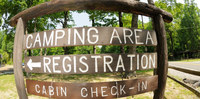
California Labor Law Also Applies to Seniors
Greg and his wife Cathy retired a few years ago and like many seniors found part-time employment to supplement their Social Security checks. They were employed as seasonal caretakers for two separate companies with similar policies. The first year they were hired by California Land Management in Palo Alto, a company that manages federal parks.
“They give you so many hours per week to work and give you a campsite to live at so you can take care of the campground,” Greg explains. “We were only hired to take care of the campground - check the campers in, collect their money and clean up after they leave.”
Everything was fine for about a week. The couple (in their mid-60s) were promised they only had to work 30 hours a week at the most, but soon they were putting in more than 40 hours a week. “The manager gave us a time card but he refused to take them if we didn’t fill them out they way they want it,” says Greg. “He wouldn’t accept our time cards if we clocked in more than 40 hours.”
This year they worked for another company. “Before we signed on, we made sure they understood we only wanted to work 30 hours per week,” says Greg. “Again, it was OK for the first week but they got us to do more work. We cleaned bathrooms along with the usual job, and there was a lot more paperwork involved collecting fees. They wanted us to repair stuff; we had to paint the building that was not agreed on ahead of time. At this place we didn’t even get time cards.
“When I complained, the manager (he runs five campgrounds) got mad at me, took me aside and said we were ‘hiding in our trailer and not working smart.’ In other words he insinuated that we are lazy and stupid. So we packed up and left. But we couldn’t fill out a time card and we were never paid California overtime, which we kept track of.”
Greg figures he and Cathy are owed one week of work - 30 hours each - and overtime pay. And Greg says they aren’t the only seniors being taken advantage of.
“We know one couple in their late 70s who are working 50 hours per day,” he adds. “And we were told that we couldn’t talk to other ‘camp hosts.’ I figure they don’t want us to file a joint complaint.
“I mostly want to get this story told to help other seniors and stop this practice. It is pretty outrageous, especially because it comes down to the federal government who contracts these companies.”
Greg and Cathy wrote a letter to the main company that runs the campgrounds, the district manager and the forest service, below.
To Whom It May Concern:
This letter is to inform you that we are unable to continue our employment contract at Big Cove Campground CA with Thousand Trails Management Services due to the [manager’s] verbal harassment, being ordered not to communicate with other employees, a requirement to work overtime and on days off without compensation, and falsification of timecards that we were not allowed to see or sign. Being of Hispanic decent, I believe this is prejudice on the part of the manager.
We are very sorry to be leaving. We loved the campground and the campers. We strived to take superior care of the grounds. Campers and forest service employees often complimented us on our care of the campground. We will continue to look for employment as Camp Hosts and we hope at a future date we can work for Thousand Trails again.
Sincerely,
Greg and Cathy Villalobos

Plaintiffs Ring the Taco Bell in California Labor Lawsuit
At issue in the California labor law dispute are meal breaks for employees of Taco Bell that are alleged to have been observed outside of legislated parameters mandated by the California labor code.
To wit, California labor employment law holds that non-exempt employees in the state are entitled to a meal break lasting no less than 30 minutes and taken without the need or requirement to perform any work, prior to the end of their fifth consecutive hour of work. However, the class action against defendant Taco Bell claims that plaintiffs are denied an opportunity for a meal break until they have worked five full hours.
According to court records, the California labor lawsuit has underpinnings in an action originally filed by two former employees of Taco Bell, Lisa Hardiman and Sandrika Medlock. The two plaintiffs claimed meal break and overtime violations in the original lawsuit in 2007. The lawsuit was consolidated with other cases in 2009, with plaintiffs starting to lobby for certification as a class action two years after that, in 2011.
That certification for the so-called late meal break class was achieved last year.
In one of the latest developments, the late meal break class petitioned US Magistrate Judge Stanley A. Boone last month to grant the class summary judgment with regard to the late meal break claims, citing alleged violations of the Private Attorney General Act for the State of California (PAGA).
“The court certified the meal period claims because Taco Bell implemented and enforced a common meal period policy/procedure that failed to provide class members with timely meal periods as required under the California Labor Code,” the motion said.
2014 marks the 10th anniversary since the PAGA was enacted in the state. In sum, the California labor employment law statute provides private citizens an avenue for pursuing civil penalties on behalf of the California Labor and Workforce Development Agency. In so doing, private citizens have the opportunity to enforce California labor code.
The amended California labor lawsuit will represent all nonexempt hourly paid Taco Bell employees working in the state of California from September 7, 2003 to July 1, 2013. The criteria is that the employees would have worked more than six hours in a day, and who did not receive the required meal break after working more than five hours.
It has been reported that the class could involve 28,000 class members in the California labor lawsuit. The case is In re: Taco Bell Wage and Hour Actions, Case No. 1:07-cv-01314, in the US District Court for the Eastern District of California.

Disney Faces Proposed Class-Action California Labor Lawsuit
The California labor lawsuit has been brought by Reykeel Zorio, a former nonexempt employee of Disney. According to court documents, the California resident was hired by Walt Disney Worldwide Services Inc. in 2011 and commenced his employment at Disneyland Resort. His employment status was transferred from Walt Disney Worldwide Services Inc. to Walt Disney Parks and Resorts US Inc., according to the complaint.
The plaintiff claims that Walt Disney Worldwide Services Inc., which undertakes the finance data processing system - and Walt Disney Parks and Resorts US Inc., the entity that manages Disney parks - did not properly pay him the accrued vacation time he claims was his due when he left Disney’s employ. Zorio claims this oversight is a violation of California labor code.
He doesn’t stop there. Zorio also claims that Disney, or at least those entities of Disney named in the putative class action, failed to immediately provide to employees who had been fired or terminated wages that were their due, as well as vacation time and other forms of compensation as stipulated under California labor employment law.
California and labor law holds, according to the complaint, that employees who resign are paid the aforementioned compensation within 72 hours of submitting their resignation. The California labor lawsuit claims that this was not done.
“Moreover, the final wages that defendants eventually paid to each plaintiff did not include all of the wages, vacation time and other compensation that were in fact due and owing to plaintiff,” the complaint said.
No fewer than six iconic Disney properties, all based in California, are named in the lawsuit: Disneyland Hotel, Disney Grand Californian Hotel & Spa, Disney’s Paradise Pier Hotel, Downtown Disney District, Disneyland Park and Disney’s California Adventure Park. To that end, the proposed class-action lawsuit would include any and all former nonexempt employees of the two Disney companies named as defendants, who might have worked at any of the six named properties over the preceding four years. Class members are expected to exceed over 500 in number, and would be entitled to wages for each day they were not paid at their regular rate for up to 30 days from the time they were due, according to California state labor laws.
The three causes of action include damages for unpaid vacation pay, restitution of wages and disgorgement of profits due to fraudulent, unfair and illegal business practices, according to the complaint.
The California labor lawsuit was filed June 19. There was no comment from Mickey, Pluto or Goofy, who were not named as defendants. The case is Zorio v. Walt Disney Worldwide Services Inc. et al., Case No. BC549292, in the Superior Court of the State of California, County of Los Angeles.

California Labor Lawsuits and Settlements: From Apple to Janitorial
The Apple lawsuit was filed last year. Apple requested the lawsuit be thrown out, but last week US District Judge William Alsup said a trial would be helpful to learn more about the nature of the employee searches, according to gigaom.com. The former Apple employees allege they waited for up to 30 minutes a day without pay to have managers search their bags for stolen merchandise - whenever they clocked out for lunch and at the end of their shift. Apple managers called the searches “Daily Downloads,” which also included “personal technology checks,” whereby managers compare employees’ Apple device serial numbers to a recorded list. Apple said the search is optional for its 26,000 retail staff, meaning they don’t need to bring a bag to work. Judge Alsup didn’t see it that way, pointing out that “Apple employees may need to bring a bag to work for reasons they cannot control, such as the need for medication, feminine hygiene products, or disability accommodations,” as detailed by gigaom.com.
Two janitorial companies, NLP Janitorial and Coast to Coast West, were slapped with more than $1.5 million in citations by the California Labor Commissioner for allegedly engaging in multiple wage violations, including failure to provide rest or meal breaks, or pay minimum wage or overtime wages, and misclassifying 52 workers as independent contractors. In a news release, Labor Commissioner Julie Su said, “There is a high cost to unfair competition, and these 52 workers bore the brunt of it when their earned wages were stolen from them. Honest janitorial employers struggling to compete against scofflaws also pay.” The two janitorial companies compete for cleaning services to hotels, resorts, theater chains and restaurants.
California labor law settlements
And plaintiffs who filed an overtime class-action lawsuit against Compass Health Inc., asked a California federal judge to grant final approval of a $1.1 million settlement. The proposal would require Compass to pay up to $700,500 to about 2,500 current and former hourly nonexempt employees who worked for the group in California from March 29, 2009 until January 6, 2014.
A $4.75 million California labor law settlement was reached by Universal Alloy Corp. (UAC), a large maker of alloys for the airline industry, based in Anaheim. Plaintiffs in the class-action lawsuit alleged that UAC violated the labor laws regarding overtime and minimum wage payments. The manufacturer was accused of paying factory employees only according to their scheduled shift hours, rather than hours actually worked. Further, the company failed to add bonuses to regular rates of pay, which resulted in overtime miscalculations. A total of 770 class members will share in the settlement.
To avoid stiff penalties, California employers have been advised by the Office of the Labor Commissioner and Labor Law attorneys to prepare for the minimum wage hike this July - it will increase one dollar to $9 per hour.

Proposed California Labor Lawsuit Settlement Worth $4.75 Million
The California labor lawsuit settlement is worth $4.75 million, with the California class reported as reaping the greatest benefit from the settlement. The lawsuit was brought in 2013 and filed in California Federal Court. Universal Alloy Corp. (UAC) maintains headquarters in Canton, Georgia, but also has a large facility at Anaheim.
According to court documents, lead plaintiff Fabio Gonzalez toiled at UAC’s Anaheim plant for about six years, with one of two additional plaintiffs having worked at the Anaheim facility for longer than seven years. A total of 770 class members will share in the settlement, with participants split almost equally with 390 in the California class and the remaining 380 in a class identified with the Fair Labor Standards Act (FLSA).
The California class, however, stands to reap the greatest rewards under California labor employment law, with each California class member expected to receive $7,476 in compensation, v. $840 on average for the FLSA class.
The defendant said that it agreed to settle, in spite of admitting to no wrongdoing and denying the allegations, partly due to the disruption the lawsuit was causing to its business and operations.
In their California labor code lawsuit, plaintiffs alleged that UAC paid factory employees only according to their scheduled shift hours, rather than hours actually worked. There were also allegations that UAC failed to incorporate bonuses into regular rates of pay, which would have resulted in what was described as a systematic miscalculation of overtime, an alleged violation to statutes under California and labor law.
The California labor lawsuit also accused the company of failure to maintain adequate wage statements and records, and failure to provide the required meal and rest breaks as mandated under FLSA guidelines and California labor code.
Plaintiffs in the action seek certification for all current and former nonexempt employees who toiled at the California plant from May 10, 2009 to the present day. They also request certification for a separate, nationwide opt-in class of UAC workers for the same time period, in connection with the company's alleged FLSA violations.
“This settlement provides a substantial recovery, including 100 percent of the alleged underpaid overtime and minimum wages based on defendant’s allegedly improper [conduct],” the plaintiffs state in their proposed settlement motion pertaining to California employee labor law.
US District Judge James V. Selna will undertake judicial review and approval of the proposed settlement. Plaintiffs have requested a hearing for June 16.
The California labor lawsuit is Fabio Gonzalez v. Universal Alloy Corp. et al., Case No. 8:13-cv-00807, in the US District Court for the Ce

Exotic Dancers Bring California Labor Lawsuit
The San Jose Mercery News (4/30/14) reports that 11 former dancers at the Pink Poodle strip club filed a lawsuit alleging that they were treated as independent contractors instead of employees and were not paid minimum wage or overtime. Furthermore, because they were classified as independent contractors, they were not eligible for employee benefits. The lawsuit also alleges that some women were forced to pay the club so they could dance there and were threatened with retaliation if they complained.
The lawsuit was filed in Santa Clara County Superior Court, according to CBS San Francisco (5/1/14). The defendants are reportedly the Kuzinich family, owners of the Pink Poodle.
Lawsuits have been filed by dancers across the country alleging the owners of various strip clubs have failed to pay their dancers minimum wage or overtime, in violation of various labor laws. In 2012, a club in California settled a similar lawsuit for $12.9 million, according to Time (1/15/14). In 2013, dancers from the Penthouse Executive Club settled their lawsuit with the club for $8 million. They also alleged unpaid wages.
Also in 2013, a lawsuit was filed by Felicia Harmon and others against Foxy Lady, Inc. and Arthur Dillard alleging that not only did Foxy Lady not pay its dancers minimum wage and overtime, it did not pay dancers wages at all and forced the plaintiffs to pay to work at the Foxy Lady. The lawsuit (case number 1:13-CV-3517-TWT, in the Northern District of Georgia Atlanta Division) seeks to represent current and former employees of Foxy Lady.
Court documents allege that despite having specific work schedules, specific times and manners for dancing, regulations for attire and set prices for dances, the Foxy Lady classified all its entertainers as independent contractors. The plaintiffs say they were also required to pay a “bar fee” so they could work any given shift and were charged fines or fees for being late for work or violating any of the Foxy Lady’s rules. The lawsuit further alleges that the entertainers were required to attend mandatory meetings but were not paid for being at those meetings.
With so many dancers filing lawsuits alleging they have been misclassified as independent contractors, a federal judge ruled that dancers at Rick’s Cabaret in New York should be paid minimum wage and were improperly classified as independent contractors even though they should have been classified as employees, ABC News reported (9/12/13). That lawsuit was filed in 2009.
The Pink Poodle lawsuit is Coleman et al vs Pink Poodle Enterprises et al, case number 114CV264315.



About . TOS . Privacy . Disclaimer . Contact . Advertise . Member Login
This work is licensed under a Creative Commons Attribution-NoDerivs 3.0 Unported License ©2026 Online Legal Media. All rights reserved.
Visit other Online Legal Media Websites: