Restaurant & Food Service News

Fast Food Joints Sizzling with California Labor Law Violations
Employees at Five Guys Burgers are flipping more than burgers. Both former and current workers have sifted through pages of legal documents and filed a class-action lawsuit against the burger company, claiming California overtime and meal break violations on behalf of the company’s non-exempt, hourly California employees. Originally filed last November 2012, Gutierrez v. Five Guys Operations (Case No. 37-2012-000-86185-CU-OE-CTL) is currently pending in San Diego County Superior Court for the State of California.
Besides claiming non-payment of overtime and meal breaks, the class-action complaint also alleges that Five Guys Burgers failed to provide the proper amount of overtime wages and also failed to provide to their non-exempt, hourly employees in California all legally required thirty (30) minute uninterrupted meal breaks.
The California Labor Code dictates that non-exempt hourly employees must be paid overtime for any hours worked in excess of eight in a workday, and 40 in a workweek must be paid at 1.5 times the employees’ regular rate of pay.
Over at Taco Bell, plaintiffs in several class-action lawsuits filed between 2007 and 2010 were finally granted certification in January 2013 with respect to the late meal break class. YUM! Brands, Inc., the world’s largest quick-service restaurant company with over 39,000 units in more than 125 countries and territories (that are primarily made up by its KFC, Pizza Hut and Taco Bell), continues to defend itself against a consolidated wage and hour litigation in California, according to the Company’s April 29, 2013, Form 10-Q filing with the U.S. Securities and Exchange Commission.
Taco Bell Corp. was named defendant in the class-action suits alleging violations of California labor laws, including unpaid overtime, failure to timely pay wages on termination, failure to pay accrued vacation wages, failure to pay minimum wage, denial of meal and rest breaks, improper wage statements, unpaid business expenses, wrongful termination, discrimination, and conversion and unfair or unlawful business practices in violation of California Business & Professions Code Section 17200.
Furthermore, a number of former Taco Bell employees are also seeking penalties for alleged violations of California’s Labor Code under California’s Private Attorneys General Act as well as statutory “waiting time” penalties and alleged violations of California’s Unfair Business Practices Act. The Plaintiffs seek to represent a California statewide class of hourly employees.
According to calculations by the Federal Judicial Center, US employers have seen an increase in the number of wage and hour lawsuits filed against them in federal court, and California is no exception. A recent article in Corporate Counsel said in 2003 that the number of federal cases nearly doubled, from 2,035 to 4,055. By 2007, they had increased to 6,786.
Meanwhile, fast food franchiser Alia Corporation (which has more than 20 outlets in California) agreed to pay $100,000 to settle a disability discrimination lawsuit filed by the Equal Employment Opportunity Commission (EEOC). The lawsuit was filed in 2011 on behalf of a former floor supervisor with an intellectual disability who was demoted to janitor when Alia took over. The EEOC alleged that Alia cut his hours and reduced his hourly wages, thereby forcing him to find other employment and resign by June 2009. The EEOC argued that Alia had engaged in disability discrimination that violated the Americans with Disabilities Act (ADA).

California Labor Law: Tip Pools Complex
A recent decision in New York is reminiscent of one in California from 2009. The lawsuit in New York involved Starbucks baristas, who alleged shift supervisors should not be eligible to participate in the tip pool because they are supervisors and make more than the baristas. According to NBC News (6/26/13), the New York Court of Appeals found that shift supervisors are eligible to share in the tip pool because their main duty is to serve food and drinks.
The court found, however, that assistant store managers should not be included in the tip pool because they have too many managerial duties, including hiring and firing, so they could not be classified as wait staff.
In 2008, Starbucks faced a similar lawsuit in California (Chau vs. Starbucks), with the Superior Court of the State of California finding that the coffee chain must pay its baristas $100 million to settle a lawsuit, arguing shift managers should not be part of the tip pool.
But in 2009, the California Court of Appeals in San Diego ruled that shift supervisors are eligible to share in the tip pool, reversing the lower court decision. The Los Angeles Times (6/3/09) reported at the time that the court found that shift supervisors performed the same tasks as baristas.
Under California state law, employers or agents of employers cannot receive any part of a tip left for an employee, with the legal definition of an employer or agent being someone who has the authority to supervise or direct workers. Baristas argued they should not share their tips with shift supervisors because they were managerial, but Starbucks said its shift supervisors spent up to 95 percent of their time making and taking coffee orders, essentially the same work that baristas perform. Furthermore, Starbucks argued that although shift supervisors had some supervision authority, they could not hire or discipline baristas, limiting their authority.
As with so many labor laws involving pay, the important thing is not the worker’s job title, but the actual duties the worker performs. So it is not enough to say that the employee is managerial. The duties the employee regularly performs must reflect that title for that employee to be exempt from overtime pay and tips.
California Labor Law: Bi-polar Cook Wants Just Desserts
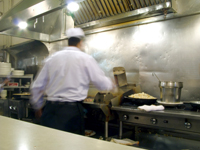
Anthony, 20 years old, suffers from bi-polar disorder, but it didn’t interfere with his work as cook/dishwasher at a Mountain Mike Pizza franchise. In fact, nobody even knew about his condition (he had worked there for six months) and Anthony wasn’t required to divulge that information to his employer, unless he was asked.
“On my day off I had a nervous breakdown and had to be hospitalized overnight,” Anthony says. “Because I couldn’t go back to work the next day, my employer told me to get a doctor’s note, which said ‘Crestwood Psychiatric Clinic’ on the letterhead. I just missed one day of work and I was under the assumption that I would resume my usual work schedule. I worked the night shift, starting at 6 p.m. until midnight, five days a week.”
Despite Anthony’s positive work record, his boss (the franchise owner) fired him. Anthony has looked into the California labor code and believes he has been both wrongfully terminated and also discriminated against due to his disability.
“As soon as my boss knew that I suffer from bipolar, my hours were cut to zero, but she kept me on as an employee for more than a month,” Anthony explains. California is an “at will employment” state, but that is no excuse to lead Anthony on for that amount of time: It is unfair and illegal to discriminate, but it is downright mean to leave him hanging for more than a month without any income.
“When it was time to get the week’s schedule, she would call and say they didn’t need me,” says Anthony. “This is a fast food restaurant; there is no way over 30 days that you don’t need one of your cooks, or need the dishes washed. A co-worker told me that she had hired three new people during my absence.
“I finally sat down and talked to my boss. She said that I had threatened her, the company and an employee! I didn’t learn that I had threatened anyone until I had this conversation with her, which took place about three weeks after the hospital incident. She said this employee feared for her life, which was ridiculous. Fortunately, when I tried to talk to her, I had one of my co-workers, Christina, with me. ‘I have no idea what you are talking about because he would never threaten anyone,’ Christina told my boss. But she was still adamant that she had no hours for me.
“I explained to her that I really needed the hours, even though I was getting paid $8 per hour, which is exactly the minimum wage. I would take any shitty job she had, including standing outside waving the restaurant’s sign. She even denied me that. I could blow the whistle and report her to the health department if I wanted to be vindictive, but she will get her just desserts eventually and I don’t need to add to it.
“I contacted the California Labor Board because I am not the only one she is messing with. She has also discriminated against other employees; she has treated them wrongly. As for a California labor lawsuit, I don’t expect anything. I just want her to know, through the proper legal channels, that she can’t treat people this way. Given the economy and employers like her messing with you, it is extremely hard to find work.
“I recently found a better job and I am getting paid $9 per hour. And I told my new employer that I am bi-polar. He didn’t ask so I wasn’t obligated to tell him anything. But I explained the previous situation and he wants to give me a chance. ‘I have heart,’ he said.”

ERISA Not Just About Protecting Investments
employee stock plans, the truth is that ERISA covers much more than retirement plans. Included in ERISA benefits are insurance provided through an employer, meaning that any claims about employer-provided insurance are covered by ERISA.
Covered by the Employee Retirement Income Security Act of 1974 (ERISA) are retirement, health, life insurance, and disability insurance plans. Covering only private employers, ERISA does not require employers to provide health insurance or other benefits plans; it simply sets out rules for when employers choose to offer such benefits. If employers choose not to offer benefits as covered by ERISA, they are not governed by ERISA rules. Furthermore, ERISA does not cover insurance policies that are purchased privately. It only covers those provided by an employer.
Under ERISA, those in charge of health plans and other benefits must provide information about the plan's funding and features, must abide by their fiduciary responsibilities and must provide an appeals process for people who have a grievance with their plans. Finally, ERISA gives participants the right to sue plan fiduciaries in cases where there is a breach of fiduciary duty.
Before a lawsuit can be filed, however, under ERISA the claimant must exhaust administrative remedies before filing a lawsuit. This means that if the insurance company has an internal appeals process, the claimant must file an appeal before filing a lawsuit, if the insurance policy in question is provided by the employer (private insurance, because it is not covered by ERISA, does not have such a requirement and a lawsuit can be filed once the first denial is received.)
Many insurance companies have rules for filing appeals, including a set time in which to file. Certain medical records and an appeal letter may also be required. If that appeal is then denied, a lawsuit can be filed to enforce the claimant's rights. A plan beneficiary or participant can file the lawsuit, depending on the circumstances, and the lawsuit is typically filed against the plan fiduciary or administrator.
It is important to note that under ERISA a claimant will not be awarded punitive damages; all that can be claimed are costs associated with the insurance policy.
.jpg)
In-N-Out Burger Class Action Alleges Racial Discrimination in California
According to the Contra Costa Times (9/7/12), plaintiffs Alonzo Brown and Carlos Dubose applied for jobs with the chain, at various locations and for various jobs. Even though the firm was actively advertising for applicants, the plaintiffs allege in their California labor lawsuit they were repeatedly turned away. Both men are over 40 years of age, and both are African-American.
Arnie Wensinger, vice president and general counsel for the company, said in a statement the allegations in the lawsuit have no basis in fact. "In-N-Out Burger does not discriminate on the basis of ethnicity, race or age in our hiring policies or practices," Wensinger said. "We hire from our local communities and our restaurants reflect the demographics of that community."
Wensinger referenced the allegations as baseless and irresponsible.
Plaintiff Brown, according to the California labor lawsuit, applied for a store associate job in Oakland. Brown alleges he was told the company was hiring, but was denied a job two months later.
Dubose, as part of his California and labor law complaint, noted he applied for two jobs on two separate occasions at two locations: a cleanup associate position at Fisherman's Wharf in San Francisco, and a month later for an advertised position in Oakland. According to the lawsuit, Dubose was denied both positions.
The California labor employment lawsuit alleges that Dubose was denied a job at the Oakland location in spite of the fact a manager at the restaurant told him at the time he applied the company planned to hire five individuals within two months.
The plaintiffs allege age and racial discrimination, noting they were both told the company was not hiring after all when the two were rejected for jobs, even though both men had been told at the point of application the company was, indeed hiring.
"These are not isolated examples of employment practices or individual decisions," the lawsuit states. "On the contrary, these incidents are representative of the Company's systematic discrimination against the Class and in favor of applicants who are under the age of forty and/or not African American."
California labor code has strict guidelines when it comes to areas such as California prevailing wage law, hours of work, meal and rest periods, and the correct computation of overtime. Discrimination against age, ethnicity and gender is also entrenched in California state labor laws.
The statement from In-N-Out Burger noted the company intends to "aggressively defend itself" against the allegations. It was noted in the statement that more than 23 percent of the workforce employed at the two identified locations, are African-American.
Safety Hazards Violation of California Labor Law
In Jonathan’s case, he was already in the unsafe and dangerous workplace. The California labor code also says that “No employer shall require, or permit any employee to go or be in any employment or place of employment which is not safe and healthful.”
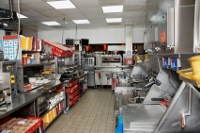
“I worked as a cook at Chipotle for three months,” says Jonathan. “It was just a matter of time before someone had a serious accident. No one spoke up about the safety conditions here; nobody brought it to the supervisor’s attention. I know they were afraid of losing their jobs if they did complain about the hazardous environment. They always complained amongst each other, at every chance they could. But when push came to shove, nobody would back me.
"Some people have been working at Chipotle for years and they like their jobs. I work mostly with women in the kitchen and they constantly complained about how they didn’t like the conditions. There were slippery floors, for one thing. The first time I complained to my boss was about a big pot, it was a huge pressure cooker that only had one handle??"the other had broken off.
"My boss said, ‘Just work with it and you have to learn how to move around in this job, adapt’. She didn’t want to hear that anything was unsafe. But how can you take a heavy pot from one end of the kitchen to the dishwasher that is boiling hot and ‘adapt’? I’m sure my employer is familiar with California labor employment law??"they count on employees not speaking out because they are afraid of losing their jobs.
"I have to prep food. The policy at Chipotle is that you have to wear a metal mesh cutting glove (I’m 6’ 4” and 220 lbs) but the glove they gave me was way too small. I got bruises and my hand was cramped, so I complained. My boss said that she couldn’t get another glove because someone threw the others away. I have knife skills but this was their policy: If you got caught by the manager not wearing it you would be fired. On my first day I started prepping without the glove and I was reprimanded. ‘Whoa, don’t ever do that again, ever,’ my boss told me. ‘If you cut yourself not wearing the glove, we aren’t liable.’ I guess someone had a bad accident in the past…
"Here’s another thing: The pilots on the ovens always went out while I was cooking. There were usually a few burners that didn’t work; I would turn on the burner but it wouldn’t ignite. I shouldn’t have to light the pilots all the time but that went on for weeks. When you’re in a hurry, you just turn your burner on and if it didn’t light, sometimes it took a while to relight the pilot. This meant that gas was pumping out of that burner??"sometimes for a minute or so.
"The last time I complained, my supervisor basically told me to shut up and just do my job. I believe I got fired because of the safety issues but my boss told me it was because I ‘had an attitude’. I didn’t smile enough and customers can see me??"we work in an open kitchen. It’s pretty hard to smile all the time with my hand in that mesh glove, walking on slippery floors and trying to carry a pot with one handle.”
The California labor code states:
Any employee who is discharged, threatened with discharge, demoted, suspended, or in any other manner discriminated against in the terms and conditions of employment by his or her employer because the employee has made a bona fide oral or written complaint to the division, other governmental agencies having statutory responsibility for or assisting the division with reference to employee safety or health, his or her employer, or his or her representative, of unsafe working conditions, or work practices, in his or her employment or place of employment, or has participated in an employer-employee occupational health and safety committee, shall be entitled to reinstatement and reimbursement for lost wages and work benefits caused by the acts of the employer. Any employer who willfully refuses to rehire, promote, or otherwise restore an employee or former employee who has been determined to be eligible for rehiring or promotion by a grievance procedure, arbitration, or hearing authorized by law, is guilty of a misdemeanor. (Labor Code Section 6300)
No employee shall be laid off or discharged for refusing to perform work in the performance of which this code, including Section 6400, any occupational safety or health standard or any safety order of the division or standards board will be violated, where the violation would create a real and apparent hazard to the employee or his or her fellow employees. Any employee who is laid off or discharged in violation of this section or is otherwise not paid because he or she refused to perform work in the performance of which this code, any occupational safety or health standard or any safety order of the division or standards board will be violated and where the violation would create a real and apparent hazard to the employee or his or her fellow employees shall have a right of action for wages for the time the employee is without work as a result of the layoff or discharge. (Labor Code Section 6311.)

Recent Meal and Rest Break Decisions could result in California Overtime Lawsuits, says Attorney
In April 2012 the California Supreme Court clarified the law with respect to meal breaks and rest breaks. “We had an explosion of meal and rest claims in California in recent years,” says Leonard Emma, California labor law attorney. “Right now employers are touting Brinker as a victory but the Court’s holding isn’t as remarkable or sweeping as the defense bar is making it out to be.”
Emma says that in the legal world there are certain highly-anticipated decisions that lawyers will attempt to spin into game-changers, and that is what is happening with the Brinker case. “The key issue the Brinker Court decided is the extent of employers’ obligations with respect to providing meal and rest periods to employees,” says Emma. “Must employers simply permit employees to take breaks? Or must employers police the workforce and pro-actively ensure that employees are relieved of all work duties during designated break periods? Brinker is important because the penalty for each meal or rest period violation is one hour of pay at the employee’s regular hourly rate. When dealing with a large class of hundreds or thousands of employees, the stakes are high.”
In Brinker, the defense (employer) prevailed in its argument that employers need only to make breaks available and that employers are not be required to police the workforce to pro-actively ensure all employees stop all work during designated breaks. “While this clarifies the law, it is a common-sense decision and should not come as a great surprise,” explains Emma. “Employers still may not require that employees work through breaks without paying a premium for the violation, which is one-hour of pay at the regularly hourly rate. Similarly, employers may not impede or discourage employees from taking meal or rest breaks.”
“Workers will still be pressured to work through breaks by unscrupulous employers after Brinker,” predicts Emma, “and meal and rest period claims remain viable after Brinker.” Emma notes that there are other ways to vindicate employees’ rights in the meal and rest break context. For example, off-the-clock and overtime violations resulting from work performed during meal periods are unaffected by this decision. “The Brinker Court held that work performed by an employee while off-the-clock during his or her meal period must be paid if the employer knows or should know the employee is working,” says Emma. “To the extent this off-the-clock work results in overtime, overtime wages are owed. Keep in mind that this is the law in California only and these rules apply to non-exempt employees.”
Also in April, the California Supreme Court issued a second and separate meal and rest break decision in Kirby v. Immoos Fire Protection Inc. In the Kirby case, the employer prevailed at trial and judgment was entered against the plaintiff to pay the employer’s attorneys fee but the California Supreme Court overturned that decision. “Kirby held that attorneys’ fees are not recoverable by either prevailing employees or prevailing employers in meal or rest period violation claims,” says Emma.
So how does this all play out for the average California worker? Emma says that California employment attorneys will probably file fewer lawsuits alleging meal and rest period claims exclusively. “First, the employer doesn’t have to proactively ensure breaks are taken so employees cannot hope to prevail on that theory,” he adds. “Second, there is less incentive for attorneys to take these cases on an individual basis.”
But it isn’t all doom and gloom for wage and hour attorneys. “There are often separate grounds for recovery of attorneys’ fees in wage and hour cases,” says Emma. “For example, meal and rest period violations are often brought in tandem with claims for unpaid overtime. Attorneys’ fees are available to prevailing employees in overtime cases. Furthermore, in the class action context, attorneys’ fees are recoverable under the common fund, substantial benefit, and/or private attorney general theories.”
For this reason, plaintiffs’ attorneys should not be deterred from filing wage and hour class actions that include strong meal and rest period claims. “I would expect to see fewer questionable meal and rest cases filed, which is a good thing,” quips Emma. “Otherwise it’s business as usual.”

California Labor Law: Last Word on the Lunch Break Lawsuit
Employers no doubt feel the decision was worth the wait - a suit that began in a lower court held that California labor employment law only requires employers to "supply or make available" meal periods. But the Division of Labor Standards Enforcement, which is charged with the responsibility of enforcing wage and hour laws in the state, has another point of view, stating that employers have "an affirmative obligation to ensure the workers are actually relieved of all duty" during meal breaks.
The questions were whether an employer simply provides for meal breaks or does the employer have a legal responsibility to enforce breaks?
The California Court of Appeals upheld the lower court ruling, which is consistent with several decisions at the federal level: California employees are not forced to take their meal breaks - but employers still have to pay them if they do work through their break. However, if an employee chooses to work through their lunch break, the court ruled that an employer "will not be liable for premium pay." Rather, "it will be liable for straight pay, and then only when it 'knew or reasonably should have known that the worker was working through the authorized meal period.'"
The court made it absolutely clear that the employer has no obligation to ensure that an employee does absolutely no work during his legally mandated lunch break.
Under California law - Labor Code section 512 and Wage Order No. 5 - employers are only obligated to provide hourly employees with a lunch break. That obligation is satisfied "if the employee (1) has at least 30 minutes uninterrupted, (2) is free to leave the premises, and (3) is relieved of all duty for the entire period."
"We conclude an employer's obligation is to relieve its employee of all duty, with the employee thereafter at liberty to use the meal period for whatever purpose he or she desires," Justice Kathryn Mickle Werdegar wrote in the unanimous decision. "But the employer need not ensure that no work is done."
The court's analysis of the lunch break lawsuit further explained what would happen if an employee chose to work through his lunch break. In a nutshell, a California employee can't file a lunch break lawsuit if he (1) freely chooses to work through lunch, and (2) gets paid his regular hourly rate for doing so.
The wage and hour case that morphed into the Lunch Break Lawsuit began in 2002 when The California Division of Labor Standards Enforcement launched an investigation into whether Brinker International Inc., a Dallas-based restaurant operator whose brands include Chili's Grill & Bar and Maggiano's Little Italy, was complying with its rest and meal break obligations. In the end, Brinker paid $10 million to settle a lawsuit by the state agency.
Then a separate lawsuit seeking class-action status was filed on behalf of employees at Brinker's restaurants in California. The lawsuit claimed that Brinkers failed to provide rest and meal breaks as required under state law, and forced some employees to work off the clock during meal periods.
A lawyer for the hourly employees at Brinker, said they are pleased with the Supreme Court decision. "We feel that it is a very good result for California workers," said attorney Kimberly Kralowec.
As for the second meal:
The Supreme Court ruled that the duty to provide a second meal period arises only after 10 hours of work. This ruling meant that the Court rejected the plaintiffs' contention that a second meal period must be provided within five hours after the end of the first meal period (known as the "rolling five-hour" theory that plaintiffs had proposed).
The Court weighed in on rest rules:
Employers must authorize and permit employees to take a 10-minute rest period for each four-hour period in which they work any amount of time in excess of two hours, unless an employee's total daily work time is less than 31/2 hours. Further, although the "general rule" in a typical 8-hour shift is that "one rest break should fall on either side of the meal break," the sequencing of meal and rest breaks may be altered depending on factors such as shift length."
To summarize the lunch break lawsuit:
Employers must provide off-duty meal periods, but need not ensure they are taken.
What does this ruling mean to those people who have wage and hour lawsuits regarding meal breaks pending? Stay tuned: LawyersandSettlements will ask a wage and hour attorney experienced with the California labor code to weigh in.

California Labor Law Case Settled for $316,000
The release noted that the claims were filed against the Pho Clement and Pho Clement 2 restaurants in San Francisco. The Department of Industrial Relations' (DIR) Division of Labor Standards Enforcement, also known as the Labor Commissioner's Office, helped the parties come to an agreement following an investigation that started in June 2011.
"Regardless of the industry, employees should never feel like they have to fight to receive the full wages they are owed. In this instance, employees successfully stood up for wages taken by their employer that they were owed," Christine Baker, the director of DIR, said in a statement.
The release noted that the settlement that was reached requires that the employers pay each of the eight employees an amount that ranges from $17,432 to $85,114, depending on the amount of unpaid overtime wages that they were owed.
"While we are grateful that this process has come to an amicable conclusion, refusal to pay workers for all hours worked has no place in California. Overtime laws are on the books for a reason and the state will protect both employees and the honest employers who play by the rules," said Su.
The release noted that the collaborative effort between workers, legal and community advocates, and the state helped the employees receive the settlement that they deserved.
"The Asian Law Caucus, Chinese Progressive Association and the Progressive Workers Alliance assisted us in conducting the thorough investigation that led to our ability to get the wages owed into workers' pockets," said the labor commissioner.
According to the DIR website, the California Department of Industrial Relations' Division of Occupational Safety and Health (Cal/OSHA) also recently issued 28 citations with penalties that added up to $540,890 following its investigation of a recent explosion in Sylmar that injured three people, two of them critically.

Panera Bread Settles California Labor Law Dispute
The news source reports the class-action lawsuits were filed by former employees who claimed the cafe chain did not pay overtime or provide breaks to them at stores in California.
While Panera noted in the regulatory filing that it has set aside $5 million to settle the claims, the California Superior Court still needs to approve the settlement, according to the news provider. Additionally, Panera has reportedly denied any wrongdoing and did not make any admission of guilt in the proposed settlement, according to the filing.
The Dispatch reports that in the lawsuits, which were filed in 2009 and 2011 in the counties of Contra Costa and San Bernadino, former Panera employees accused the company of violating the California Labor Code.
In addition, the plaintiffs claimed Panera failed to provide meal and rest periods and "termination compensation," and violated California's Unfair Compensation Law.
Panera is not the only corporation to have been hit with allegations of labor violations recently, as California Labor Commissioner Julie A. Su recently issued additional citations totaling more than $600,000 against Premier Warehousing Ventures for issues uncovered during an inspection on October 12.
According to a release from the state's Department of Industrial Relations, the citation was the result of the company's alleged failure to provide proper wage statements for its workers. The Labor Commissioner also said the company failed to keep its payroll records in the state, which was another violation.
"We hope this citation sends a message to all employers in California that when the failure to keep and provide records as required by law is part of a concerted effort to deny workers their hard-earned wages, we will not tolerate it," Su said in a statement.



About . TOS . Privacy . Disclaimer . Contact . Advertise . Member Login
This work is licensed under a Creative Commons Attribution-NoDerivs 3.0 Unported License ©2026 Online Legal Media. All rights reserved.
Visit other Online Legal Media Websites: