
Financial Industry News

Class-Action Status Given to Apple Wage and Hour Lawsuit
The initial lawsuit - which was dismissed in 2014 after a Supreme Court decision in a different case - was refiled. It alleges that because the security check is for the sole benefit of Apple and is done in all Apple retail stores across the US, that employees should be paid. Typically, employees undergo security screening after they have clocked out for their meal break or at the end of the day, meaning any time spent waiting for a manager to be free to do a check is unpaid time.
According to the initial lawsuit, that time can add up. For an employee leaving twice during a shift, the wait can mean anywhere from 10 to 15 unpaid minutes. For full-time employees, that adds up to uncompensated overtime.
The lawsuit calls Apple’s conduct regarding the unpaid security checks “illegal and improper” and says employees throughout the US are owed millions of dollars in wages and overtime. Amanda Frlekin, a named plaintiff in the original lawsuit, recorded between 10 and 15 uncompensated minutes during every shift, adding up to between 50 and 90 minutes over the course of the week.
“This daily 10-15 minute uncompensated waiting time during security checks was done in order to undergo searches for possible contraband and/or pilferage of inventory,” the lawsuit alleges. “Because such screening is designed to prevent and deter employee theft, a concern that stems from the nature of the employee’s work (specifically, their access to high value electronics and merchandise), the security checks and consequential wait time are necessary to the employee’s primary work as retail Specialists and done solely for Apple’s benefit.”
Workers are allegedly prohibited from leaving the store prior to a screening, and employees who refuse the security checks can face disciplinary action, including termination.
Apple has argued that the time spent undergoing bag checks is negligible and therefore should not be compensated. It also argues that not all managers conduct security screenings.
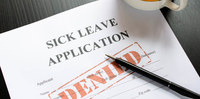
Will Paid Sick Leave Spur California Labor Lawsuits?
If an employer denies an employee accrued paid sick leave and/or retaliates in any way when an employee tries to use paid sick leave, that employee can now file a labor law complaint with the California Labor Commissioner’s Office. After a complaint is filed, the Commissioner’s Office has the authority to investigate the complaint and determine if damages and penalties will be awarded.
Many of those 6.5 million workers (about three-quarters of the state’s low-wage workers) who will benefit from this new law for the first time are parents who have to take care of their children. Too often children would show up at school sick because the (often single) parent feared getting fired if they didn’t show up at work. Having to send a sick child to school or leaving a sick child at home alone is heart-wrenching. Hillary Clinton said that no one should have “to choose between keeping a paycheck and caring for a new baby or a sick relative.”
And many employees who were never given paid sick leave, or any paid time off, are workers earning minimum wage. People in restaurants and retail who are barely scraping by and go to work sick (yes, the person who cooked your food could have the flu). Assembly member Lorena Gonzalez, D-San Diego, said that “We just want employers to know it’s not an option, and employees can’t be penalized for using their paid sick days. They can’t be fired or have their hours cut. It’s important for them to know they have the right to earn these paid sick days.”
The new law is complicated, and another reason why paid sick leave complaints may spur lawsuits. But every employee should know their rights and exactly what is covered. In a nutshell, for each 30 hours that somebody works, they get one hour of sick leave. The AB 1522 says that businesses will be required to show how many hours of paid sick leave workers have earned on their pay stubs. Employers can either choose to have workers accrue one hour of paid sick leave for every 30 hours worked, or grant employees three days of paid sick leave upfront, to be used within a one-year period.
Every business is required to provide this benefit, even if it only has one employee. Whenever possible, employees must provide “reasonable advance notification” orally or in writing of their desire to use the leave when the need for sick leave is foreseeable. Of course you can’t always know beforehand when you will be sick but you can also use sick leave for the following:
• the diagnosis, care or treatment of an existing health condition
• the preventive care of an employee
• an employee’s personal family member (including spouses, registered domestic partners, children, parents, grandparents, and siblings)
• employees who are victims of domestic violence, sexual assault, or stalking
If they haven’t done so already, employers might want to familiarize themselves with the new paid sick leave law and revise their policies and procedures. And employees shouldn’t rely on their employers to explain their benefits.

California Labor Paid Sick Leave Laws Clarified, Still Complicated
In sum, The Healthy Workplaces, Healthy Families Act of 2014 (AB 1522) was signed into law by Governor Jerry Brown last year for a planned two-stage implementation at the beginning of 2015. Various changes to record keeping and the posting of notices were brought in at the first of the year, followed by the implementation of changes to accruals and reporting on July 1.
The aforementioned changes to the California labor code were part of the original adoption of AB 1522. However, employers found the rollout somewhat overwhelming, requiring an update to AB 1522 in an effort to straighten out some of the confusion.
That update came in the form of AB 304, a bill that Governor Brown swiftly signed into law on July 14 and is effective immediately. The amendments provide some clarification with regard to compliance over payments, provisions for time off and so on. The clarifications are important not only for the employer - in order to properly comply - but also the employee, for whom a basic understanding of the new provisions is important in order to identify whether or not an employer is properly conforming to the new guidelines.
One of the clarifications with regard to California and labor law stemming from the quick passage of AB 304 has to do with record keeping: while an employer can know the reason(s) and purposes for which an employee uses paid sick time, there is no requirement in record-keeping protocols for maintaining documentation to that end.
Were an employer to maintain documentation with regard to the purposes for paid sick leave, or were an employee to find himself getting stiffed on sick pay and sick leave, he needs to be able to identify incidents of noncompliance in order to initiate and pursue a California labor lawsuit, as required.
AB 304 clarifies protocols for calculating paid sick leave, and the employer now has two options for doing so: 1) a calculation formula akin to the regular rate of pay for overtime calculation for the workweek in which paid sick time is used, and 2) the original calculation protocol dividing the employee’s total wages, not including overtime premium pay, by the employee’s total hours worked in the full pay periods of the prior 90 days of employment.
The July 14th amendment also provides for alternate accrual methods beyond the formula of one hour for each 30 hours worked, provided the accrual is on a regular basis and the employee will have 24 hours of paid sick leave available by the 120th calendar day of employment.
There is also clarification, for the purposes of California labor employment law, with regard to the right an employer has in limiting an employee’s use of paid sick days to 24 hours or 3 days either: (1) in each year of employment (by anniversary year, for example); or (2) in each calendar year; or (3) in any specified 12-month period.
Among other provisions in AB 304 is clarification over the requirement that an employee, to be eligible for paid sick leave, must be in a position to have worked for the same employer for 30 days, as opposed to simply working for any employer in the state of California.
There is a somewhat complicated grandfather clause for those employees who were provided paid sick leave or paid time off prior to the implementation of AB 1522 at the first of the year, and for whom a different method for accruing sick time may have been used. This clause allows for a more gradual accrual, provided the employee accrues eight hours of paid sick leave in the first three months of employment and was eligible to earn 24 hours of sick leave or paid time off within nine months of employment.
At the end of the day, California state labor laws are intended to level the playing field and provide fairness for the employee. A mutual understanding of California employee labor law is an important prerequisite for the employer to properly implement new laws, and for the employee to understand when those statutes are being accidentally or purposefully circumvented…

Respecting Caitlin Jenner and Her Community Under the Law
For some time now, California labor law has protected transgendered individuals from discrimination and harassment. However, a decision by the Superior Court of California, County of Sacramento last spring held that denying transgender employees the right to use gender-identity appropriate facilities remains a violation of the state’s anti-discrimination laws, and other statutes entrenched in the California Labor Code.
That decision, released in March of 2014, held that transgendered employees in the state of California have the right to use gender-identity appropriate change room and washroom facilities in the state of California. Various other states have enacted similar updates to their laws.
Now, the Feds have finally entered the pool with an update to federal codes that mirror California and labor law, as well as similar laws in other jurisdictions related to transgendered individuals.
To that end, the Occupational Safety and Health Administration (OSHA) on June 1 published A Guide to Restroom Access for Transgender Workers.
“The core principle is that all employees, including transgender employees, should have access to restrooms that correspond to their gender identity,” said Assistant Secretary of Labor for Occupational Safety and Health Dr. David Michaels, in a released statement. “OSHA’s goal is to assure that employers provide a safe and healthful working environment for all employees.”
The guide itself is detailed, but in sum, the rule is stated simply thus: if a female has transgendered, either emotionally or physically (or both) to male and therefore identifies as male, then that individual has the right and freedom to use the men’s washroom.
The same holds true for Bruce Jenner, who now identifies as Caitlin. It wasn’t that long ago that Jenner was being interviewed on national television about his story and his ongoing transition to female, the gender to which Jenner now identifies. This week, the release of the Caitlin Jenner photo shoot for the cover of Vanity Fair is a stark representation of what Jenner was revealing just a few weeks ago.
Therefore, applying the Bruce Jenner/Caitlin Jenner example to the rule of law, Bruce Jenner identifies as female now (as Caitlin Jenner) and thus, has the right to use the women’s washroom.
The OSHA guide, and the corresponding law, is founded upon the core belief that all employees in the workplace should be permitted, without retaliation, use of the facility that best matches his or her gender identification. At the end of the day, however, the OSHA guide notes that the employee should determine “the most appropriate and safest option for him - or herself.”
OSHA also identifies best polices that provide additional options that transgendered employees may choose, but are at the same time not a requirement. Such options, as available, could include: “Single-occupancy gender-neutral (unisex) facilities, and: Use of multiple-occupant, gender-neutral restroom facilities with lockable single occupant stalls.
“Under these best practices, employees are not asked to provide any medical or legal documentation of their gender identity in order to have access to gender-appropriate facilities,” states the guideline. “In addition, no employee should be required to use a segregated facility apart from other employees because of their gender identity or transgender status. Under OSHA standards, employees generally may not be limited to using facilities that are an unreasonable distance or travel time from the employee’s worksite.”
The guidelines also speak to the existence of local and state laws and statutes, such as California labor employment law, about which all employees should be conversant.
To summarize, transgendering has long passed the signpost of sensationalism. Rather, gender identification in any form has progressed from tolerance to widespread acceptance; and yet another indication of this is the release, this summer, of Becoming Us, an unscripted “docuseries” on ABC Family, documenting the life of 17-year-old Ben Lehwald of Evanston, Illinois. In the series, which is produced by Ryan Seacrest Productions, Ben’s father Charlie transitions to Carly. The narrative is told from Ben’s perspective as he watches his dad go through his divorce from Ben’s mom Suzy, before undergoing gender reassignment surgery.
In the grand scheme of things, washroom assignment (or reassignment) should be the least of a transgendered individual’s worries. Nonetheless, it is an issue that many states have been grappling with for some time - including California and labor law observed by the state. Now, the Department of Labor through the OSHA guideline will ensure that the rights of everyone are quite properly observed and respected behind the washroom stall.
Caitlin Jenner will use the women’s washroom. It’s only appropriate. And it’s also the law.

Two Very Different California Labor Code Lawsuits
The case is Wilemon v. Intercontinental Exchange Inc., Case No. GCG-15-544667, in the Superior Court for the State of California, County of San Francisco.
According to court records, Wilemon served as a managing director of NYSE Euronext from 2009 through 2014, and was often sought out by media such as Fox News and Al Jazeera to comment on behalf of the NYSE. According to court records, in February of 2014 Wilemon was contacted by a producer associated with the satirical program, The Daily Show, and was asked if he would be interested in presenting his views on the Affordable Care Act (ACA).
Wilemon, according to the California labor lawsuit, agreed to participate - although he specified he would not be representing the views of the NYSE or, for that matter, Fox News. He did agree, however, to be identified as a “Fox Business Guest Commentator,” and was aware of The Daily Show’s capacity to edit several hours of footage into what became a seven-minute satirical segment.
Even though Wilemon did not represent the views of his employer, NYSE’s parent company Intercontinental Exchange Inc. was not happy with the outcome and terminated Wilemon’s employment in violation of the California labor code, or so Wilemon alleges in his California labor lawsuit.
“Defendants terminated plaintiff’s employment due to defendants’ own antipathy for the political message of The Daily Show, which is widely regarded as an influential progressive political platform and defendants’ assumption that their financial industry clients shared defendants’ said antipathy,” the suit says. Wilemon seeks damages not less than $150,000.
That’s how the cookie crumbles
Meanwhile, in an unrelated California labor employment law case, the Office of the California Labor Commissioner has cited a Vista-based wholesaler for numerous violations to California and labor law, including allegations of wage theft.
According to a news release (3/20/15) from Labor Commissioner Julie A. Su, Cookies con Amore denied various employees overtime pay, rest periods and meal breaks. Su also alleged that Cookies con Amore forced some of the 73 workers affected to sign a statement agreeing to the practices that amounted to wage theft violations.
It is alleged that between October 2013 and December of last year employees were made to work 10 hours a day or longer, but paid straight time without any provision for overtime pay, in an alleged violation of California labor employment law. Within that time, it is alleged that employees were given only a single, 30-minute break.
It is alleged that some workers were mandated to sign a written consent, agreeing to working conditions and circumstances that the Office of the Labor Commissioner held as substandard. If they did not agree to sign the waiver, it is alleged that employees were told to seek employment elsewhere.
“California workers deserve to be paid fairly and fully for their labor, and employers who deny them their wages and benefits will be held accountable,” said Christine Baker, Director of the Department of Industrial Relations (DIR). The Labor Commissioner’s Office, also known as the Division of Labor Standards Enforcement (DLSE), is a division within DIR.
“We appreciate the brave workers who cooperated with our investigation and the California Rural Legal Assistance, a critical partner to us in helping workers come forward and report such violations,” Su added.
Cookies con Amore supplies gourmet cookies to Whole Foods, gourmet grocery stores and food outlets.
With regard to the foregoing violations to California state labor laws, Cookies con Amore was assessed $120,665 including $51,444 in overtime wages, and $69,221 in rest and meal time periods, which will be paid to the affected workers, and an additional $63,800 in civil penalties.

Chase Bank to Settle California Labor Lawsuit
Legal Newsline (10/23/14) reports that employees of Chase Bank in 12 states were part of the lawsuit. They alleged they were not paid properly for work, including overtime, because not all their hours were counted as worked and because they were not given proper meal or rest breaks. Chase allegedly did not allow employees to record all hours worked, and/or erased or modified recorded hours.
Other allegations included not properly reimbursing employees for all incurred business expenses, not providing proper wage statements and not paying wages timely. The class period varied based on the state, but in California, employees who worked with Chase from February 17, 2007 and on as personal bankers, tellers or ABM trainees were eligible to join the lawsuit.
The lawsuit alleged Chase’s policy was to “deny earned wages, including overtime pay, to its non-exempt hourly employees at its retail branch facilities throughout the country.” The lawsuit also alleged Chase employees were required to perform work-related activities during unpaid breaks.
“The net effect of Chase’s policy and practice, instituted and approved by company managers, is that Chase willfully fails to pay overtime compensation and willfully fails to keep accurate time records, in order to save payroll costs,” the lawsuit claimed.
Other states involved in the lawsuit were Arizona, Florida, Illinois, Kentucky, Louisiana, Michigan, New York, Ohio, Texas, Washington and Wisconsin. The lawsuit also alleged violations of the Fair Labor Standards Act.
According to court documents filed in the Motion for Preliminary Approval of Settlement, the amount of the settlement is up to $12 million, including $222,500 to be shared by the named plaintiffs of the class. Court documents note that the settlement was negotiated with the help of a mediator.
The settlement still requires court approval.
The Chase lawsuit was Hightower v. JPMorgan, case number 2:11-cv-01802, U.S. District Court, Central District of California.

Bank of America Loses Arbitration Bid in Overtime Lawsuit
The lawsuit (case 1:13-cv-01531-HB, Southern District of New York) alleges Bank of America and Merrill Lynch violated the Fair Labor Standards Act and New York Labor Law by failing to pay employees designated as “Financial Solutions Advisors” for their overtime work. The plaintiffs - from New York and California - filed a lawsuit against Bank of America and Merrill Lynch seeking class-action status on behalf of current and former Financial Solutions Advisors who were not paid for their overtime hours.
As Financial Solutions Advisors, the employees were registered with the Financial Industry Regulatory Authority (FINRA) and signed a “Form U-4,” which contains an arbitration clause. That arbitration clause, which states “I agree to arbitrate any dispute, claim or controversy that may arise between me and my firm, or a customer, or any person, that is required to be arbitrated under the rules…”, means that the employee agrees to settle any dispute between him or herself and the company through FINRA arbitration, rather than through the courts.
As such, Bank of America and Merrill Lynch filed a motion to force the employees’ claims to arbitration, dismissing the lawsuit.
But Judge Harold Baer, Jr., found that FINRA rules prohibit the enforcement of arbitration agreements against a member of a class action until class-action certification has been denied or decertified. In other words, arbitration cannot be forced until the judge has refused to certify a class-action lawsuit or until the class has been decertified. Only at that point can arbitration be enforced.
This means that the plaintiffs can continue their claims in court rather than through the arbitration system.
Bank of America and Merrill Lynch maintain that the employees were properly exempted from overtime pay under the Fair Labor Standards Act. Under the Fair Labor Standards Act, employees can be exempt from overtime pay if they meet certain administrative criteria. Lawsuits have been filed against various employers alleging employees were improperly classified as exempt from overtime pay.

California Labor Law and Pregnancy Complications
“I’ve heard stories about companies firing their employees because they say women put their children first and think we can’t do business at the same time,” says Katherine, “but I never thought it would happen to me." Katherine was fired by her employer, Bank of America, when she came back to work from mat leave.
“I was a banking center manager and the bank first demoted me to a banker, which meant a drop in salary of about $7,000 per year,” explains Katherine. “They didn’t give me a reason; they just said I was needed more in this area.” But Katherine believes they had a reason.
“Everyone says women are treated equal to men but the reality is we are not,” says Katherine. “Once I had a manager tell me that women prefer to work part time instead of full time because we prefer to stay at home. Well I disagree. We already do it all??"have babies and work full-time. And we do it well.”
Katherine had worked at the bank five years before she was told that she had 30 days to find a job anywhere else in the bank or she would be let go. “They didn’t give me a reason for that either,” she adds. “I had a high risk pregnancy and was out for almost a year. As soon as I found out I was pregnant I couldn’t go back to work. Then I had my normal mat leave of three months.
"I talked to HR; they had nothing in their records to back up these actions, no write ups, no negative reports. They just said there was no reason that I should be suffering these consequences. When I was first demoted I didn’t do anything about it: I figured the bank must know what it was doing. The second time I figured they were violating the California labor code and discriminating against me, because I was coming back from mat leave. But I know that pregnancy discrimination is against the California labor code.
"I was able to collect unemployment but it is ending December 23rd. And I have two young kids looking forward to their Christmas presents."
Jessica, 19 years old, is three months pregnant. She has worked at Subway for 18 months and during that time, she trained to become a supervisor.
“Ever since I told my boss that I was pregnant, he has cut my hours to where I can't pay my bills,” says Jessica. “And he said, 'I don't want you to become supervisor until after you have your baby because I don't want your hormones getting in the way’. I couldn’t believe it. Even though I am 19, I am very responsible and I have all the skills of a supervisor.
"When I confronted my boss, he said, ‘Down the road (meaning after I have my baby), if we think you can handle it, we will reconsider.’ Right now they are trying to train the new hires to be supervisor. And for the past few weeks I have worked just one day per week, and not even 8 hours, just 4 hours. Before I told them I was pregnant, I was working 8 hour shifts, 4-5 days per week. I had morning sickness and I think that is one reason why they cut my hours. But I feel fine now and I was hoping they could work a bit with me. Instead they figured I couldn’t handle my job.
"I think they are smart enough to know they can’t fire me because that would be discrimination so they are trying to get me to quit. They know I have to pay rent and bills. I have been on their case asking for more hours but they keep saying that I have to prove myself.”
Jessica says she has lost the motivation to work at Subway, but she doesn’t want to give them the satisfaction of quitting. She has never had any negative write-ups so there is no reason to fire her, other than the fact that she is pregnant. Her employer knows that the California labor law protects pregnant women. And now businesses must be ready to meet the challenges of implementing this new breast-feeding discrimination law.
Although the California Labor Code already requires employers to provide accommodations for women who are breast-feeding, this new law goes a step further by providing additional recourse for women who have encountered breast-feeding discrimination. According to the Society for Human Resource Management, employers should first consider updating their employee handbooks or implementing a breast-feeding policy. Second, employers should take seriously any complaints from employees relating to breast-feeding and should treat these complaints with the same seriousness as they would a complaint based on race or age discrimination.
“Subway has never said anything about my pregnancy on paper??"I guess they know that pregnancy discrimination is illegal."

ERISA Not Just About Protecting Investments
employee stock plans, the truth is that ERISA covers much more than retirement plans. Included in ERISA benefits are insurance provided through an employer, meaning that any claims about employer-provided insurance are covered by ERISA.
Covered by the Employee Retirement Income Security Act of 1974 (ERISA) are retirement, health, life insurance, and disability insurance plans. Covering only private employers, ERISA does not require employers to provide health insurance or other benefits plans; it simply sets out rules for when employers choose to offer such benefits. If employers choose not to offer benefits as covered by ERISA, they are not governed by ERISA rules. Furthermore, ERISA does not cover insurance policies that are purchased privately. It only covers those provided by an employer.
Under ERISA, those in charge of health plans and other benefits must provide information about the plan's funding and features, must abide by their fiduciary responsibilities and must provide an appeals process for people who have a grievance with their plans. Finally, ERISA gives participants the right to sue plan fiduciaries in cases where there is a breach of fiduciary duty.
Before a lawsuit can be filed, however, under ERISA the claimant must exhaust administrative remedies before filing a lawsuit. This means that if the insurance company has an internal appeals process, the claimant must file an appeal before filing a lawsuit, if the insurance policy in question is provided by the employer (private insurance, because it is not covered by ERISA, does not have such a requirement and a lawsuit can be filed once the first denial is received.)
Many insurance companies have rules for filing appeals, including a set time in which to file. Certain medical records and an appeal letter may also be required. If that appeal is then denied, a lawsuit can be filed to enforce the claimant's rights. A plan beneficiary or participant can file the lawsuit, depending on the circumstances, and the lawsuit is typically filed against the plan fiduciary or administrator.
It is important to note that under ERISA a claimant will not be awarded punitive damages; all that can be claimed are costs associated with the insurance policy.
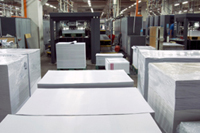
Was Worker's Death Due to Ignorance of California Labor Laws?
Margarita Mojica was 26 at the time of her death two years ago when she became entrapped in a box creasing and cutting machine. She was 17 weeks pregnant at the time with her second child.
California labor code, as with many federal statutes, dictates not only the requirement that an employer provide a safe work environment, but also that a worker has a right to protest if he or she feels at any time in danger while on the job.
It is not clear if the victim was even aware of the potential for disaster while simply doing her job.
According to the October 19th issue of the San Francisco Chronicle, the Oakland wife and mother of a young daughter was preparing a box creasing and cutting machine to start a job at the facility to replace a cutting die. According to prosecutors she was leaning into the machine when it suddenly activated and closed like a giant clamshell around her.
It is alleged that the owners of Digital Pre-Press International (DPI) of San Francisco were employing a previously owned cutting and creasing machine originally purchased in 2003. It has been reported that workers at some juncture asked to have a safety bar removed from the machine to allow for the handling of thicker cardboard. Investigators say the safety bar was not reinstalled.
While it is unclear if the accident would have been prevented had the safety bar been in place, there are a number of allegations that suggest workers at the facility were not properly schooled in safety protocols according to the tenets of California and labor law.
Regulators cited DPI on two previous occasions, in 1998 and again in 2001, for failing to maintain a worker safety program. The owner of DPI, Sanjay Sakhuja, is reported to have communicated to regulators that he had a training program in place by 2002; and an insurance inspection in 2007 found no problems with the machines at the facility.
However, following the tragic death of Mojica, state regulators under California labor employment law issued no fewer than 14 citations against DPI for not training workers properly. While the plant was reported to have a written safety program, workers told regulators they were never instructed on machine safety.
Sakhuja, along with pressroom manager Alick Yeung, have each been charged with manslaughter and willful violation of California state labor laws. A wrongful death civil suit has since been settled, according to The Chronicle. The value of the settlement was reported to be $6 million.



About . TOS . Privacy . Disclaimer . Contact . Advertise . Member Login
This work is licensed under a Creative Commons Attribution-NoDerivs 3.0 Unported License ©2026 Online Legal Media. All rights reserved.
Visit other Online Legal Media Websites: