
Manufacturing News

California Labor Law Wage Theft = 865 Employees, Three Time Clocks
Late last month the California Labor Commissioner, Julie A. Su, issued a series of California labor code citations totaling more than $1 million against Quetico LLC.
According to a release from PR Newswire (1/28/13), Quetico employed only three time clocks in the entire complex to service more than 800 employees. Workers, according to the release, were relegated to waiting in long lines just to clock in and out of work - and for their meal periods. In order to avoid being penalized for reporting for work late, due to the lineups at the time clock(s), employees were forced to arrive at the worksite increasingly early, in order to accommodate the long lineups to punch in, so they would avoid reporting for work late.
It is not known if the citations stemmed from a California labor lawsuit or simply from an investigation. Nonetheless, the investigation undertaken by the Division of Labor Standards Enforcement on behalf of the exploited workers, noted that employees coming into work early on a consistent basis just to deal with the long lineups at the time clock, were not be compensated for those extra hours.
The same held true for meal periods, according to the report. Employees, according to California labor employment law guidelines, were allotted a 30-minute meal period each shift. However, they were also required to punch out at the beginning of their meal period, and punch back in upon its conclusion. The long lineups at the time clock would, according to the release, eat into their allotted meal period. Conversely, to avoid reporting back to work late, workers would have to cut their meal period short in order to line up yet again at the time clock, to punch back in.
It was alleged by the Department of Industrial Relations (DIR) that Quetico would alter employee records to suggest employees were given the full benefit of their allotted 30-minute meal period, when in fact employees had been shortchanged.
The same held true at day’s end, when delays at the time clock would force workers to be at work beyond quitting time, just to punch out. Overtime was not paid in accordance with California and labor law. Workers who complained about the unpaid overtime were issued disciplinary memos by the employer, or so it was alleged. Three employees, who filed complaints with the Office of the Labor Commissioner, were suspended from their jobs.
“Wage theft takes many forms,” said Labor Commissioner Su in a statement. “My office will crack down on any employer who is taking hard-earned wages from workers by falsifying time cards and systematically preventing employees from taking a full meal break. We are also intent on eliminating the competitive advantages that labor law violators gain over employers who play by the rules.”
California state labor laws hold that workers in all industries are allotted appropriate meal and rest periods, and - unless a job is classified as exempt from overtime - that overtime pay be provided for all hours spent at the workplace over and above the standard work week, as defined under California employee labor law.
Workers shortchanged according to provisions in California prevailing wage law often seek redress through a California labor lawsuit. The state of California, in particular, is aggressive in pursuing unsavory employment practices on the part of employers, in order to better protect the rights of workers. Lawsuits, either filed by the Office of the California Labor Commissioner or by individuals, or a class of individuals, are often part of the process.

ERISA Not Just About Protecting Investments
employee stock plans, the truth is that ERISA covers much more than retirement plans. Included in ERISA benefits are insurance provided through an employer, meaning that any claims about employer-provided insurance are covered by ERISA.
Covered by the Employee Retirement Income Security Act of 1974 (ERISA) are retirement, health, life insurance, and disability insurance plans. Covering only private employers, ERISA does not require employers to provide health insurance or other benefits plans; it simply sets out rules for when employers choose to offer such benefits. If employers choose not to offer benefits as covered by ERISA, they are not governed by ERISA rules. Furthermore, ERISA does not cover insurance policies that are purchased privately. It only covers those provided by an employer.
Under ERISA, those in charge of health plans and other benefits must provide information about the plan's funding and features, must abide by their fiduciary responsibilities and must provide an appeals process for people who have a grievance with their plans. Finally, ERISA gives participants the right to sue plan fiduciaries in cases where there is a breach of fiduciary duty.
Before a lawsuit can be filed, however, under ERISA the claimant must exhaust administrative remedies before filing a lawsuit. This means that if the insurance company has an internal appeals process, the claimant must file an appeal before filing a lawsuit, if the insurance policy in question is provided by the employer (private insurance, because it is not covered by ERISA, does not have such a requirement and a lawsuit can be filed once the first denial is received.)
Many insurance companies have rules for filing appeals, including a set time in which to file. Certain medical records and an appeal letter may also be required. If that appeal is then denied, a lawsuit can be filed to enforce the claimant's rights. A plan beneficiary or participant can file the lawsuit, depending on the circumstances, and the lawsuit is typically filed against the plan fiduciary or administrator.
It is important to note that under ERISA a claimant will not be awarded punitive damages; all that can be claimed are costs associated with the insurance policy.
.jpg)
California Employment Bill Designed to Protect Workers' Rights
According to American Banker (9/28/12), Tri Counties Bank will pay up to $2.5 million to settle allegations made in a class action lawsuit that the bank did not properly pay employees for overtime hours worked. Specifically, the plaintiffs allege assistant branch managers were misclassified as exempt from overtime pay, a violation of California labor law. The bank will pay between $2.1 million and $2.5 million, depending on how many class participants file claims.
Meanwhile, California Governor Jerry Brown signed into law a bill designed to protect people who work as temporary labor in warehouses and distribution centers. The bill requires the agencies that provide workers for the warehouses and distribution centers to provide documents proving they obey the laws and can pay their workers. The bill will take effect January 1, unless delayed by legal action.
The bill's supporters say it will help ensure temporary workers are paid for the hours they work and have safe working conditions.
In September 2012, warehouse workers who load trucks to deliver to Walmart walked off the job protesting what they called terrible working conditions. A letter reportedly sent to Walmart executives (found online at takeaction.walmartwatch.org) cites unsafe working conditions??"including broken equipment and inadequate access to clean drinking water??"low pay and common injuries. "Right now, the temperatures in Riverside and San Bernardino top 100 degrees daily and inside the metal containers the temperature can get up to 120 degrees," letter writers Limber Herrera and Marta Medina write. "There is little ventilation and the heat and pollutants we inhale can make us vomit and bleed from the nose. We face intense retaliation from management if we say anything about the conditions."
According to Huffington Post (9/14/12), Marta Medina, one of the letter writers, reportedly reached her limit when she was eight months pregnant and told to ship 2,000 boxes in one hour. Workers at the warehouses are not directly employed by Walmart, but are instead employed by subcontractors.
A spokesperson for Walmart said service providers and subcontractors are expected to comply with the law.
.jpg)
California Labor Law Violations Found Via Impromptu Inspections
Labor Commissioner for the state of California, Julie A. Su, headed a joint enforcement action involving the California Division of Labor Standards Enforcement (DLSE) and the US Department of Labor (DOL) Wage and Hour Division. Targeted were a handful of manufacturing facilities in the garment industry of Los Angeles.
A release from the office of the Labor Commissioner released earlier this month (8/8/12) noted that the wave of unannounced inspections occurred 17 years to the day after garment workers were found toiling in deplorable conditions, behind barbed wire and under the supervision of armed guards at a sweat shop in El Monte. "Rooting out continued violations of basic wage protections for garment workers is a top priority for this administration," Su said in a statement concerning the California labor code violations. "The honest employers in the industry depend on this effective enforcement, and garment workers deserve nothing less."
Enforcement officials were organized into separate teams and co-ordinated to visit ten facilities at the same instant, without prior notification. A total of 199 workers were employed at the ten facilities on the day of the impromptu inspections. Investigators found various violations to California labor employment law??"among them, failure to carry workers' compensation for their employees, and failure to obtain a garment license, according to the release.
California and labor law have a symbiotic relationship under the watchful eye of the Office of the Labor Commissioner. In this case, a total of $217,844 in citations were issued.
Over and above that will be various amounts, yet to be determined, owed to workers for alleged or suspected violations to minimum wage and overtime provisions under California prevailing wage law.
The garment industry typically attracts low-wage workers. It is also common for the industry to exploit its workers in an affront to California employee labor law. The ten garment facilities were not identified specifically in the release.
Su indicated in this latest effort to enforce California state labor laws, 50 inspectors from the joint effort were divided into teams of ten, with five inspectors each co-ordinated to swoop in on the targeted facilities at the exact same time.
"My office is focused on ensuring that all wages are paid for all hours worked, especially for minimum wage workers," continued Labor Commissioner Su, in speaking to the violations to California employee labor law.
While some workers are too timid to launch a California labor lawsuit on their own, legal advocates will sometimes assist on their behalf. It is not known if any of the 199 workers employed at the ten facilities would be considering legal action beyond the efforts of the enforcement agencies involved.
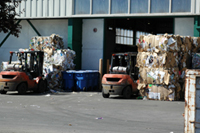
Tragic Deaths of Two Brothers May Have Involved Violations of California Labor Law
The Los Angeles Times (3/22/12) reported that in excess of $165,000 in fines were levied against Community Recycling and Resource Recovery, located in the San Fernando Valley. A spokesperson for the State division of Occupational Safety and Health said in a statement that the deaths of the two young workers were "completely preventable."
This particular California and labor law story unfolded October 12 of last year, when Armando Ramirez was standing atop a ladder in a drainpipe when he was overcome while attempting to clear a blockage in the pipe. Armando's older brother Eladio came to the aid of Armando but was himself overcome by hydrogen sulfide, a common byproduct of the composting process.
Armando was pronounced dead at the scene, while Eladio died in the hospital two days later. The Division of Labor Standards Enforcement is reportedly looking into possible violations of California and labor law pertaining to child labor. Armando's work papers were reported to have claimed the deceased was 30 years of age, when in actual fact he was just 16. Eladio, his older brother, was 22 when he was removed from life support.
An investigation into the incident against a backdrop of California labor employment law may reveal that the younger Armando, at 16, may have been too young to perform the hazardous work that eventfully claimed his life.
A spokesperson for the facility noted that a thorough and aggressive investigation was launched into the incident, and that a thorough review of the company's safety and training protocols was undertaken.
Further investigation will ascertain if criminal charges are warranted in this California labor employment law matter.
It is not known if a California labor lawsuit has been launched on behalf of the two dead brothers.
California state labor laws exist to prevent a myriad of injustices that are often leveled at workers??"everything from fair pay and overtime, to working conditions, rest periods and meal breaks. Accidents will happen??"and such may have been the case here. Nonetheless, some employers flaunt the law for their own convenience and to their own advantage.

Third-Party Walmart Warehouse Pay Lawsuit Apparently Not a New Problem
There is no signage on such warehouses, which are owned and operated by the logistics company under contract to Walmart, according to the writer. The workers, identified as mostly Latino, are not paid by Walmart but rather work for, and are compensated by, the warehouse owner. Investigators determined that workers were paid in piecemeal fashion according to the number of containers they moved, at rates of pay not articulated to the workers or reflected on paychecks.
The logistics company was subsequently fined just shy of $500,000 for various violations to California labor code, and six warehouse workers subsequently filed a lawsuit in federal court seeking back wages and other forms of compensation.
Other workers toiling for similar warehouses in California and Chicago have launched lawsuits claiming their pay does not reflect the hours worked or tasks performed. While promised a rate of pay higher than that of minimum wage, paychecks have failed to properly reflect all hours worked. The resulting shortfall in hours serves to begat an actual rate of pay that comes in lower than the minimum wage rate in Chicago or mandated under California and labor law.
Judging from previous press reports, this is far from a new problem…
It was two years ago this month that the Chicago Tribune published the comments of plaintiff Miguel Deniz, who had visited a Chicago church with 20 of his co-workers, looking for help.
"I worked 57 hours and I only got paid for 35," said the 62-year-old Deniz. "I think it's unjust that we're not getting paid complete hours and for overtime. We're being defrauded."
In early December of 2009, Deniz joined seven other workers in the filing of a class-action lawsuit against SelectRemedy, an independent contractor doing work for Walmart. SelectRemedy was named as the defendant, although Walmart wasn't mentioned. In a statement published December 11, 2009 in the Chicago Tribune, a spokesperson for Walmart indicated that the retailer tries to comply "with all labor laws and regulations.
"And we rely on our third-party vendors to do the same," said Walmart spokeswoman Michelle Bradford.
In California, US District Court Judge Christina Snyder was reported to have issued a preliminary injunction requiring agencies that hire temporary workers to alter their pay practices, in an attempt to persuade the agencies to better conform to California state labor laws. It was issued October 31 of this year.

California Walmart Warehouse under Investigation Due to Alleged California Labor Law Violations
The warehouse, located in Riverside County, California, is operated by Walmart contractor Schneider Logistics and handles a significant amount of the corporation's goods in the state.
The team of investigators from the labor department found that two of the temporary staffing agencies who supplied the manual laborers had not been keeping track of how much money workers were owed, according to the news outlet.
One of the firms, Impact Logistics Inc., was issued a $499,000 fine for not providing itemized wage statements to the workers who were in charge of unloading and loading the products from the corporate giant. The agency was also hit with a warning for failing to maintain time records.
Another staffing agency, Premier Warehousing Ventures, was issued a similar warning, the Post reported. The two agencies supplied more than 200 workers to the site.
Following the issuance of the warning a spokesman for Impact Logistics issued a statement.
"It is our utmost goal to be one hundred percent compliant with the state's laws concerning wage requirements for employees, and we consider our people to be our company's greatest asset," the individual noted.
Jim Pittman, the chief operating officer for Premier Warehousing Ventures, told the Post that the company plans on proving that it was in compliance with the state's labor law.
"My employees mean the world to me," Pittman said. "It is our intent to abide by all of the labor laws whether it be in California or the other states we work in."
None of the employees who worked in the warehouse work for Walmart directly, but the products that are loaded and unloaded in that location were headed for the shelves in the company's stores, according to the news source.
Several employees voiced their displeasure with the work conditions that existed at these sites, as they noted the lack of breaks and long hours that were required, the North County Times reported.
"I went 28 consecutive days without a day off," Juan Chavez, speaking through a Spanish interpreter, told the news source. "There were no lunch breaks, no rest breaks."

Levi Strauss Fined for California Labor Law Violations
According to Reuters, the Labor Department found that the jeans manufacturer had not recorded all of the hours that its employees had worked in its payroll system. As a result, the company mistakenly said that some workers were exempt from overtime, according to an investigation by the Labor Department's San Francisco district office.
"The federal rules governing the employee classification process are complex and it's common for companies to have issues with misclassification," a spokesperson for the company told the news provider.
The spokesperson added that Levi Strauss had worked with the department to review the information and answer questions that arose during the investigation.
A statement from the Labor Department said that the investigation examined the back wages for time worked during a span of two years, according to the news source.

Was Worker's Death Due to Ignorance of California Labor Laws?
Margarita Mojica was 26 at the time of her death two years ago when she became entrapped in a box creasing and cutting machine. She was 17 weeks pregnant at the time with her second child.
California labor code, as with many federal statutes, dictates not only the requirement that an employer provide a safe work environment, but also that a worker has a right to protest if he or she feels at any time in danger while on the job.
It is not clear if the victim was even aware of the potential for disaster while simply doing her job.
According to the October 19th issue of the San Francisco Chronicle, the Oakland wife and mother of a young daughter was preparing a box creasing and cutting machine to start a job at the facility to replace a cutting die. According to prosecutors she was leaning into the machine when it suddenly activated and closed like a giant clamshell around her.
It is alleged that the owners of Digital Pre-Press International (DPI) of San Francisco were employing a previously owned cutting and creasing machine originally purchased in 2003. It has been reported that workers at some juncture asked to have a safety bar removed from the machine to allow for the handling of thicker cardboard. Investigators say the safety bar was not reinstalled.
While it is unclear if the accident would have been prevented had the safety bar been in place, there are a number of allegations that suggest workers at the facility were not properly schooled in safety protocols according to the tenets of California and labor law.
Regulators cited DPI on two previous occasions, in 1998 and again in 2001, for failing to maintain a worker safety program. The owner of DPI, Sanjay Sakhuja, is reported to have communicated to regulators that he had a training program in place by 2002; and an insurance inspection in 2007 found no problems with the machines at the facility.
However, following the tragic death of Mojica, state regulators under California labor employment law issued no fewer than 14 citations against DPI for not training workers properly. While the plant was reported to have a written safety program, workers told regulators they were never instructed on machine safety.
Sakhuja, along with pressroom manager Alick Yeung, have each been charged with manslaughter and willful violation of California state labor laws. A wrongful death civil suit has since been settled, according to The Chronicle. The value of the settlement was reported to be $6 million.

Workers' Memorial Day Addresses California Labor Law
A press conference took place yesterday in front of Pfizer Research Facility. One of the speakers was injured Pfizer molecular biologist Becky McClain, who recently won a $1.37 million judgment against Pfizer.
McClain, a former member of the company's safety committee, claimed to have been infected by an experimental virus while working at Pfizer Inc.'s Groton Laboratories. She also claimed that Pfizer violated her freedom of speech by terminating her after she pressed complaints with the US Occupational Safety and Health Administration, and that Pfizer violated whistleblower laws.
A US District Court jury in Hartford found that the company retaliated against her and interfered with her right to free speech. The jury also decided to award punitive damages, so Pfizer might be on the hook for well over $2 million. "The fact that the largest drug company in the world has such contempt for the protection of their thousands of scientists is a stark warning that the present protective laws are not being enforced and need to be seriously strengthened," said Steve Zeltzer, chair of the California Coalition For Workers Memorial Day (CCWMD), a group that advocates for employees hurt on the job.
This year the CCWMD is focusing on the need for health and safety protection, regulation and standards for new industries such as biotechnology and nanotechnology. On April 27 at Davis, Biotech worker David Bell was the focus: he was infected at Agraquest Laboratory and the owner Pam Marrone refused to take responsibility for his injuries.
On April 19 injured movie industry and hospital workers as well as other injured workers and their families spoke about health and safety. Downey Kaiser Hospital complex was built on one of the most toxic sites in the LA area, and hundreds of workers have been sickened due to the failure of the developer to properly clean up the site and the failure of federal and state regulatory agencies to properly regulate health and safety protection.
The CCWM participated in a mock funeral procession on April 24 with labor activists and area unions in Los Angeles neighborhoods as part of a "memorial day" rally honoring workers injured or killed in the workplace each year.
A number of people were memorialized at the procession, including Maria Isabel Vasquez Jimenez, 17, a pregnant farmhand who died in 2008 after collapsing in the heat while pruning vines in California; and Carlos Rivera, 73, a dock worker who was killed in an accident at the Port of Long Beach in 2008.
Aura Lopez, 29, attended the rally. She is a former car wash worker from Los Angeles who is permanently disabled after falling and injuring her spine in 2008 at work. She says she has filed a civil claim against her former employer, who has since gone into bankruptcy. Other car wash workers who attended said their workshops suffered from a chronic lack of safety equipment. "I want to avoid that what happened to me happens to anyone else," said Lopez??"a sentiment echoed by many people who attended. A number of people held posters that read in both English and Spanish: "No job is worth more than our lives" and "Remember the dead??"fight for the living."



About . TOS . Privacy . Disclaimer . Contact . Advertise . Member Login
This work is licensed under a Creative Commons Attribution-NoDerivs 3.0 Unported License ©2026 Online Legal Media. All rights reserved.
Visit other Online Legal Media Websites: