
California Labor Law News

Can California Labor Code Computers Not Keep Up?
According to the 7/19/10 issue of the Los Angeles Times, the California Supreme Court ruled in a unanimous decision in 2003 that state workers should be paid no more than the federal minimum wage during a budget impasse.
There have been lots of those lately, as the state limps from one budget crisis to another.
At the time of the Supreme Court ruling, former State Controller Steve Westly indicated that a decades-old computer system could not be easily re-programmed to accommodate the change. However, he assured the Court that compliance with the May 2003 ruling could happen by September of that year.
Seven years later, it still hasn't happened.
There is little doubt that the California labor law computer system is decades out of date. According to the LA Times, current Controller John Chiang recently released a three-month study claiming that it would take in excess of two years and nearly $8.7 million to re-program the system to reflect changes in minimum wage. Given that the entire system is to be replaced in 2012, such a revision would make little sense.
However, critics of the status quo claim that the Controller's computer system has already been revised to halt the pay of elected officials and their appointed staffs during a budget impasse. The system then reimburses those affected in withheld wages once a budget is signed. There have been other changes and updates over the years as well.
It was also noted that labor unions contributed millions of dollars to Chiang's election campaign in 2006 and have so far provided $350,000 for his current campaign. A pay reduction to minimum wage for state employees would in theory affect a lot of unionized workers.
In fairness, former Controller Westly also claimed there were technical obstacles to the requested change, given the inadequacies of the current system.
However, in a ruling last year Sacramento County Superior Court Judge Timothy M. Frawley wrote that Chiang's argument was "long on qualifiers and conclusions, and conspicuously short on facts." He added that "many of the Controller's objections seem to relate to whether the [minimum wage] should be implemented, rather than whether it can be implemented."
On July 16 Sacramento County Superior Court Judge Patrick Marlette denied a request from California Governor Arnold Schwarzenegger for an injunction compelling Controller Chiang to lower state salaries while there is no budget. But he ordered the two sides back to court in August to argue the feasibility of reprogramming the computers to comply with the California labor code in this instance.

California Labor Law: Misclassified Independent Contractors
By classifying their employees as independent contractors, employers can also avoid payments such as payroll taxes, workers' compensation insurance, unemployment insurance, disability insurance, social security and even minimum wage. And many employers get away with misclassifying employees because there is no specific definition of the term "independent contractor."
According to the California's Department of Industrial Relations (DLSE), "One must look to the interpretations of the courts and enforcement agencies to decide if in a particular situation a worker is an employee or independent contractor. In handling a matter where employment status is an issue, that is, employee or independent contractor, DLSE starts with the presumption that the worker is an employee."
That is exactly what happened this week when the court held that, although workplace contracts may be subject to out-of-state law, actual workplace terms and conditions affecting workers in California are governed by California statutes.
The decision stemmed from three California truck workers who said they were improperly classified as independent contractors and denied employee benefits, including overtime, business-related expenses and meal compensation. Eagle Freight Systems (EGL) required the workers to sign contracts acknowledging their status as independent contractors subject to the labor laws of Texas. California's multi-faceted test of employment, however, showed an employment relationship between the drivers and EGL. As well, the Internal Revenue Service (EGL's request) and the Employment Development Department of California (plaintiff Mohit Narayan's request) determined that Narayan was an employee for federal tax purposes.
EGL might have considered a similar case in 2008, where FedEx settled a California labor lawsuit and agreed to pay $26.8M in a worker classification dispute. The case originated in 1999 when employees of RPS (later to become FedEx Ground) claimed lost overtime and expense reimbursements because of their classification as independent contractors. Critics said the settlement showed that the drivers proved their case in California.
Two years earlier a small courier business, JKH Enterprises, had reclassified its drivers as independent contractors, which resulted in a penalty assessment of $1,000 per worker. According to the DLSE, "JKH unsuccessfully challenged the hearing officer's decision …and the decision is now final and authority for future enforcement actions by the Labor Commissioner and private parties.
"All employers are urged to be aware of this important decision and the myriad consequences of misclassification of employees including:
- Stop orders and penalty assessments pursuant to Labor Code section 3710.1;
- Liability for overtime premium, meal period pay, and other remedies available to employees under the Labor Code and Orders of the Industrial Welfare Commission;
- Exposure for tort liability for injuries suffered by employees when workers compensation insurance is not secured (LC section 3706);
- Exposure for unfair business practices (B&P section 17200);
- Tax liability and penalties;
- Criminal liability (LC section 3700.5)
Did EGL take into consideration the FedEx and JKH settlements?

California Overtime: Threatened and Harassed
Cheryl worked for three years at the restaurant, collecting minimum wage. She worked five days a week, eight hours per day. But on Friday and Saturday she worked from 5 pm until 2 am, and she wasn't paid overtime.
California law requires overtime after eight hours, and after 40 hours in the payroll week, plus double time over 12 hours and on the seventh consecutive day of work. As well, federal law requires overtime after 40 hours. In some cases, California law permits an employee to waive the requirement for overtime after eight hours if she does so in advance, and if she is legitimately working a four day, 10-hour per day schedule. But Cheryl never agreed to waive her overtime rights.
"When I complained to our general manager he said I should talk to my union rep, as a joke. We aren't unionized??"no one is in a union. My employers had their own dictatorship going on: they don't provide food for us but if we order from another eatery or someone picks up a sub or pizza from next door, we would be reprimanded. You aren't written up but you are told not to do it again. We don't get lunch breaks or any break. The smokers, however, can go outside for a smoke break, but I don't smoke.
"When I complained about not getting five-minute breaks, my manager told me to get back to work and call my union rep. I was written up the next day, complaining that I wasn't a team player, the other bartenders didn't like me and customers didn't like me - after three years! I was the original waitress; they went through so many staff, mainly because of these long hours without overtime. I'm definitely not the only one. Some of the girls were young and playful and they were in favor with the boss, but if you just want to work, you aren't a team player.
"I was fed up and filed a complaint with the labor board; I took my check stubs and schedules. Then I talked to the restaurant owner to find out if she knew how I was being treated. She said that overtime was time over 40 hours a week but not over eight hours a day. I told her that the California labor law changed a long time ago and overtime kicks in after eight hours in one day. She has other employees who should be paid overtime. She said she would be willing to pay if she owed me.
"The labor board figured out that I am owed over $1,000. The owner rebutted and said she owes me $88 and she paid me $100 - I could keep $12 as a settlement. That is when I went to a lawyer.
"The lawyer told me to dismiss this claim 'without prejudice' because the owner wrote a retaliation letter to the labor board saying I had personal problems and that I tried to extort money from her by saying the law had changed ages ago. My lawyer was so disgusted with the letter; he said I have a solid case.
"We were scheduled for a meeting at the labor board last week. My lawyer told me to put off the meeting - dismiss without prejudice - until he has time to get the paperwork together. He is going to file a suit on my behalf for slander and defamation of character. And I will discuss the question of overtime at our next appointment; he is going to include that too. This letter was so scathing, there is no way that she should get away with this.
"When I was at the labor board I heard so many stories similar to mine. People know jobs are scarce and they were in the same position as me--getting threatened and harassed, not getting breaks and not getting overtime. It's like I was working on a plantation - I wasn't even allowed to bring in my own food!"

California Labor Law Dispute over Nursing Levels
Nurses employed by the University of California (UC) are at odds with the university over staffing levels. The California Nurses' Association (CNA) had planned to stage a one-day strike over the issue. However, San Francisco Superior Court Judge Peter J. Busch cited California labor code to temporarily and then permanently establish a ruling that halts any such activity by the nurses and the CNA.
The union says it is undeterred by the ruling.
According to the 6/19/10 issue of the Sacramento Bee, Judge Busch issued a temporary restraining order on June 8, two days before a planned walkout at various hospitals run by UC. The restraining order was requested, according to the report, by the state Public Employment Relations Board (PERB) on behalf of UC.
On June 18, the judge made that ruling "permanent," reports the Sacramento Bee. There was reasonable cause, argued the judge, for the PERB to believe a strike would violate California state labor laws.
The CNA is involved in contract talks with UC with regard to its employees at the five medical centers run by the university. One issue that has become particularly contentious is the union's assertion that staffing levels at the UC medical centers are unsafe.
The state mandates nurse-to-patient ratios of at least one nurse for every five patients, with more nurses for patients requiring higher levels of care.
The university denies the union's charge that staffing levels are unsafe.
The current contract between the university and the CNA expires on September 30. Judge Busch has outlawed any kind of a walkout or strike at least until that date.
Carol Robinson, the chief nursing officer for the UC Davis Medical Center, told the Sacramento Bee she is hopeful that the judge's ruling will convince the CNA to "sit down at the table so we can work out a really good contract for the nurses. We can do this in earnest instead of posturing."
But the CNA is undeterred, said Beth Keane, the CNA's lead negotiator for the union's university labor contracts. "We're going to continue fighting for proper staffing levels. We're not going to stop."
Keane noted that while the union intends to file complaints with the State Department of Public Health, a previous complaint filed by the union in November of last year over staffing levels at the UC Davis Medical Center has yet to be met with a response.
The CNA represents nearly 11,000 registered nurses employed by the university, including 1,800 at the UC Davis Medical Center. The employee labor law dispute appears poised to simmer through a long, hot California summer.
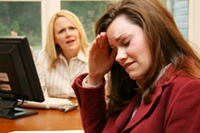
California Labor Law Violation: "Your Check Is in the Mail"
According to the California labor code, an employee who is discharged must be paid all of his or her wages, including accrued vacation, immediately at the time of termination. If you resign voluntarily, then California labor law requires that your employer pay you all final wages within 72 hours.
If the employer does not comply, California labor laws enforce financial penalties to employers called Waiting Time Penalties. California Labor Code 203 states, "If an employer willfully fails to pay…any wages of an employee who is discharged or who quits, the wages of the employee shall continue as a penalty from the due date thereof at the same rate until paid or until an action therefore is commenced."
In addition to waiting time penalties, California Labor Code 218.6 provides for the awarding of interest on all due and unpaid wages at an annual rate of 10 percent. California employees can also expect to recover reasonable attorney's fees and costs in any action brought for the non payment of wages.
According to Denise, she was fired. "When I gave my resignation, my boss said, 'As soon as you are done today, make sure you have all your appointments written down for us,' and my office manager also interpreted that comment as getting fired," says Denise. The next day she went back to work, to return the company phone and tie up a few loose ends, and pick up her final check.
"I finally got my check one week later. That is a California labor law violation," Denise explains. "The letter said I was fired as of April 28, not the April 26, which is the day I left. I believe they were covering themselves by changing the date two days later because they didn't have the check ready.
"The events leading up to my termination are a long story, so I'll make it brief. When I was first hired as supervisor of a number of group homes, I told the boss that I wanted to change a few things and he was all for that because they were money-saving changes. Right of the get-go I felt friction from the staff.
"I heard from a few co-workers that a lot of the staff were bad-mouthing me, including discriminatory remarks, such as 'white bitch.' (I'm white and the majority of the staff is black.) The bosses had so many discrimination suits against them already from firing people they were afraid to take any disciplinary action; they just told me to be careful and document everything. I had a number of complaints against me, saying I was rude. But the complaints were retaliation for cutting people's hours - I was just doing my job."

Bag Check Is on the Clock in California
The settlement also includes payment owed to the employees since 2002 for unpaid breaks and overtime.
So-called employee bag checks at the end of a shift is common practice at many retailers across the US.
"During the trial an expert and former manager of loss prevention testified that it is not a great practice for catching people because employees know it's coming," says Kitchin. "However, retailers see it as a deterrent to internal theft, which is admittedly a big problem the industry."
However, asking employees to stand around waiting for the bag check without compensating them for their time is a violation of California labor law. It is a specific assignment required by their employer, as Kitchin successfully argued in the suit against Polo, and sales associates should be paid for it.
"From our perspective, as in the Polo case, if you are locked in a store waiting for a manager, you are under their control," says Kitchin. "Sales associates have lots of duties??"stocking, folding, generating sales, and one of their last jobs at the end of the day is to undergo a bag check."
Although there is federal labor law on the same subject, it is not as clear as the California law. "Federal law is not as protective as California labor law," says Kitchin. Some activities, including bag checks, may or may not be compensable uder federal law.
Patrick Kitchen specializes in wage and hour class actions suits as well as sex and gender discrimination in the workplace. Since 1999, his practice has been devoted to seeking civil justice for people who have been emotionally or physically harmed by others and workers whose rights have been violated by employers. He is a graduate of the University of Michigan School of Law.

Discrimination against a Senior Black Woman: a California Labor Law Violation
In 2005 Sodexo settled to the tune of $80 million a discrimination lawsuit filed by thousands of black employees who charged that they were barred from promotions and segregated within the company. The giant provider of food and facilities management services also agreed to follow diversity and inclusion guidelines that would increase opportunities for African Americans to advance within the company. In fact, the Sodexo website states, "Sodexo's leadership in diversity and inclusion stems from our recognition that being a dynamic company requires people with rich backgrounds and diverse perspectives." A picture of two happy black people supplements the text.
None of this is news to Florene.
Discriminatory actions started even before Florene's first day on the job. "My friend, who is the general manager and got me the job, said I would start at $12 per hour. But when I met my supervisor, he said the job only paid $10.50 per hour.
"When I got this job I was so excited, like someone had thrown me a lifeline," says Florene, who had been out of work for some time. "My supervisor and a few co-workers made unreasonable demands on me, but I figured if they saw my efforts and hard work, they would get through this." Unfortunately, their racist behavior continued, with the obvious goal of forcing Florene to resign.
"I wouldn't resign. I knew I was doing a good job and I'm a hard worker, regardless of my age. My age doesn't bother me but others think if you are over 60 you can't walk and chew gum at the same time. I look and feel 55 but I don't have control over the calendar. I can easily work 40-hour weeks; I wasn't going to mess up this job.
"However, the complaints against me continued at weekly meetings. They wanted me to sign reports??"complaints about me??"but I wouldn't. The badgering continued. One person said, 'Why don't you just resign and maintain your dignity?'
"'Whatever it is you want, I will try to do that but I will not resign,' I told my supervisor. I complained to HR but they ignored me. I finally left, and for three days I was so overwhelmed that I couldn't leave my house.
"My friends said I should file a complaint, because I was also replaced by a 20-year-old. I believe I was discriminated because of my age and race. I know I was doing a good job and I was working very hard. The way I was treated indicates discrimination, and I know that is a violation of the California labor law. And discrimination must not be tolerated anywhere. I owe it to myself and others to file a claim against Sodexo. Certainly I need money, but this isn't just about the money. They are horrible people, and I am devastated by this.
"I get social security but we all know that isn't enough. I need to work because the cost of living is just too high. My job prospects aren't good and I'm struggling emotionally. And I'm not alone: lots of people are discriminated against within this company."
"We had a director at our unit actually refer to the employees as monkeys," writes George Spivey, a Sodexo worker at Georgia Tech. "It bothers me to even talk about it. I went to Human Resources to report a complaint. I don't know if they ever did an investigation."
"I worked with a chef who would pull down his pants, use the 'n' word, and always had this thing about 'you people' referring to us being different from him," said Rubynell Barbee, a Sodexo worker at Morehouse College. "I brought it up with Human Resources but they said since he was part black it was ok. I don't think that it's ok."

California Labor Law Basis for Federal Lactation Accommodation Health Reform
"Today many women elect to return to work soon after giving birth," said California Labor Commissioner Angela Bradstreet, in comments appearing in US State News on 5/13/10. "They want to be a valuable member at work and still be able to care for their newborn. Compliance with California's lactation laws is not only the right thing to do for these employees, it is also smart business because there are many cost benefits to employers."
While California Labor Code sections 1030 and 1031 were adopted in 2001, it's only been in the last few years that the provisions have actively been enforced. Because of a complaint filed by an employee, the Office of the Labor Commissioner has been initializing investigations. Companies known or discovered to have failed in providing lactation accommodation have been cited by the Labor Commissioner's Office.
"Many businesses discover that having an effective lactation support program is good for their bottom line," said Bradstreet. "These companies see lower turnover rates, a reduction in health care costs, higher productivity and worker loyalty."
Bradstreet also emphasized the need for employees to report violations of the lactation accommodation law, noting that it is not a law that can be addressed with enforcement sweeps.
California employee labor law requires that every employer in the state, regardless of size, must provide a reasonable amount of time to accommodate the expressing of breast milk, together with reasonable efforts to provide the lactating employee with the use of a room or other accommodate that would allow for the process to be carried out in private.
A restroom does not qualify for that purpose.
Ms. Bradstreet recently visited the White House as a guest of President and Michelle Obama. The lactation provisions in the new federal health reform act are almost a direct clone of provisions adopted in California. While various employers have been cited for violations of California's lactation law, the release did not specify the penalties faced by those employers in violation of the law.
In recent years the popularity of breastfeeding over the use of formula has increased, due to the increased health benefits for both mother and child. California was among the first states to enact such a provision.

Hands in the Tip Jar—Violation of California Labor Law
Los Angeles, CA: Cheryl and her co-workers at the dog grooming salon suspected some time ago that their boss was taking a good chunk of their tips, but after Cheryl heard about the Starbucks settlement (the company was ordered to pay back more than $100 million to California baristas), she realized her boss was ripping them off. California labor law prohibits managers and supervisors from sharing in employee tips.
"Last month I groomed dogs for two clients who I know leave big tips but I didn't see a cent," says Cheryl. "I don't see the tips??"the boss is in charge of all the payments so he can lie to us and do whatever he wants. Last week the same clients came back and I groomed their dogs again. This time, however, the boss had gone out and I saw their files; the manager helped me find them. (I just called a few lawyers to see if it is legal for us to look at the clients' payments??"I haven't got answer yet).
"Last Christmas the boss kept our tips for two months and gave them to us at his own discretion as a bonus. 'That's your bonus, money I have been collecting out of the tips, from credit cards and cash,' he said. He decided, by how many hours we worked, how much money we would get. I got $235, which is likely a lot less than I am owed.
"He divided the tips between five of us: I know that one co-worker got over $300??"he told me so, and he suspected all along that the owner was stealing our tips; now we all believe that he is also pocketing some of our tip money.
"Granted, some people don't tip at all and others are very generous; it's a real crapshoot. But the amount of money he finally gave me isn't my complaint. We are supposed to get those tips within the next pay period. Period. It is not up to the owner to decide when and how to distribute those funds.
"I have decided that I want to let him know he has violated the law. He has to keep an accurate record of every tip given to every groomer. I called the California labor board for advice and they said I need to have records regarding how much I didn't get.
"I am going to keep records of every dog I groom and client phone numbers and I will ask the boss every day how that person paid and what tip they paid. After a few months, when I have sufficient information, I will take action.
"A previous employee already tried to sue him. She was abusive and volatile to us and everybody asked the boss to fire her, listing all the reasons why. I said I would quit if he didn't fire her. I quit??"she was a danger and a liability to the business. Two weeks later she faked an injury and they had to pay workers' compensation. Then she tried to sue the owner for tips she didn't get. She wasn't smart and didn't keep records: the judge threw her case out: she tried to sue for $7,000. But the owner was sweating bullets and we couldn't figure out why??"that's when we clued in! (And I got my job back.) He was so sick from stress and we couldn't understand why he was so worried.
"I'm a tough cookie; everybody who was a good groomer has quit but I am going to hang in here and document the evidence so I will have some recourse. And I want people to know what is happening and that it is illegal to take tip money."
The Starbucks lawsuit focused on a section of California Labor Code regarding the payment of tips to employees and the practice of tip pooling. Labor Code Section 351 says, "No employer or agent shall collect, take or receive any gratuity or a part thereof that is paid, given to or left for an employee by a patron," and Labor Code Section 350 defines "agent" as "every person other than the employer having the authority to hire or discharge any employee or supervise, direct or control the acts of employees."

Workers' Memorial Day Addresses California Labor Law
A press conference took place yesterday in front of Pfizer Research Facility. One of the speakers was injured Pfizer molecular biologist Becky McClain, who recently won a $1.37 million judgment against Pfizer.
McClain, a former member of the company's safety committee, claimed to have been infected by an experimental virus while working at Pfizer Inc.'s Groton Laboratories. She also claimed that Pfizer violated her freedom of speech by terminating her after she pressed complaints with the US Occupational Safety and Health Administration, and that Pfizer violated whistleblower laws.
A US District Court jury in Hartford found that the company retaliated against her and interfered with her right to free speech. The jury also decided to award punitive damages, so Pfizer might be on the hook for well over $2 million. "The fact that the largest drug company in the world has such contempt for the protection of their thousands of scientists is a stark warning that the present protective laws are not being enforced and need to be seriously strengthened," said Steve Zeltzer, chair of the California Coalition For Workers Memorial Day (CCWMD), a group that advocates for employees hurt on the job.
This year the CCWMD is focusing on the need for health and safety protection, regulation and standards for new industries such as biotechnology and nanotechnology. On April 27 at Davis, Biotech worker David Bell was the focus: he was infected at Agraquest Laboratory and the owner Pam Marrone refused to take responsibility for his injuries.
On April 19 injured movie industry and hospital workers as well as other injured workers and their families spoke about health and safety. Downey Kaiser Hospital complex was built on one of the most toxic sites in the LA area, and hundreds of workers have been sickened due to the failure of the developer to properly clean up the site and the failure of federal and state regulatory agencies to properly regulate health and safety protection.
The CCWM participated in a mock funeral procession on April 24 with labor activists and area unions in Los Angeles neighborhoods as part of a "memorial day" rally honoring workers injured or killed in the workplace each year.
A number of people were memorialized at the procession, including Maria Isabel Vasquez Jimenez, 17, a pregnant farmhand who died in 2008 after collapsing in the heat while pruning vines in California; and Carlos Rivera, 73, a dock worker who was killed in an accident at the Port of Long Beach in 2008.
Aura Lopez, 29, attended the rally. She is a former car wash worker from Los Angeles who is permanently disabled after falling and injuring her spine in 2008 at work. She says she has filed a civil claim against her former employer, who has since gone into bankruptcy. Other car wash workers who attended said their workshops suffered from a chronic lack of safety equipment. "I want to avoid that what happened to me happens to anyone else," said Lopez??"a sentiment echoed by many people who attended. A number of people held posters that read in both English and Spanish: "No job is worth more than our lives" and "Remember the dead??"fight for the living."



About . TOS . Privacy . Disclaimer . Contact . Advertise . Member Login
This work is licensed under a Creative Commons Attribution-NoDerivs 3.0 Unported License ©2026 Online Legal Media. All rights reserved.
Visit other Online Legal Media Websites: