
California Labor Law News

California Labor Lawsuit Gets Class-Action Status
The Walmart lawsuit was filed by truck drivers who alleged the company violated the California Labor Code and other labor laws by not paying minimum wage and by not providing meal and rest breaks. The Trucker (9/17/14) reports that the plaintiffs claim Walmart’s piece-rate pay does not provide minimum wages and does not provide pay for all mandatory duties performed that are related to their work, including time spent washing, fueling, weighing the trucks and completing paperwork.
“The court finds that plaintiffs have met the commonality requirement for the proposed class of drivers,” District Judge Susan Illston wrote in her decision. “While Wal-Mart argues that there are varying circumstances in which individual drivers may be granted pay at the discretion of general transportation managers, this does not negate plaintiffs’ assertion that there is a general default policy, defined in the driver reference and pay manuals, against paying drivers for certain tasks.”
The court also wrote that she found Walmart’s argument that the plaintiffs did not show how they could determine which drivers performed which tasks or how long was spent on those tasks unpersuasive. Judge Illston wrote that there were common questions concerning Walmart’s pay formula, which would allow for class certification regarding wages and wait times.
The court did, however, note that if the class members have major variations in the length of time spent involved in mandatory activities such as paperwork or fueling, that Walmart could move to decertify the class. The plaintiffs’ motion to certify wage statements as a class was denied.
According to court documents, the lawsuit was originally filed in 2008. There are reportedly approximately 500 potential members of the class. The drivers also argued that they are paid $42 for 10-hour layovers.
The lawsuit is Ridgeway v. Wal-Mart Stores Inc., No. C 08-05221, US District Court, Northern District of California.

California Labor Law: Popular “Day Rate” for Personal Attendants No Longer Legal
The problem is that many employers of personal attendants either are unaware of or refuse to accept this change in overtime laws.
According to Daniel Chaleff, a partner at the employment law firm of Rehwald Glasner & Chaleff, “The Domestic Workers Bill of Rights law requires that caregivers, housekeepers, maids and childcare providers, who work in private households as personal attendants, must be paid a minimum of $9 an hour for the first 9 hours of work, and time-and-a-half - $13.50 - for more than 9 hours worked in a day.
“In my experience, many caretakers of people with disabilities, the elderly, and the sick are being paid under a day rate, for example $80 to $120 per day,” Chaleff says. “Paying personal attendants a day rate is illegal under the new law, which requires employers to pay overtime to personal attendants who work more than nine hours a day.”
As Chaleff notes, at the current minimum wage, a personal attendant working 24 hours in a day must be paid $283.50 per day, well above the typical $80 to $120 day rate.
Domestic workers are employees performing work in someone’s home. They include live-ins and personal attendants. Domestic workers qualify as personal attendants, if they don’t spend more than 20 percent of the total hours worked in a week performing duties other than supervising, feeding and dressing the person cared for. Exceptions to the law may include certain relatives.
Prior to the enacting of the Domestic Workers Bill of Rights, employers were able to use the personal attendant exception to avoid paying their domestic workers overtime. The new law removes that exception and requires employers to pay their personal attendants overtime.
A personal attendant who is not paid for all hours worked, including overtime, can file a lawsuit against his or her employer to recover unpaid wages and overtime. The damages can include reasonable attorney’s fees, associated litigation costs, interest and penalties.
The new law contains a “sunset” provision, which means it is only in effect until January 1, 2017. After that point, the law will be repealed unless another statute is enacted. To determine whether another statute is enacted, the governor will convene a committee - including personal attendants and their employers - to report on the effects of the law.

California Labor Lawsuit Class Members Want Dispute Back in State Court
According to court documents, a La Boulange bakery factory and another facility lay at the center of a dispute that also involves temporary workers. According to attorneys representing the class, 99.7 percent of the potential class members live in the state, regardless of whether or not they are temporary or employees that have more permanency.
The lead plaintiffs in the dispute are Norma Serrano and Maria Grande (Serrano et al v. Bay Bread LLC et al, case number 3:14-cv-01087, in the US District Court for the Northern District of California). In their complaint the two California women claim that they worked at a Bay Bread factory in South San Francisco, as well as a bakery in Newark owned by co-defendant Fullbloom Baking. At both locations, according to the plaintiffs, they were denied complete and full wages and adequate rest periods according to California and labor law that would apply to the San Francisco location, at least.
Another co-defendant is Aerotek Inc., a temporary staffing agency. After the California labor employment lawsuit was filed in San Mateo County Superior Court in January, the defendants petitioned to have the lawsuit moved to federal court two months later. They argued that the dispute could exceed $7 million and involve nearly 1,200 class members. Co-defendant Aerotek, the temporary staffing agency, is based in Maryland.
That doesn’t hold water with the plaintiffs, who want the lawsuit moved back to state court.
At issue are the temporary workers who the defendants claim are transient by nature. However, with the vast majority of class members having addresses in California and Bay Bread also headquartered in the state, it would be reasonable to expect that the state of California has jurisdiction.
US District Court Judge Thelton Henderson, the presiding justice in the California and labor law dispute, appears to be aligning himself with the plaintiffs and has challenged the various co-defendants to provide further grounds to support leaving the case in federal court.
“Given that 99.7 percent of [the class members] live here, it’s reasonable to conclude that two-thirds are California citizens,” Judge Henderson is quoted as saying.
According to court documents Bay Bread does business as La Boulange. The latter is a chain of cafes purchased by Starbucks two years ago.

California Labor Law: Settlement with Cheerleaders Announced
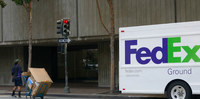
“We’re Finally Getting Somewhere in the FedEx California Labor Lawsuit,” Says FedEx Driver
The panel also noted that, although FedEx drivers provided their own vehicles, FedEx assigned drivers delivery areas, directed where packages went and assessed drivers’ workloads.
Non-exempt employees are entitled to overtime compensation under the federal FLSA (Wages and Fair Labor Standards Act), and minimum wage and benefits such as time off under the Family Medical Leave Act, which independent contractors are not entitled to.
While some courts in other states have sided with FedEx, determining the drivers are independent contractors and not entitled to overtime and other benefits, the appeals court found that the California and Oregon drivers have claims similar to other unpaid wages lawsuits filed against FedEx in about 40 states.
“My work time is supposed to be from 7:30 am until 3.30 pm, five days a week but I hardly ever get my deliveries done in that time frame,” says Eric. “My workday typically ends at 5 or 6 pm and this has been going on for years. It used to be OK back in the day because delivery routes would even out during the week. For instance, I would work 10 or 12 hours on Monday and Tuesday and only six hours toward the end of the week. But in the past few years I’ve given them at least 15 hours a week of free work.”
Eric points out that other FedEx employees on an hourly rate are paid overtime, so why not drivers? “I asked my supervisor why we aren’t hourly employees,” Eric explains. “He said, ‘Sorry, that’s just the way it is and there is no overtime.’ So whatever happened to equal pay for a fair day’s work?”
Reuters says that the California case was brought by about 2,300 workers who were full-time FedEx delivery drivers between 2000 and 2007. Court documents state that the drivers were classified as independent contractors under the terms of an operating agreement used by FedEx. The world’s largest express transportation company said it disagrees with the panel’s rulings and will challenge their decision.

Domestic Workers Eligible for Overtime Pay
Under California’s Domestic Worker Bill of Rights (AB 241), people employed as personal attendants are eligible for overtime pay, which they were not before. The Act defines personal attendants as people employed to work in a private household, “to supervise, feed, or dress a child, or a person who by reason of advanced age, physical disability, or mental deficiency needs supervision.” People who spend more than 20 percent of their time in other duties are not considered personal attendants. Personal attendants can be either live in or live out and include nannies, babysitters and certain caregivers.
People who work in facilities are not included. Also not included are family members of the employer or casual babysitters.
The Domestic Worker Bill of Rights requires personal attendants who work more than nine hours in a workday or 45 hours in a workweek to be paid one-and-one half times their regular rate of pay for any time above nine hours per day or 45 hours per week. Personal attendants are also entitled to minimum wage pay.
This means that someone who works as a personal attendant for an elderly person and spends 10 hours a day working should be given overtime pay for one hour that day.
Prior to the Domestic Worker Bill of Rights, employers would rely on the personal attendant exemption to avoid paying their domestic workers - which included caregivers, housecleaners, housekeepers and childcare providers - with overtime pay. Now, if personal attendants are not given their overtime, they can file a lawsuit to recover unpaid wages, reasonable attorneys fees and interest and penalties.
The distinction between personal attendant and domestic worker is important because there are different overtime rules governing the two groups. California Domestic Workers Coalition notes that while overtime for personal attendants kicks in at nine hours in a day or 45 in a week, overtime for live-out domestic workers who are not personal attendants kicks in at eight hours in a day or the first eight hours on the seventh consecutive day. Double overtime starts for live-out domestic workers at 12 hours in a day or more than eight hours on the seventh consecutive week.
Live-in domestic workers have different overtime rules as well, including time-and-a-half for more than nine hours in a day and for the first nine hours on the sixth and seventh consecutive days, and double time for more than nine hours on the sixth or seventh consecutive days.
Despite having a right to overtime, personal attendants do not have a right to meal or rest breaks.
Although the Domestic Worker Bill of Rights is law, it is only a temporary law and ends in 2017 if the legislature does not extend it.
Failure to pay domestic workers and/or personal attendants for their overtime hours can result in a lawsuit being filed against the employer.

Plaintiffs in California Labor Law Class Action Take On Olive Garden
The defendant is the venerable Olive Garden franchise, which is operated by GMRI Inc. Earlier this month a federal judge granted a partial class certification in a California labor lawsuit brought against GMRI over the missed rest period issue.
The lawsuit is Antonio Romo, Jonathan Macias and Claudia Garcia v. GMRI Inc., doing business as Olive Garden, case number 5:12-cv-00715, in the US District Court for the Central District of California. According to court records, the plaintiffs had originally filed two complaints alleging California labor code violations in 2012 and 2103 respectively. The two lawsuits were consolidated when they were removed to California federal court, and originally involved a third subclass with regard to an alleged failure on the defendant’s part to reimburse employees for the purchase of nonslip shoes.
However, the plaintiffs subsequently withdrew their petition for certification in that subclass.
There were various reasons noted by Senior US District Judge Justin L. Quackenbush for denying certification for the meal break subclass. However, he did give a nod to the subclass with regard to missed or inadequate rest periods as required under California labor employment law.
Under the California labor code, an employee who works a shift lasting 7.5 hours is entitled to not one but two paid rest breaks. Plaintiffs allege that manager guidelines observed by Olive Garden managers reflect the provision for a single, 10-minute paid rest period to an employee working a shift of that length.
“GMRI has not presented such overwhelming evidence that GMRI in fact had a policy of providing second rest breaks to employees, sufficient to inject fatal uncertainty as to the question of commonality,” Judge Quackenbush wrote in his certification filed with the Court earlier this month, on August 12.
The rest period subclass that achieved certification includes all nonexempt, and/or all workers paid on an hourly basis, who were employees at Olive Garden restaurants operated by GMRI in the state of California from January 2011 until the date of certification.
Rest breaks and meal periods are entrenched in California employee labor law as a necessary right of employment for all employees meeting the criteria. When employers allegedly deny employees their breaks as mandated under California state labor laws, employees are not shy about pursuing their employment rights through the courts…

SpaceX Faces California Labor Lawsuits
According to the Los Angeles Times (8/12/14), lawsuits have been filed against SpaceX alleging the company violated various labor laws. One lawsuit alleges the company violated state law by not providing meal and rest breaks and by forcing employees to work off the clock. The lawsuit alleges employees were not only denied their breaks, they were not paid for those missed breaks.
Court documents filed in the case note that class members regularly worked more than five and 10 hours a day without being given first and/or second uninterrupted meal periods. Employees were also allegedly subject to “…pressure from SpaceX’s management and supervisors to perform work at the expense of their meal and rest periods…” That pressure included denying a “significant number” of employees’ first meal periods and refusal to allow second meal periods on shifts of over 10 hours.
The lawsuit alleges that shift and production schedules did not provide employees with proper opportunities to take their breaks, even though employees did not waive their right to a break. Labor laws require employers in California to provide one 30-minute meal break for non-exempt employees whose shift is more than five hours and a second 30-minute break for shifts of more than 10 hours per day (under certain circumstances, the second 30-minute break can be waived).
“On certain weekend shifts, SpaceX also required Plaintiff and the Class Members to choose between taking a single meal period or receiving two rest periods…” court documents note.
Furthermore, according to the lawsuit, employees were not compensated for time worked, including overtime worked, when their hours were rounded down, which also resulted in inaccurate wage statements.
The lawsuit seeks to represent non-exempt current or former employees, estimated in court documents to be more than 100 individuals.
A different lawsuit filed in August alleges SpaceX illegally laid off hundreds of employees without providing them with proper notice or compensation.
The wage and hour lawsuit is Smith v. Space Exploration Technologies Corp., et al, case number BC554258 in the Superior Court of California, County of Los Angeles.

California Employees Paid Commission Take Note…
The class-action lawsuit was initially filed over five years ago in California state court. Plaintiff Susan Peabody, a former account executive at Time Warner Cable Inc., sold advertising on the company’s cable television channels. She claimed the huge cable company violated California overtime law by using employees’ commissions to meet minimum wage requirements.
Time Warner paid Peabody an hourly wage of $9.61 per hour based on a 40-hour workweek. As well, the company paid commission wages under its account executive compensation plan, which brought her wages up to about $75,000 in the 10 months she was employed for the company.
But Peabody claimed she often worked more than 45 hours per week and never received overtime pay. Further, for the pay periods in which she received only her hourly wages, she earned and was paid less than the minimum wage. Time Warner’s justification was that Peabody, as an inside salesperson, was exempt from overtime compensation. This exemption applies if employee’s earnings must exceed one and one-half times (1.5) the minimum wage, and more than half of the employee’s compensation must represent commissions, according to the California labor code.
However, the majority of Peabody’s paychecks comprised only hourly wages and equated to less than 1.5 times the applicable minimum wage during that time period. Peabody argued that she was misclassified as exempt because she collected commissions in only some pay periods and she did not earn one and one-half times the minimum wage as required by federal law and California law for her overtime work.
According to Justia.com, Time Warner argued that commissions should be calculated to the weeks of the monthly pay period in which they were earned and not to the pay period in which they were paid. So paying commission over multiple pay periods would have satisfied the inside sales exemption.
In August of 2012, the case was sent to the California Supreme Court to appeal the 2009 decision, and to answer the question:
To satisfy California’s compensation requirements, whether an employer can average an employee’s commission payments over certain pay periods when it is equitable and reasonable for the employer to do so.
The Supreme Court held that an employer may not attribute commission wages paid in one pay period to other pay periods in order to satisfy California’s compensation requirements. (The case is Peabody v. Time Warner Cable, Inc., 2012 WL 3538753 (9th Cir. 2012).)

California Labor Lawsuit against Apple Certified Class Action
According to RE/CODE (7/22/14), the lawsuit was filed in 2011 by Brandon Felczer and other employees, who alleged Apple owed its retail and corporate employees back wages. As many as 20,000 workers could be included in the class.
In allowing the class-action certification, San Diego Superior Court Judge Ronald S. Prager broke the class into six subclasses: a meal break class for retail employees, a meal break class for corporate employees, a rest break class for retail employees, a rest break class for corporate employees, a waiting time penalty subclass and a wage statement subclass.
Brandon Felczer alleged in his lawsuit that he was forced to work five hours or more at a time without a meal break, a violation of California labor law. Furthermore, he alleges that when he quit his job he gave 72-hours notice but did not receive his final paycheck until two days later and did not receive sufficient waiting fees.
According to the judge’s ruling, Apple argued that plaintiffs were provided timely rest breaks. The judge, however, found that under Apple’s meal period policy, non-exempt non-manager employees were not told they were permitted to take their meal break within the first five hours of every shift. The policy reportedly stated that non-exempt employees who work more than five hours at any time during a work shift must take at least a 30-minute meal period, and that meal periods cannot be taken at the end of a shift to allow the employee to leave work early.
“Thus, as stated, it can be argued that Defendant’s meal break policy never authorized, permitted or made its non-exempt employees aware that they had the right to take a meal period within (italics in original) the first five hours prior to August 1, 2012,” the judge noted in his ruling.
The lawsuit is Felczer et al vs Apple Inc, case number 37-2011-00102593-CU-OE-CTL, in the Superior Court of California, County of San Diego.
In 2013, Apple employees in California filed a lawsuit against the company alleging they were wrongly denied overtime wages because they were not paid for time they spent off-the-clock waiting for security checks prior to leaving stores.



About . TOS . Privacy . Disclaimer . Contact . Advertise . Member Login
This work is licensed under a Creative Commons Attribution-NoDerivs 3.0 Unported License ©2026 Online Legal Media. All rights reserved.
Visit other Online Legal Media Websites: