
Compliance News
.jpg)
California Labor Law Violations Found Via Impromptu Inspections
Labor Commissioner for the state of California, Julie A. Su, headed a joint enforcement action involving the California Division of Labor Standards Enforcement (DLSE) and the US Department of Labor (DOL) Wage and Hour Division. Targeted were a handful of manufacturing facilities in the garment industry of Los Angeles.
A release from the office of the Labor Commissioner released earlier this month (8/8/12) noted that the wave of unannounced inspections occurred 17 years to the day after garment workers were found toiling in deplorable conditions, behind barbed wire and under the supervision of armed guards at a sweat shop in El Monte. "Rooting out continued violations of basic wage protections for garment workers is a top priority for this administration," Su said in a statement concerning the California labor code violations. "The honest employers in the industry depend on this effective enforcement, and garment workers deserve nothing less."
Enforcement officials were organized into separate teams and co-ordinated to visit ten facilities at the same instant, without prior notification. A total of 199 workers were employed at the ten facilities on the day of the impromptu inspections. Investigators found various violations to California labor employment law??"among them, failure to carry workers' compensation for their employees, and failure to obtain a garment license, according to the release.
California and labor law have a symbiotic relationship under the watchful eye of the Office of the Labor Commissioner. In this case, a total of $217,844 in citations were issued.
Over and above that will be various amounts, yet to be determined, owed to workers for alleged or suspected violations to minimum wage and overtime provisions under California prevailing wage law.
The garment industry typically attracts low-wage workers. It is also common for the industry to exploit its workers in an affront to California employee labor law. The ten garment facilities were not identified specifically in the release.
Su indicated in this latest effort to enforce California state labor laws, 50 inspectors from the joint effort were divided into teams of ten, with five inspectors each co-ordinated to swoop in on the targeted facilities at the exact same time.
"My office is focused on ensuring that all wages are paid for all hours worked, especially for minimum wage workers," continued Labor Commissioner Su, in speaking to the violations to California employee labor law.
While some workers are too timid to launch a California labor lawsuit on their own, legal advocates will sometimes assist on their behalf. It is not known if any of the 199 workers employed at the ten facilities would be considering legal action beyond the efforts of the enforcement agencies involved.
.jpg)
California Labor Law Settlement Worth $90 Million
As noted in the Daily News of Los Angeles (7/11/12), the dispute between Jennifer Augustus and her fellow plaintiffs and ABM Security Services centered on the expectation of being on call while on break. The California labor code mandates that employees are provided with regular meal and rest breaks within their workday??"during which they are not required to perform any work??"unless there are special circumstances.
To that point, the defendant had at one time an exemption in place that allowed for on-duty breaks by their security personnel. However, it has been reported the company failed to seek a renewal when the policy expired.
Augustus worked for ABM in Woodland Hills from 2003 to 2006. Los Angeles Superior Court Judge John S. Wiley awarded $89.7 million in wages, interest and penalties, and noted in his ruling, "Put simply, if you are on call, you are not on break. That has been the law for many years."
Even though the class action California labor lawsuit represented workers across the land, the guards involved worked primarily in Southern California and the Bay Area. ABM was based in San Francisco at the time of the ruling. It has been reported they will contest the award.
Assuming the award stands, according to California labor employment law, the payout to the plaintiffs will be founded upon their individual hourly rate of pay, together with their tenure with the firm.
The California and labor law award was for $89.7 million and represents lost wages, interest and penalties.
In a related story, it appears as if wage and hour lawsuits are on the rise, according to the Sacramento Business Journal (7/23/12). While it is a national phenomenon, the trend is also being seen in California, representing California labor employment law cases. Those numbers reflect a total of 7,064 cases filed nationally under the Federal Labor Standards Act for the year ended March 31st, v. 5,302 for 2008. That's a 33 percent increase.
Complaints under California prevailing wage law remain fairly common??"as do issues having to do with misclassification, work performed off the clock and incorrect, or lack of overtime pay for non-exempt workers.

Recent Meal and Rest Break Decisions could result in California Overtime Lawsuits, says Attorney
In April 2012 the California Supreme Court clarified the law with respect to meal breaks and rest breaks. “We had an explosion of meal and rest claims in California in recent years,” says Leonard Emma, California labor law attorney. “Right now employers are touting Brinker as a victory but the Court’s holding isn’t as remarkable or sweeping as the defense bar is making it out to be.”
Emma says that in the legal world there are certain highly-anticipated decisions that lawyers will attempt to spin into game-changers, and that is what is happening with the Brinker case. “The key issue the Brinker Court decided is the extent of employers’ obligations with respect to providing meal and rest periods to employees,” says Emma. “Must employers simply permit employees to take breaks? Or must employers police the workforce and pro-actively ensure that employees are relieved of all work duties during designated break periods? Brinker is important because the penalty for each meal or rest period violation is one hour of pay at the employee’s regular hourly rate. When dealing with a large class of hundreds or thousands of employees, the stakes are high.”
In Brinker, the defense (employer) prevailed in its argument that employers need only to make breaks available and that employers are not be required to police the workforce to pro-actively ensure all employees stop all work during designated breaks. “While this clarifies the law, it is a common-sense decision and should not come as a great surprise,” explains Emma. “Employers still may not require that employees work through breaks without paying a premium for the violation, which is one-hour of pay at the regularly hourly rate. Similarly, employers may not impede or discourage employees from taking meal or rest breaks.”
“Workers will still be pressured to work through breaks by unscrupulous employers after Brinker,” predicts Emma, “and meal and rest period claims remain viable after Brinker.” Emma notes that there are other ways to vindicate employees’ rights in the meal and rest break context. For example, off-the-clock and overtime violations resulting from work performed during meal periods are unaffected by this decision. “The Brinker Court held that work performed by an employee while off-the-clock during his or her meal period must be paid if the employer knows or should know the employee is working,” says Emma. “To the extent this off-the-clock work results in overtime, overtime wages are owed. Keep in mind that this is the law in California only and these rules apply to non-exempt employees.”
Also in April, the California Supreme Court issued a second and separate meal and rest break decision in Kirby v. Immoos Fire Protection Inc. In the Kirby case, the employer prevailed at trial and judgment was entered against the plaintiff to pay the employer’s attorneys fee but the California Supreme Court overturned that decision. “Kirby held that attorneys’ fees are not recoverable by either prevailing employees or prevailing employers in meal or rest period violation claims,” says Emma.
So how does this all play out for the average California worker? Emma says that California employment attorneys will probably file fewer lawsuits alleging meal and rest period claims exclusively. “First, the employer doesn’t have to proactively ensure breaks are taken so employees cannot hope to prevail on that theory,” he adds. “Second, there is less incentive for attorneys to take these cases on an individual basis.”
But it isn’t all doom and gloom for wage and hour attorneys. “There are often separate grounds for recovery of attorneys’ fees in wage and hour cases,” says Emma. “For example, meal and rest period violations are often brought in tandem with claims for unpaid overtime. Attorneys’ fees are available to prevailing employees in overtime cases. Furthermore, in the class action context, attorneys’ fees are recoverable under the common fund, substantial benefit, and/or private attorney general theories.”
For this reason, plaintiffs’ attorneys should not be deterred from filing wage and hour class actions that include strong meal and rest period claims. “I would expect to see fewer questionable meal and rest cases filed, which is a good thing,” quips Emma. “Otherwise it’s business as usual.”

Late Paycheck: California Labor Law Violation?
Perry is one of about 580,000 people that work for the US Postal Service. Because he is the local steward for his post office, Perry has received a number of complaints regarding late paychecks.
“Frankly I am disturbed that this practice happens and I want it to stop,” Perry says, “and I have no hesitation using my name because I am opposed to my employer breaking the California labor law and the federal law.
“Since I became shop steward I notice this practice more frequently because I am now the ‘go to’ guy. Just a few months ago a co-worker told me that he and several other employees didn’t get their paychecks. I went immediately to management and said in no uncertain terms that they must pay their employees by a cash advance - they can issue money orders. Two employees were told earlier in the day that they couldn’t be paid and had to come back next week, regardless whether they are scheduled to work or not. Some of these people are part-time so they have to make an effort to return to the main office and possibly pay for transportation to pick up their checks.
“A more recent incident happened to a co-worker I know personally. He is in desperate need of income and must get paid on time. He had to wait eight days after the due payday, which is more than two weeks after the pay period. He had to live off his credit card so he was forced to pay late fees and overcharges incurred. This isn’t right.”
Perry is right in that he needs an experienced California employee labor law attorney to advise him. Although the California labor law requires that wages are to be paid on the regular pay day due, there is no automatic fine if the employer misses a day. (This is not to be confused with getting your final paycheck upon termination.) However, a lawsuit can be filed…
The latest incident happened to a part-time employee who asked Perry to file a grievance because his paycheck didn’t get electronically deposited in his account. He wasn’t scheduled to work the next week and it was difficult to return each day looking for his paycheck.
“During the grievance process (the first meeting discusses the case and we try to find a resolution process) I questioned the postmaster about the reasons why the cash advance was denied,” Perry explains. "She argued that the employee didn’t bother to come in the following week to get his money. She said it was his fault for not showing up the following week. They said there was nothing they could do about it. In other words, the postal service is blaming their employee for not coming in every day the following week to see if his check was available.
“But I know the postal service policy regulations state otherwise. The postal service has specific guidelines for the management to follow when a missing or lost paycheck occurs. When this employee asked for a cash advance - as stated in our company policy handbook - they still refused to accept accountability.”
Perry’s incident happened a few years ago, but it had to do with a pay error. “Again, I brought it to management’s attention, told them to correct it, but it took an exorbitant amount of time - about six weeks -before it was corrected,” Perry says. “They corrected a portion of it on the next pay check but I didn’t get my full pay until about three pay checks later.
“I was a shop steward a long time as a letter carrier - believe me, I can write a book about all the labor law violations. Now I am at a point in my life where I want to do something about it. If I don’t get involved now, I never will. This is what I need to give back to my union that has represented me well over the past 24 years.
“I checked with the Division of Labor Standards Enforcement and I have sent a number of emails to the California labor board. Even after the volumes of information I have read about California labor law, I still don’t know if the postal service is exempt. I heard that the postal service, a federal government agency, is exempt from many state laws.
“Then I found LawyersandSettlements. I was just contacted by your attorney and I’m hopeful that I will finally get some answers. With this practice happening to so many people, perhaps the postal service needs someone to file a class action lawsuit so they will stop violating the labor laws.”

Municipal Statute Does Not Violate California Labor Law: Ruling
At issue is 'Measure L,' a statute voted on in 2010 by the voters of Menlo Park which gave taxpayers a voice they might not of otherwise had in the debate over pension issues related to City employees. According to the Palo Alto Daily News (5/9/12), Measure L raises the retirement age of new City employees by five years from 55 to 60, and caps pension payouts to two percent of the highest base salary earned over three consecutive years, multiplied by years of service.
That's down from 2.7 percent, which grandfathered employees??"City staff hired prior to Measure L coming into effect??"are not affected by. Police officers are also not impacted to the new measures.
Unions representing affected Menlo Park employees cried foul, citing violations to California labor code. They responded with a California labor lawsuit, and on May 4 Superior Court Judge George Miram ruled in favor of the measure after hearing arguments from both sides.
The right to unencumbered collective bargaining is a right entrenched in California and labor law. To that end, two of the unions representing Menlo Park employees??"Service Employees International Union (SEIU) and American Federation of State, County and Municipal Employees (AFSCME)??"claimed Measure L compromises that right, suggesting the capacity for voters to impact issues related to employee compensation is illegal when, in the union's view, only City Council has the authority to do so.
In his nine-page opinion on the California Labor employment law issue, Judge Miram disagreed with the union's contention that Measure L constrained the ability for elected council officials to bargain with unions in good faith. "The city continues to have the duty to negotiate in good faith, albeit within the constraints provided by Measure L," he wrote.
The unions which launched the California employee labor lawsuit expressed disappointment in the ruling, stating: "SEIU and AFSCME stand by our opinion that workers rights that are protected by the state Constitution shouldn't be subject to the whims of political currents."
The State of California has suffered from numerous budget woes over the last several years, and has sought concessions from unions and state employees to help with the fiscal pressure. Presumably, municipalities also feel the pinch and look for ways to economize within the confines of the California labor code.
To this end, Measure L falls within the municipality's rights, according to the ruling, under California state labor laws. It is not known if the unions plan to appeal.

California Labor Law: Last Word on the Lunch Break Lawsuit
Employers no doubt feel the decision was worth the wait - a suit that began in a lower court held that California labor employment law only requires employers to "supply or make available" meal periods. But the Division of Labor Standards Enforcement, which is charged with the responsibility of enforcing wage and hour laws in the state, has another point of view, stating that employers have "an affirmative obligation to ensure the workers are actually relieved of all duty" during meal breaks.
The questions were whether an employer simply provides for meal breaks or does the employer have a legal responsibility to enforce breaks?
The California Court of Appeals upheld the lower court ruling, which is consistent with several decisions at the federal level: California employees are not forced to take their meal breaks - but employers still have to pay them if they do work through their break. However, if an employee chooses to work through their lunch break, the court ruled that an employer "will not be liable for premium pay." Rather, "it will be liable for straight pay, and then only when it 'knew or reasonably should have known that the worker was working through the authorized meal period.'"
The court made it absolutely clear that the employer has no obligation to ensure that an employee does absolutely no work during his legally mandated lunch break.
Under California law - Labor Code section 512 and Wage Order No. 5 - employers are only obligated to provide hourly employees with a lunch break. That obligation is satisfied "if the employee (1) has at least 30 minutes uninterrupted, (2) is free to leave the premises, and (3) is relieved of all duty for the entire period."
"We conclude an employer's obligation is to relieve its employee of all duty, with the employee thereafter at liberty to use the meal period for whatever purpose he or she desires," Justice Kathryn Mickle Werdegar wrote in the unanimous decision. "But the employer need not ensure that no work is done."
The court's analysis of the lunch break lawsuit further explained what would happen if an employee chose to work through his lunch break. In a nutshell, a California employee can't file a lunch break lawsuit if he (1) freely chooses to work through lunch, and (2) gets paid his regular hourly rate for doing so.
The wage and hour case that morphed into the Lunch Break Lawsuit began in 2002 when The California Division of Labor Standards Enforcement launched an investigation into whether Brinker International Inc., a Dallas-based restaurant operator whose brands include Chili's Grill & Bar and Maggiano's Little Italy, was complying with its rest and meal break obligations. In the end, Brinker paid $10 million to settle a lawsuit by the state agency.
Then a separate lawsuit seeking class-action status was filed on behalf of employees at Brinker's restaurants in California. The lawsuit claimed that Brinkers failed to provide rest and meal breaks as required under state law, and forced some employees to work off the clock during meal periods.
A lawyer for the hourly employees at Brinker, said they are pleased with the Supreme Court decision. "We feel that it is a very good result for California workers," said attorney Kimberly Kralowec.
As for the second meal:
The Supreme Court ruled that the duty to provide a second meal period arises only after 10 hours of work. This ruling meant that the Court rejected the plaintiffs' contention that a second meal period must be provided within five hours after the end of the first meal period (known as the "rolling five-hour" theory that plaintiffs had proposed).
The Court weighed in on rest rules:
Employers must authorize and permit employees to take a 10-minute rest period for each four-hour period in which they work any amount of time in excess of two hours, unless an employee's total daily work time is less than 31/2 hours. Further, although the "general rule" in a typical 8-hour shift is that "one rest break should fall on either side of the meal break," the sequencing of meal and rest breaks may be altered depending on factors such as shift length."
To summarize the lunch break lawsuit:
Employers must provide off-duty meal periods, but need not ensure they are taken.
What does this ruling mean to those people who have wage and hour lawsuits regarding meal breaks pending? Stay tuned: LawyersandSettlements will ask a wage and hour attorney experienced with the California labor code to weigh in.

Workin' at the Car Wash Blues
The car wash industry in California appears to chronically violate California labor code. To that end, the California Department of Industrial Relations (DIR) announced violations against the statutes of California labor employment law on the part of three car wash operators in the state.
The DIR is a division of Labor Enforcement Standards, an entity that operates within the jurisdiction of the Labor Commissioner's Office. To that end, California Labor Commissioner Julie A. Su is on a quest to ensure every single employee in California is paid fairly, with proper meal breaks and rest periods.
In two recent cases, breaches have been found. Su and her department have been busy filing the odd California labor lawsuit as a result.
According to US State News (3/6/12), two separate lawsuits were brought in Los Angeles Superior Court against three car wash operations. The three were identified as Rosecrans King Car Wash, Wilshire Car Wash and Vermont Auto Spa. The DIR conducted investigations and found evidence of unpaid wages, as well as other violations.
Rosecrans King Car Wash was found to have systematically failed to pay workers all wages earned for all hours worked beginning in January 2009??"a violation of California prevailing wage law. The California labor lawsuit in that case seeks lost wages, as well as damages and other costs to the tune of $1,698,732, according to the report in US State News.
A subsequent complaint is filed against two other car wash operations. V5 Car Wash LLC, doing business as Vermont Auto Spa, succeeded the Wilshire Car Wash run by B.B.L Investment Corporation at the same California location. That lawsuit seeks $348,732 in minimum wages, overtime, and penalties for meal and rest period violations according to California employee labor law.
"Wage theft is a serious problem that harms workers and employers who follow the laws as well as the state economy," said DIR Director Christine Baker.
Labor Commissioner Su echoed those comments.
"Our investigations found that employers knowingly and willfully failed to properly record accurate time records for each worker and failed to provide them with itemized wage deduction statements with their pay," added Su. "By not providing an itemized statement, workers had no way to verify if the pay they received covered all hours worked. This routine practice by the employers is nothing less than an act of wage theft."
Despite what you see in the movies, many employees find themselves having a case of working at the car wash blues. Su and her various departments are bent on upholding California state labor laws, for the benefit of employees, and holding employers accountable.

For Those Who Violate California Labor Law, There's a New Sherriff in Town…
In attempting to gain an unfair competitive advantage (and to save costs), many employers stoop to unsavory practices all in the name of making a better buck. That includes paying workers less than minimum wage, denying workers overtime, misclassifying workers to avoid overtime costs, and non-provision of workers' compensation coverage and benefits. The foregoing is in violation of the California labor code.
Companies employing such tactics gain an unfair and undeserved advantage over their competitors when bidding for projects. Conversely, those employers who play by the rules are often shut out of lucrative contracts.
In either scenario, a California labor lawsuit is often the response.
"We are very excited to announce the creation of this unit, which will be tasked with leveling the playing field for California employers by raising the stakes for those who underpay, underbid and under-report in violation of the law," said California Labor Commissioner Julie A. Su in a statement late last month. "This is a vital tool in our efforts to step up enforcement to protect California workers and employers struggling to make an honest living."
The unit, which will be comprised of peace officers reporting directly to the Labor Commissioner, will work under the auspices of the Department of Industrial Relations' Division of Labor Standards Enforcement (DLSE), and will investigate and pursue any and all violations and allegations of fraud against the required guidelines of conduct set forth in California labor employment law.
A news release from the state February 27 noted the unit will be watching for labor theft, lost wages through bounced paychecks or accounts with chronically insufficient funds, and kickbacks on public labor projects. The CIU will also have in its sights unlicensed farm contractors and similar conduct in the garment industry, together with violations involving minors on the job. All flies in the face of California and labor law.
"As a law enforcement agency, we will use all tools available to us to bring about compliance," Su said in a statement. "The Labor Code's criminal provisions acknowledge that wage theft is a threat not just to those most directly affected, but to public safety and the health of our economy."
While the unit will bolster compliance with California employee labor law, it is not known if the unit's activities will stem the flow of lawsuits or increase their number. Many violations go undetected, given that workers are often reluctant to come forward to complain, afraid for their jobs and their respective livelihoods. An increase in the rate of exposed employers in non-compliance could very well increase the likelihood of a California labor lawsuit.
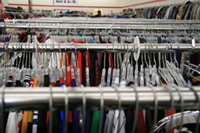
In Attempting to Thwart Theft, Retailer Accused of Stealing Wages
Business Wire (1/18/12) reported last month that five lead plaintiffs have accused managers of routinely delaying them during their lunch hours and upon the conclusion of their workday, in order to conduct bag searches. Legal professionals close to the California labor lawsuit make the point that many retail associates at Forever 21 are under 18 and still in high school - and thus, don't understand their rights under the California labor code.
The five lead plaintiffs - Jazzreeal Jones, Jessica Ramos, Shanelle Thompson, Alyssa Elias and Tiffinee Linthicum - accuse Forever 21 of unnecessarily detaining them and potentially thousands of participatory plaintiffs after hours, when employees are on their own time and not getting paid.
Thus, the California labor lawsuit alleges that such delays result in unpaid wages.
This is not the first time Forever 21 has been on the radar of California and labor law. Eleven years ago, workers in six factories complained of unsafe and unsanitary working conditions. A lawsuit was launched, but the action was dropped when Forever 21 agreed to improve working conditions in their factories and duly pay workers the wages they were owed.
Forever 21 operates various factories and has about 500 retail locations in eight countries, with 100 stores in California.
The California and labor law complaint against Forever 21 is similar to an action filed against Polo Ralph Lauren in 2010, according to Business Wire. That California labor lawsuit resulted in a $4 million settlement. At issue is the practice, described as industry-wide, of detaining employees at the end of their shifts for routine bag checks, in an effort to thwart potential acts of shoplifting.
In so doing, however, legal advocates claim that the practice, in reality, is robbing innocent employees of wages. In detaining their employees, Forever 21 is requiring them to remain on the premises until the bag check is complete, while not paying them to stay later in order to facilitate the check. Legal experts claim that such a practice runs afoul with workers' rights under California labor employment law.

California Walmart Warehouse under Investigation Due to Alleged California Labor Law Violations
The warehouse, located in Riverside County, California, is operated by Walmart contractor Schneider Logistics and handles a significant amount of the corporation's goods in the state.
The team of investigators from the labor department found that two of the temporary staffing agencies who supplied the manual laborers had not been keeping track of how much money workers were owed, according to the news outlet.
One of the firms, Impact Logistics Inc., was issued a $499,000 fine for not providing itemized wage statements to the workers who were in charge of unloading and loading the products from the corporate giant. The agency was also hit with a warning for failing to maintain time records.
Another staffing agency, Premier Warehousing Ventures, was issued a similar warning, the Post reported. The two agencies supplied more than 200 workers to the site.
Following the issuance of the warning a spokesman for Impact Logistics issued a statement.
"It is our utmost goal to be one hundred percent compliant with the state's laws concerning wage requirements for employees, and we consider our people to be our company's greatest asset," the individual noted.
Jim Pittman, the chief operating officer for Premier Warehousing Ventures, told the Post that the company plans on proving that it was in compliance with the state's labor law.
"My employees mean the world to me," Pittman said. "It is our intent to abide by all of the labor laws whether it be in California or the other states we work in."
None of the employees who worked in the warehouse work for Walmart directly, but the products that are loaded and unloaded in that location were headed for the shelves in the company's stores, according to the news source.
Several employees voiced their displeasure with the work conditions that existed at these sites, as they noted the lack of breaks and long hours that were required, the North County Times reported.
"I went 28 consecutive days without a day off," Juan Chavez, speaking through a Spanish interpreter, told the news source. "There were no lunch breaks, no rest breaks."



About . TOS . Privacy . Disclaimer . Contact . Advertise . Member Login
This work is licensed under a Creative Commons Attribution-NoDerivs 3.0 Unported License ©2026 Online Legal Media. All rights reserved.
Visit other Online Legal Media Websites: