Agriculture News
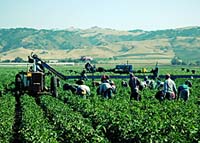
Federal Initiative Augments California Labor Law
Judy Chu, Representative for the State of California, applauded the olive branch.
"Today's decision by the US Department of Labor is a bold step in addressing our nation's immigration challenge as it relates to unscrupulous employers illegally taking advantage of immigrant workers," Chu said in a statement released April 28 by States News Service. "This practice is far too common and it hurts immigrant workers and it undercuts American workers. No longer will immigrant workers be enslaved out of fear of deportation by abusive employers who refuse to treat them by the standard that the law requires.
"This decision will allow immigrant workers to come out of the shadows, leave cruel working conditions behind and find jobs where they are treated with the dignity and respect every worker in America deserves."
A survey was initiated with the assistance of 4,000 workers in three major centers around the country. Los Angeles was one of them. The survey found that almost half of workers who filed a justified complaint against their employer or attempted to form a union were subjected to various forms of undue retaliation. Among the illegal responses on the part of unsavory employers were threats to call immigration officials, threats of deportation or actual retaliatory firings. Such responses fly in the face, for Los Angeles respondents at least, of California labor code.
The same survey found that respondents were losing, combined, an incredible $56.4 million per week as a result of various labor law violations and - in California - violations to California and labor law.
Among the alleged violations revealed in the survey: 26 percent of workers had not been paid the minimum wage in the workweek preceding the survey. Of those having worked more than 40 hours in the preceding week, 76 percent were not paid overtime as outlined in binding labor law statutes.
The US Department of Labor initiative would also bode well for legitimate companies and employers who play by the rules, but which are being adversely affected by those employers undercutting the system by violating California labor employment law.
Under terms of the plan, immigrant workers willing to aid in the investigation of unscrupulous employers would be eligible for a U Visa - a document that would allow an immigrant worker to remain in the US for a total of four years, and providing a pathway for an application of permanent residency.
California state labor laws are designed to protect workers from exploitation. This US Department of Labor initiative - albeit federal - would augment efforts by the state of California to protect worker's rights, and pursue those employers engaged in illegal activity in violation of California employee labor law.
Was Worker's Death Due to Ignorance of California Labor Laws?
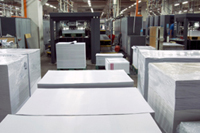
Margarita Mojica was 26 at the time of her death two years ago when she became entrapped in a box creasing and cutting machine. She was 17 weeks pregnant at the time with her second child.
California labor code, as with many federal statutes, dictates not only the requirement that an employer provide a safe work environment, but also that a worker has a right to protest if he or she feels at any time in danger while on the job.
It is not clear if the victim was even aware of the potential for disaster while simply doing her job.
According to the October 19th issue of the San Francisco Chronicle, the Oakland wife and mother of a young daughter was preparing a box creasing and cutting machine to start a job at the facility to replace a cutting die. According to prosecutors she was leaning into the machine when it suddenly activated and closed like a giant clamshell around her.
It is alleged that the owners of Digital Pre-Press International (DPI) of San Francisco were employing a previously owned cutting and creasing machine originally purchased in 2003. It has been reported that workers at some juncture asked to have a safety bar removed from the machine to allow for the handling of thicker cardboard. Investigators say the safety bar was not reinstalled.
While it is unclear if the accident would have been prevented had the safety bar been in place, there are a number of allegations that suggest workers at the facility were not properly schooled in safety protocols according to the tenets of California and labor law.
Regulators cited DPI on two previous occasions, in 1998 and again in 2001, for failing to maintain a worker safety program. The owner of DPI, Sanjay Sakhuja, is reported to have communicated to regulators that he had a training program in place by 2002; and an insurance inspection in 2007 found no problems with the machines at the facility.
However, following the tragic death of Mojica, state regulators under California labor employment law issued no fewer than 14 citations against DPI for not training workers properly. While the plant was reported to have a written safety program, workers told regulators they were never instructed on machine safety.
Sakhuja, along with pressroom manager Alick Yeung, have each been charged with manslaughter and willful violation of California state labor laws. A wrongful death civil suit has since been settled, according to The Chronicle. The value of the settlement was reported to be $6 million.

California Labor Law Turns Up the Heat on California Farm Labor Contractors
As reported July 3rd 2009 in US State News, the labor commissioner for the State of California initiated proceedings to revoke the farm labor contractor licenses for Joel Salazar Farm Labor and Valley Pride Inc. after state inspectors witnessed conditions considered dangerous to workers and in violation of state labor statutes.
According to a communiqué issued June 30th by the California Department of Industrial Relations, state inspectors attended a site May 20th of this year and encountered a crew of 15 workers planting date palm trees in 116-degree heat. The workers had less than a single gallon of water for the entire crew.
Regulations require sufficient quantities of fresh drinking water to allow each worker four, 8-ounce glasses per hour??"equivalent to a gallon of water per worker in an 8-hour shift.
Salazar Farm Labor was also cited for failing to provide adequate training to their employees in heat illness prevention.
Valley Pride Inc. was issued an Order Prohibiting Use (OPU) on May 19th when inspectors found two employees toiling in 108-degree weather, without shade. Various other citations were issued for violations ranging from the lack of an injury illness prevention program, to failure to comply with field sanitation requirements.
"This sends yet another strong message to all farm labor contractors statewide," said Commissioner Angela Bradstreet. "If you fail to provide the required level of protection for employees or falsify information on your application you can lose your license."
California became, in 2005 the first state to develop a safety and health regulation addressing heat illness.
That regulation was tested three years later after a 17-year-old farm worker succumbed to heat and died while toiling for Merced Farm Labor. The labor contractor was fined in 2008 for work safety violations and surrendered its license to operate for 3 years, prior to a license revocation hearing.
Three years is the maximum revocation period that can be sought by state regulators under California labor law. California labor employment law represents an important protection for workers in all sectors, ensuring that under California state labor law workers are free from exploitation and risks to their health and wellbeing.
California Labor Law: Heat Stress Regulation Designed to Prevent Death
The wrongful death lawsuit was filed by the family of the 17 year old girl who died in May. According to KSEE News, the victim had worked in a vineyard for more than nine hours that day and did not have access to shade or sufficient water breaks. A lack of access to sufficient water breaks and to shade violates California labor law.
The company that the victim worked for was shut down by officials after they learned that company continued violating heat stress prevention rules following the victim's death. The same company was fined in 2006 because of a failure to have a written heat stress prevention plan.
California adopted a heat stress regulation, the first state to do so, after 13 people died heat-related deaths in 2005. Under the regulation, employers are required to:
- Develop and implement written procedures on heat illness prevention;
- Provide heat illness training to all employees;
- Make readily available and encourage each employee to drink four eight-ounce cups of fresh water per hour; and
- Provide immediate access to shade or any cool area out of the sun for recovery periods for at least five minutes at a time.
Hot weather can be deadly to work in. That is why California has enacted the heat stress regulation. Many people endure desert-like heat while working outside in the summer in California, and they are at risk of serious illness and death. Unfortunately, some labor contractors are more interested in saving money than in keeping their workers safe and healthy.
Maybe they simply do not believe that workers' lives are at risk in the hot sun. Maybe they do not believe that they will be caught violating the regulation. Either way, when proper shade and water are not provided for outdoor workers, the workers are the ones who suffer.
If you or someone you love has been a victim of violations of California's heat stress regulation, or any other California labor violation, you may be eligible to file a lawsuit. Contact a lawyer to discuss your options.



About . TOS . Privacy . Disclaimer . Contact . Advertise . Member Login
This work is licensed under a Creative Commons Attribution-NoDerivs 3.0 Unported License ©2026 Online Legal Media. All rights reserved.
Visit other Online Legal Media Websites: