
Travel & Tourism News
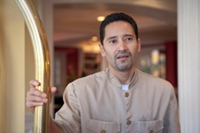
Co-Author of Study: Lowest Paid in LA Hit Hardest by Wage Theft
The report focuses on the findings of a survey of 1,815 workers in Los Angeles County, in conjunction with surveys conducted in Chicago and New York City in 2008. The respondents included many unauthorized immigrants and other vulnerable workers who are often excluded in standard surveys. The report found that minimum wage and meal break violation rates are higher in Los Angeles than in New York and Chicago.
Alarmingly, the survey found that low-wage workers in Los Angeles regularly experience minimum wage and overtime violations and they are often forced to work off the clock or during their breaks. "Other violations include lack of required payroll documentation, being paid late, tip stealing, and employer retaliation," said Milkman.
Domestic workers are vulnerable to labor violations in all three cities, but again, the survey showed especially high rates in LA County. "While some employers are well aware that they are breaking the law, there is a definite lack of knowledge in this area among employers of household workers," added Milkman.
Milkman said the study took several years, looking at key occupations and industries where the median pay rate was below 85 percent of the median wage in LA County, based on US Census data. "To participate in the survey, workers had to be employed in one of those occupations or industries," said Milkman. "We also wanted to find hard-to-reach people in the work force, such as unauthorized immigrants. Through the help of community groups we were able to recruit the first few survey respondents, and they in turn recruited others who were eligible. Starting from a handful of respondents, we wound up with more than1800."
The Los Angeles study reached the following conclusions:
- Almost 30 percent of the workers sampled were paid less than the minimum wage in the work week preceding the survey: 63.3 percent of workers were underpaid by more than $1.00 per hour.
- Among all respondents, 21.3 percent worked more than 40 hours for a single employer during the previous work week; those employers were therefore at risk for an overtime violation. Almost 80 percent of these at-risk workers were not paid the legally required overtime rate by their employers. Respondents with an overtime violation worked an average of 10 overtime hours during the previous work week.
- Nearly one in five respondents stated that they had worked before and/or after their regular shifts in the previous work week and were therefore at risk for off-the-clock violations. Within this group, 71.2 percent did not receive any pay at all for the work they performed outside their regular shift.
- Among all respondents, 89.6 percent worked enough consecutive hours to be legally entitled to a meal break. However, more than 80.3 percent experienced a meal break violation in the previous work week.
- California law requires that employers provide workers with 10-minute rest breaks during each four-hour shift (or two 10-minute rest breaks in a standard eight-hour shift). 81.7 percent of respondents eligible for rest breaks were either denied a break entirely or had a shortened break during the previous work week.
- California law requires that all workers??"regardless of whether they are paid in cash or by check??"receive documentation of their earnings and deductions. However, 63.6 percent of respondents did not receive this mandatory documentation. 45.3 percent were subjected to such illegal deductions.
Many of the workers in the survey were afraid of retaliation. "Those who complained were often fired or demoted, or given undesirable jobs or schedules??" the usual kinds of things employers do when they are unhappy with the employee. And a number of unauthorized immigrants told us that they were afraid of being reported by their employers to immigration authorities in retaliation for complaints."
Milkman said the report had gotten a positive reception. "Many members of the general public were shocked, and rightly so. Now the biggest danger is complacency, if nothing is done to fix this problem."
The LA City Council is currently considering passing a wage theft ordinance, which will make it a criminal offence if employers violate wage and hour laws. And there are more steps to take at the state and federal level.
In response to the 2008 report, Labor Secretary Hilda L. Solis said, "There is no excuse for the disregard of federal labor standards ??" especially those designed to protect the neediest among us… [this] report clearly shows we still have a major task before us." Solis hired 250 more wage-and-hour investigators in November 2009.
"Right now there is a lot of concern but it is important that there be extensive follow up and beefed-up enforcement," said Milkman. "It's a big job but there are some positive signs."

Disgruntled Employee says Disney violated California Labor Law
But that's just one of Timothy's complaints. His problems with Disney started when he suffered an injury at work and was put into a 'transitional duty stage'??"which means he was removed from his regular work and placed in another position that wouldn't require the use of his arm. "I worked for Disney WorldWide Services' restaurants and was diagnosed with advanced carpal tunnel in both wrists and torn rotator cuffs," says Timothy.
Timothy collected workers compensation benefits but says Disney caused him to lose workers compensation benefits. "Twice, they told my insurance adjustor that I had returned to work, but I hadn't returned," he says. Timothy was eventually reinstated but he didn't have any income for weeks and has a family to support.
"I'm not Disney's only workers compensation case but after my injury it has been one problem after another," he says. "I know other employees who have had medical problems??"they were transferred to positions where they have to use their hands in repetitive motions even though their doctor has given notification.
But this is my biggest beef with Disney: I came back to work on September 22 and they took union dues from my pay when the union has no standing contract with Disney and they haven't taken any dues from other union members since February. They took $140 off my check and on my pay stub it states this amount went to 'Local 681 union dues'. I phoned accounting and was told to talk to my immediate supervisors. They sent me to HR and HR told me to call the union. I even called my workers' compensation adjustor and he advised me to contact a lawyer.
The union called Disney's payroll department and Disney told the union that I would be refunded $105 on October 16th. Had I been fired, I would have been given a check immediately. Why do I have to wait for this money?"
Thirdly, Timothy says Disney has also violated California state labor law because it
"owes me money from the time when I was in transitional duties one year ago," he says.
"That position came with a premium pay which means that if I am not making tips, I get paid a higher rate than basic minimum wage. They didn't inform me that I was entitled to this premium and instead they paid minimum wage: $7.50 per hour. However I was entitled to receive $8.36 per hour. Again I called labor relations, accounting and HR and they told me to call transitional duty. Guess what??"transitional duty told me to call labor relations.
In other words, I am getting the run-around. My co-worker is owed about $350 because Disney paid out union dues when they weren't supposed to. They told him the money would be refunded but that was a year ago and he hasn't been paid what is rightfully his. Because of him I decided to seek legal help and get paid what is legally mine according to California labor employment law."



About . TOS . Privacy . Disclaimer . Contact . Advertise . Member Login
This work is licensed under a Creative Commons Attribution-NoDerivs 3.0 Unported License ©2026 Online Legal Media. All rights reserved.
Visit other Online Legal Media Websites: