
Discrimination News

Sexual Harassment amongst Officers—California Labor Law Violation
In what seems like a "she sued, she sued" soap opera, Concord agreed to settle with its employee Wendy Schwartzenberger, a civilian community service officer, for $150,000, which will be paid from city funds. According to the lawsuit that was filed last year, Lt. Robin Heinemann made unwelcome sexual remarks and physical advances, including patting Schwartzenberger's behind, hugging and kissing her "at least 100 times."
In 2009, forty-six-year-old Heinemann, a 23-year department veteran and the highest-ranking woman in the Concord Police Department, filed a lawsuit against the city claiming that she was harassed and discriminated against because of her gender. Heinemann said she was the target of "trumped-up" internal-affairs investigations into whether she had been dishonest and disrespectful to superiors. According to the suit, male officers who were accused of wrongdoing went unpunished. Heinemann and her attorneys, Stan Casper and Toni Lisoni, settled with the city for $150,000.
It doesn't stop there. More than a decade ago, Heinemann and other female police officers cried sexual harassment within the department and settled for $1.25 million. Heinemann was promoted to lieutenant two years later.
According to The San Francisco Chronicle, last November, the city of Concord agreed to settle a sexual-harassment lawsuit for $750,000. Former police officer Lisa Capocci claimed that her bosses retaliated against her when she complained that a supervisor sent "I love you" messages to her on a police-cruiser computer.
In another totally separate lawsuit involving a probation officer, and this one in Alameda, a 30-year-old deputy probation officer accused Alameda County Chief Probation Officer David Muhammad of sexual harassment and assault in 2011, and that another employee filed a claim of harassment in 2009. The $1.5 million lawsuit, which has been filed against defendants Muhammad and Alameda County, claims the deputy probation officer suffered economic harm, mental distress and anguish.
According to Amy Blackstone, a sociologist at the University of Maine, as many as 70 percent of women and 45 percent of men have experienced some form of sexual harassment in the workplace.

Pregnancy Discrimination Will Result in California Labor Lawsuit
California scored top marks for having America's first paid leave program for parents of newborns and for providing disability payments for private sector employees with pregnancy- or childbirth-related disabilities, a flexible sick leave law and unpaid, job-protected leave for pregnancy-related disability. Additionally, state employees are eligible for up to 26 weeks of benefits for pregnancy-related disabilities and a year of unpaid parental leave.
And operated through the state disability system, in California, statewide family leave pays 55 percent of a worker's salary, up to $840 a week, for six weeks, for new parents - fathers also qualify, although 85 percent who use the leave pay are women.
Yet some employers in California are still violating the California labor code by punishing pregnant workers.
"The rise in pregnancy-related cases is part of a rise in motherhood cases," said law professor Joan Williams, at the University of California, adding that "Motherhood is a key trigger for gender discrimination." Even though Federal laws have changed in the past decade, making it easier to bring pregnancy discrimination cases to trial, those lawsuits brought by the EEOC have increased about threefold, from six or fewer per year in the 1990s to 16 or more per year since 2001, according to Equal Employment Opportunity Commission (EEOC) spokesman David Grinberg.
But the good news is that younger women know their rights, more so than women, say, 20 or 30 years ago. These days if employers attempt to penalize them for getting pregnant or having children, they call "sex discrimination" and are more likely to sue their employer.
In 2009, Darlene filed a lawsuit against her employer after he threatened to terminate her. "My boss told me that I could take as long as I wanted on my maternity leave because I wouldn't be needed back," says Darlene. "Of course I took mat leave and I told them that firing me was against the California labor code so I returned to work, but it was part time: they took away all of my duties except payroll."
Darlene's attorney has filed a discrimination claim against her employer. Even with countless pregnancy discrimination settlements nationwide, women are still illegally fired for having a baby. A recent incidence may be good news for Darlene.
In February 2012, a female employee was awarded $148,000 - including back pay, interest and damages - or being illegally fired by HCS Medical Staffing in Milwaukee - she got pregnant and went on maternity leave. In this case The US Equal Employment Opportunity Commission got involved and filed charges against the bookkeeper's employer after she was accused by the owner of "using pre-natal doctor appointments as an excuse to play hooky from work." Adding insult to injury, she was in the hospital recuperating after a Caesarean section when she was notified of her termination - by mail.
The California Fair Employment and Housing Act states that:
It explicitly prohibits employers from harassing, demoting, terminating, or otherwise discriminating against any employee for becoming pregnant, or for requesting or taking pregnancy leave. The Act applies to all employers that regularly employed five or more full-time employees in the preceding year.
The California Pregnancy Disability Leave Law ("PDLL") is part of the California Fair Employment and Housing Act, and requires employers who employ 5 or more employees to provide employees who are disabled by their pregnancy a reasonable period of leave, not to exceed four months. An employee who is disabled by her pregnancy and entitled to PDLL leave may take the leave all at once, or in increments. An employer is not required to pay wages to an employee taking PDLL leave, unless it has a policy of continuing the payment of wages for other types of temporary disability leaves.
However, the employer may require the pregnant employee to use, or the employee may elect to use, any accrued sick leave during the period of leave. For most purposes, employees who are on pregnancy disability leave must be treated the same as employees on other types of disability leave in terms of pay, benefits and other terms and conditions of employment. There is no length of service requirement, so even recently hired employees are eligible for this leave.
In addition, in California, once the employee has given birth, she may be entitled to an additional 12 weeks of leave "for the reason of the birth of a child" under the California Family Rights Act ("CFRA"), which is California's version of the FMLA. Entitlement to CFRA leave for birth of a child depends on, 1) whether the employer employs more than 50 employees within a seventy-five-mile radius; and 2) Whether the employee worked more than 1250 hours in the 12 months preceding the first day of the requested CFRA leave or any pregnancy disability leave; and 3) Whether the employee has more than one year of service with the employer.

Asian Nurse Cries Discrimination, Violation of California Labor Law
Faye says she was fired because she called in sick on two occasions - only twice since 2004. But it could have been for any reason. And Faye says that she and another Asian woman were the only people working at the clinic who were not Hispanic, and they were treated a lot differently than their Mexican co-workers, to their detriment. (Racial discrimination is also a federal offense: it is basically defined as occurring when a person is treated unfairly based on characteristics of his race or birthplace.)
"I called in sick right after Christmas because I couldn't even get out of bed, I was that exhausted," says Faye. "I left several messages with my immediate boss Gwen, telling her that I was too sick to come in and asked if they were OK. I got a call back; she said they were covered but I could come in to work that afternoon. I declined, feeling too sick.
"As it turns out, Gwen told her boss that I was OK and didn't know that I was scheduled to work. Gwen texted me twice that night and phoned around 11pm, telling me to phone the boss. I told her that I would be able to work the next day.
"Apparently Gwen also told her boss that I took the day off to go for job interviews but that wasn't the case, I really was sick. She kept arguing with me over the phone, saying I told Gwen otherwise. She told me not to come to work and would set up an appointment with the three of us to get to the bottom of this issue.
'On second thought I am suspending you as of today so don't show up to work tomorrow,' she said, right out of the blue. 'Instead I want you in my office.' I met her at 11am the next day in her office but Gwen wasn't there.
"Apparently Gwen is not confrontational. We talked for about 30 minutes about me calling in sick and in the end they said I would get a call next week regarding my schedule.
"The next week I went back to her office and I was terminated, because I didn't show up for work. I was given my last paycheck and walked out of the building. I was so upset, and I still am.
"People call in sick all the time, but when I called in sick, I was harassed. And this happened once before. I believe I was discriminated against because I am Asian. The majority of people at this company are Mexican, and we all get along very well, but a lot of things they do were not right.
"For instance, one Hispanic group often took long lunch breaks without going off the clock. Then they would bring their lunch into the office and eat it. I could never do that and not get reprimanded. They often call in sick and there is never any recrimination, only with me. Another Asian girl works here; she opens the clinic at 3am along with a Hispanic girl who is always late. But instead of the late girl getting disciplined, the Asian girl got into trouble. She called me at home, crying. She got into trouble because she called the boss about her co-worker being late.
"It is so important that we are on time. Two nurses are needed to open and get the machines going, so if someone is late, it means that the patient is going to suffer. This job has no room for error or being late."
Faye says that her boss never even listened to her side of the story. Instead, the decision to terminate Faye was based on heresay, what Gwen said. "I didn't even get a chance to defend myself," she says, frustrated. Perhaps she will get a chance, with her labor law attorney.

Iraq Veteran Claims Discrimination, California Labor Law Violation
Before Marcel could work as a security guard he was required to attend two orientations with hospital staff. The second class was cancelled; when Marcel phoned to verify the time and location, no one answered.
"I tried calling my supervisor then the district office and finally, two days later, I got a call from the district manager," says Marcel. "Now this part gets rather confusing: He made some inquires and apparently the hospital blew me off but this guy said I could get a security job with another company - he was like a sub-contractor."
Marcel was asked if he had any limitations and, again, honestly disclosed his brain injury. "I get migraines a few times a week, which limits my work and my eyes get light-sensitive," Marcel explains. "He asked if the supervisor at the hospital knew about my limitations and yes, the hospital was aware of my situation. I was hired to work the following Monday - I just had to sit in an office and watch the security cameras, and I could get someone to relieve me if I got a migraine."
Come Monday morning, Marcel got a call - he was pulled from the schedule due to his injury. This was devastating news - and why was Marcel promised work, only to be discriminated against - which goes against the California labor code?
Marcel does collect Veteran's disability benefits, which amounts to $3,200 per month - but he has a family to support; his wife is epileptic and unable to work, and his son is autistic. Marcel really needed this job.
He recently had a court hearing to apply for social security disability but was denied because he has a college education. "According to the Social Security Administration my disability is irrelevant to my education," Marcel explains, "but I just got a new evaluation from the VA, and due to nerve damage on my face and migraines, I am house-bound.
"I would like to make a California labor law discrimination claim against the security company. Why did they lead me on?" Why, indeed.
Sacramento Electrical Company Fined for Violations of California Labor Law
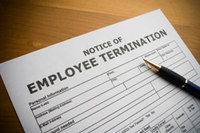
Acme Electrical Corporation was fined $846,300 for allegedly firing an employee due to the fact that he had cancer. This violation of the state's labor law led to the awarding of the money to the affected individual.
Charles Richard Wideman had reportedly worked for the company as western regional sales manager overseeing sales operations in Acme's largest territory. He was employed in this position from February 2004 to March 2008, according to the news source.
Wideman developed kidney cancer in 2006 and prostate cancer in 2007. His illnesses reportedly required two surgeries and numerous disease-related outpatient appointments to try and help him recover, the news provider said.
According to the DFEH, the company immediately granted his requests for time off for recuperative leave and surgery. Although this was allowed, Wideman reportedly requested further accommodation for the travel limitations that his cancer had caused him from June 2006 through April 2007.
It was at this juncture when Acme allegedly refused to grant or "even acknowledge these accommodation requests," according to authorities. Instead of the issuance for Wideman, the company is accused of giving him an unfavorable performance evaluation and criticizing him for insufficient travel, according to the news source.
"California's Fair Employment and Housing Act provides that persons with disabilities, such as cancer, must be reasonably accommodated, so that they can continue to work productively," Phyllis Cheng, director of DFEH, said in a statement. "This historic administrative victory underscores the department's commitment to vindicating the rights of Californians victimized by workplace discrimination."
The state's Fair Employment and Housing Commission found Acme had violated California law by failing to accommodate Wideman's known travel limitation due to the two cancers.
This was the not the only California labor law violation that was cited recently, as a smaller, family-owned electrical business??"Wulff Electric??"recently entered into a settlement because of alleged wage payment failure, according to the Vacaville Reporter.
"Many of Wulff Electric's workers were unaware of the prevailing wage laws that protect worker rights," a representative for the Northern California Electrical Construction Industry-Labor Management Cooperative Trust told the news source.

California Labor Law: Being White Also Spells Discrimination
"All of our work was supposed to be a team effort - t was company policy," says Austin, but the team didn't include him. "Every time I had a problem, such as running out of fuel, not getting somewhere on time, or a problem with the truck, no one helped me in any way. But they constantly helped each other and they expected me to help them.
"When I was first hired, everyone joined a pool - they bet on when I was going to quit. They gave me two days, then a week, then a month. They either called me 'whiteboy' or 'puta' and constantly said disrespectful things about me in Spanish, thinking I don't know what it means. [Puta literally means 'whore' in Spanish.]
"Here's another issue: Anytime there was a fuel spill, the boss told us to clean it up and it was kept quiet. But anytime I caused a spill, I would have to write up the legal form, which is fine, but everyone should have to fill out the form and sign - it's the law.
"The drivers always said I couldn't work as hard as a Mexican. I wasn't part of their clique because I wasn't Mexican and I was reminded of that daily. But I was a hard worker and never had any complaints; I was sent on all the new jobs because I was a good worker. About two months ago I told my boss, who is also Hispanic, about all these discriminatory slurs and that I was going above his head if nothing could be done about it. 'That would just cause problems for yourself and get yourself into more trouble,' he said.
"I was also given the lousiest truck to drive. After a while I wasn't the new guy anymore, which meant that I would get a better, newer truck. But the new Hispanic guy got the good truck and I stayed in the old beater. These older trucks cause more spills and the motor often gives out, creating a big problem with 10 fuel stops a day. By the fifth stop I would invariably have something go wrong, more spills, holes in hoses, all kinds of issues. And that is what I was terminated for: a hose popped and gallons of fuel leaked; I was fired for a hole in the hose that I had no control over. Every time I had a spill it was due to a mechanical error, but I'm not a mechanic (the mechanic is also Mexican and he never worked on my truck).
"I believe that I was fired because I'm white, for not being Mexican. When I worked really hard, my boss complimented me by saying, 'You work like a Mexican,' and times when I wasn't so busy my supervisor said, 'Every white guy I've hired has given up on this job.'
"I doubt this company will hire a white guy anytime soon and that is wrong. Mexican guys have this idea that white guys don't work as hard, and that's just not true. A lot of places have more Mexican guys working than white guys because the employer sometimes pays them below minimum wage, and that is also a California labor law violation. This economic mess has hurt all of us, no matter the color of your skin. But I shouldn't have lost my job because of racial discrimination."

Little-Known California Labor Law in Good Standing with Employees
California labor code is said to be one of the most stringent in the US, governing everything from overtime computation to meal and rest breaks. It's the latter that retail employees, or those who spend an inordinate part of their day on their feet, come to rely on for relief from standing.
However, according to a recent report by the Associated Press (AP) that was carried earlier this month in the Washington Post, many retailers in the state of California - including such national chains as Wal-Mart, Home Depot and Target - are facing lawsuits alleging that plaintiffs are not afforded "suitable seating" for relief from standing.
According to the AP report, the obscure statute is known as the private attorney general provision and lurks in California labor employment law. Long since accustomed to standing for hours at a time, plaintiffs are now demanding the means by which to take a load off while they're at their workstation.
According to AP, a couple of recent appellate decisions have allowed for workers and their legal advisers to employ the private attorney general provision - which apparently opens the door for a complaint to management about lack of proper seating, according to provisions in California and labor law.
Observers have noted that major retailers could be facing millions of dollars in damages. A first violation reportedly carries a fine equaling $100 per employee per pay period. The penalty is said to be doubled for any subsequent violation.
Employees who work as checkout consultants in supermarkets have sometimes required special footwear due to the need to constantly stand while at their workstation. Others have experienced back problems due to the inability to take a load off their feet outside of designated break periods.
The private attorney general provision in California state labor laws apparently provides plaintiffs with a framework to try and effect change.

California Labor Law: Discrimination Goes Both Ways
"My daughter worked at this theater for more than a year but she never got any training except for the concession," says Leo in an e-mail. "She was promised full-time employment, but sometimes she only got a few hours per week if her Asian co-workers needed the hours." Leo goes on to say that his daughter was harassed and discriminated against to the point where she had a mental breakdown and had to be hospitalized. She didn't return to work.
According to Leo, the managers, all of Asian descent, gave their Asian employees promotions, better positions and more hours.
"Employees who are Hispanic or African American are treated like third class citizens. They have even been physically pushed and humiliated. My daughter was laughed at by one manager who later asked her 'What are you going to do about it?' These same managers have been reported by other managers for abusive behavior and discrimination, but HR has not done anything. For the last seven months that my daughter worked there, the harassment escalated, week after week. There are many other employees with similar situations??"they have felt displaced by their newly hired Asian co-workers and have suffered some form of California labor abuse but have been told that they would be fired if they complained." Not only is discrimination and some forms of harassment against the California labor code, so is retaliation.
Sexual harassment is a California labor law violation, as Cindy (not her real name) is aware of. What happened to Ian (also not his real name) is the flip side of the above situation.
"Part of my job as department manager is to monitor the staff, including their breaks," says Ian, in an e-mail. "I had to write up a female employee for abusing break time (her 15-minute break became 55 minutes on several occasions, and again for yelling and insulting me in front of staff). In response to my reports, she falsified an e-mail and falsely accused me of sexual harassment."
Ian states that upper management looked for evidence of the e-mail in question but can't find it. However, if you dig deep enough, just about every e-mail is traceable. According to Ian, he then asked local management to pull all of his e-mails, but they refused, saying there was too much work to be done and they didn't have the resources to investigate.
"So that leaves me in extreme stress as this woman daily displays and promotes hatred, discrimination and harassment towards me."

Former Basketball Coach Sues over California Labor Law Violations
In the lawsuit, Jerald Clinton Eaglesmith claimed that the school officials created a work environment that was hostile and tried to take away his equal protection rights according to the law.
According to the news provider, the majority of the alleged indiscretions came during Eaglesmith's tenure as Quincy High School's head basketball coach. The suit contends that Superintendent Glenn Harris and other school officials discriminated against him and actively worked to "eliminate" him from the basketball program.
The lawsuit, which was filed in California's Eastern District of the US District Court, also names an assistant superintendent, a principal and four other officials, the news source said.
The town of Quincy, California, which is where the high school is located, is the county seat of Plumas County.

Disease Discrimination Exists in the Workplace
In May 2008 Thomas injured his knee while on duty with the LAPD. He claimed that his sergeant, rather than extend an expression of sympathy, held the injury against him and required him to undertake activities that worsened his injury. Thomas alleged to have suffered other forms of discrimination in the workplace as well, including racial discrimination.
The plaintiff won a judgment nearing $706,000.
In an unrelated case, the US Equal Employment Opportunity Commission (EEOC) launched a complaint against DynMcDermott, a privately-held corporation that provides maintenance and operations services for the Strategic Petroleum Reserve managed by the US Department of Energy on behalf of Philip Swafford.
As outlined in a 8/26/10 release by the States New Service, Swafford had applied to DynMcDermott for a position he had previously held with the company. He interviewed and was recommended for the position by both his former supervisor and the manager in charge of hiring for the position. However, the facility's director, who had ultimate authority, stated on at least two occasions that Swafford should not be hired because of his age (56 years) and??"incredibly??"because his wife was suffering from cancer. The director assumed that Mrs. Swafford's condition would interfere with her husband's capacity to perform his job duties.
The EEOC alleged that DynMcDermott's unwillingness to hire Swafford because of his age and his wife's condition violated both the Americans with Disabilities Act (ADA) and the Age Discrimination in Employment Act. DynMcDermott ultimately hired a 35-year-old applicant with no prior experience with the company.
In a separate EEOC complaint, the commission alleged that Jeff Rose was unjustly terminated from his job at ENGlobal Engineering Inc. because the company regarded him as disabled. The complaint holds that Rose had worked for the company for two weeks when, without prior warning and unbeknownst to him, he began developing symptoms of multiple sclerosis (MS). Rose quite properly reported the matter to his superiors and kept his managers informed.
However, as the manager learned more about Rose's condition and realized that he faced a potential MS diagnosis, the manager searched for a replacement and urged Rose to take medical leave despite the fact that he could continue working. After taking medical leave at his manager's insistence, Rose presented the company with a doctor's note stating that he had clearance to return to work. Although his position was available, ENGlobal human resources manager falsely told Rose that it was not. Further, although the human resources manager then told Rose that the company would try to find him another position within the company, it took no such action.
Three weeks later, the company hired another individual for Rose's job. It is the EEOC's position, stated States News Service, that ENGlobal's management violated the ADA by incorrectly and impermissibly viewing Rose as substantially limited in his ability to perform the work of any job within the company.
Such violations are unsavory acts of discrimination against individuals who suffer injury or disease through no fault of their own. So long as disease does not impact an individual's ability to perform his or her job, it is unlawful to deny such individuals the opportunity to work.



About . TOS . Privacy . Disclaimer . Contact . Advertise . Member Login
This work is licensed under a Creative Commons Attribution-NoDerivs 3.0 Unported License ©2026 Online Legal Media. All rights reserved.
Visit other Online Legal Media Websites: